Best Way to Cook Wagyu Ground Beef: Step-by-Step Cooking Guide
Keep your Wagyu ground beef cold at 38°F and handle it gently. Shape loosely packed patties without mixing in seasonings.
Season generously with kosher salt and coarse black pepper just before cooking. Preheat a cast iron skillet or two-zone grill until smoking hot for a quick, high-heat sear that locks in juices and forms a crispy crust.
Use a thermometer to stop cooking at medium-rare (130°F–135°F) to preserve its buttery texture and flavor. There’s more to perfecting Wagyu’s unique qualities that you can explore.
Key Takeaways
- Keep Wagyu ground beef cold and handle minimally, shaping loosely without compressing to preserve its delicate fat marbling and texture.
- Season patties generously on the outside with coarse kosher salt and black pepper just before cooking for a flavorful crust.
- Preheat a cast iron skillet until smoking hot (450°F+) to sear patties quickly without added oil, locking in juices and flavor.
- Sear patties 2–3 minutes per side, flipping only once, to develop a crispy crust and avoid over-rendering fat.
- Cook to an internal temperature of 130°F–135°F for medium-rare, then rest patties 3–5 minutes to retain juiciness and tenderness.
Handle Wagyu Ground Beef Cold and Gently

Always keep Wagyu ground beef cold, ideally at 38°F (4°C), until you’re ready to cook. This temperature prevents the fat from softening prematurely, preserving its delicate texture.
When shaping patties, handle the meat minimally. Limit yourself to 3–4 gentle presses to avoid compacting the grind. Work directly from the refrigerator, and if your hands warm the fat, pause and chill the batch for 10 minutes.
Form loosely packed balls and shape them into patties without compressing. This maintains a light, fluffy texture. Avoid mixing salt or seasonings into the meat’s interior, as this changes the texture toward a denser, sausage-like consistency.
Season Wagyu Ground Beef Patties for Maximum Flavor
Enhance the natural richness of your Wagyu ground beef by seasoning the patties generously, but only on the exterior. Use kosher salt and coarse black pepper immediately before cooking to build a flavorful crust without compromising texture.
Avoid mixing salt or spices into the meat itself; this can create a dense, sausage-like consistency and hinder the delicate fat marbling. Keep seasoning simple; skip wet ingredients like onions or sauces that alter binding and moisture.
Apply a higher salt-to-pepper ratio to amplify the beef’s inherent flavor without overpowering it. Season just before placing on heat to make certain the crust forms perfectly. This minimalistic approach highlights Wagyu’s buttery mouthfeel while delivering maximum flavor through the seared, seasoned outer layer. Regular maintenance of your knives, such as honing vs. sharpening, will help ensure a clean cut and preserve meat texture.
Choose and Prepare Cast Iron or Grill for Cooking Wagyu
When you’re getting ready to cook Wagyu, it’s a good idea to go with a cast iron skillet. Why? Well, it gives you even heat retention, which is perfect for really bringing out that rich flavor. Plus, it helps caramelize the fat beautifully.
If grilling is more your style, no worries! Just set up a two-zone fire. Start by searing the meat over high heat to get that nice crust, and then move it to indirect heat to finish cooking. Oh, and keep a spray bottle handy. It’s super useful for controlling any flare-ups from that delicious fat dripping onto the coals or burners. Happy cooking!
For grilling, maintain a steady temperature between 225–250°F and use a water/drip pan to help regulate heat and moisture while finishing the Wagyu two-zone fire.
Cast Iron Benefits
A well-seasoned cast iron skillet offers unmatched heat retention and even cooking, which are essential for achieving the perfect sear on Wagyu ground beef. Its dense material maintains consistent, high heat, allowing you to develop a rich, caramelized crust quickly.
Unlike thinner pans, cast iron evenly distributes heat across the surface, preventing hot spots that cause uneven cooking. Before cooking, preheat the skillet for at least five minutes until it’s smoking hot to ensure an immediate sear.
You won’t need added oil since Wagyu’s fat renders quickly, providing natural lubrication. Properly cared for, your cast iron will improve with use, enhancing the crust formation and flavor profile of each Wagyu patty you cook. Many outdoor and portable ovens can reach 900–950°F quickly, which highlights the value of cast iron’s heat retention when finishing or searing over very high heat.
Two-Zone Grilling Method
When grilling Wagyu ground beef, setting up a two-zone fire lets you control cooking intensity precisely. This method combines a high-heat sear with a gentler finish.
Arrange coals or burners so one side is hot for searing, reaching at least 450°F, while the other side maintains medium heat for finishing. Start by searing the patty 1 minute per side over direct heat to build a caramelized crust without pressing down.
Then, move it to the cooler zone to finish cooking gently, preventing excessive fat loss and flare-ups. If using cast iron, preheat it thoroughly on the grill’s hot zone for even heat distribution.
This method preserves Wagyu’s buttery texture and flavor while allowing you to monitor doneness closely. For best results, combine the two-zone approach with a resting period after cooking to redistribute juices and improve tenderness.
Managing Flare-Ups
Flare-ups often occur unpredictably due to the high fat content of Wagyu ground beef, so you need to be prepared to manage them effectively.
When cooking on a grill, keep a spray bottle of water nearby to quickly tame sudden flames caused by dripping fat. If you’re using cast iron, preheat it thoroughly to 450°F+ to sear quickly and limit fat rendering, reducing flare-up risk.
Maintain indirect heat zones on the grill to move patties away from flames as needed.
Use a two-zone grilling method for controlled cooking and flare-up management.
Have water or a damp cloth ready to extinguish small flames safely.
Avoid pressing patties to prevent excess fat release that fuels flare-ups.
Managing flare-ups guarantees a perfect crust without charring or loss of juicy texture.
For added safety and to ensure doneness, use an instant-read thermometer to confirm the internal temperature reaches a safe level when cooking ground beef.
Sear Wagyu Patties Hot and Fast for a Crispy Crust
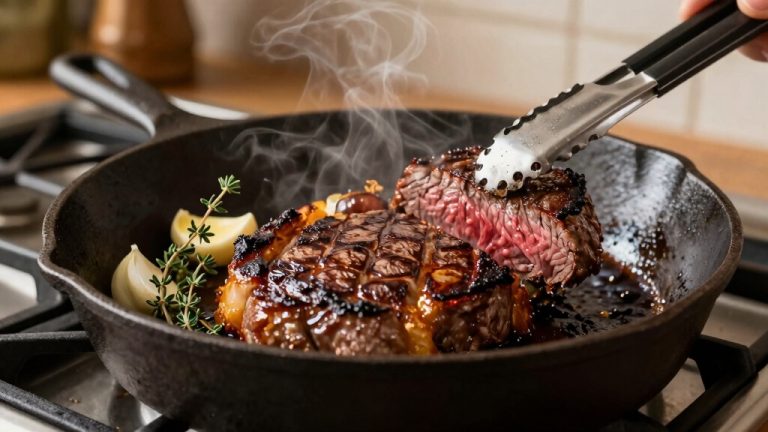
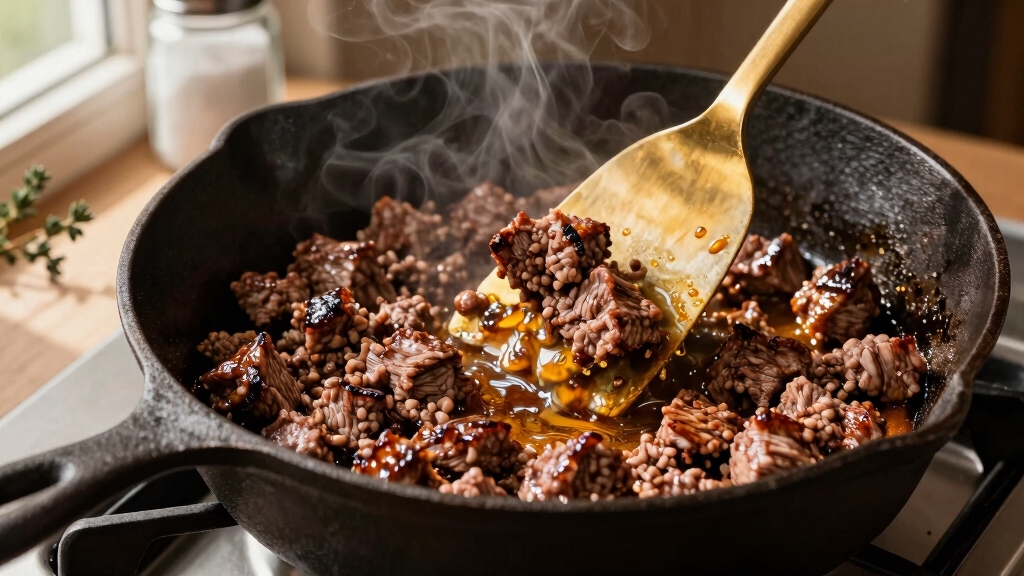
Preheat your cast iron skillet or griddle until it’s smoking hot. This intense heat is essential to develop a deep, golden-brown crust on your Wagyu patties.
Avoid adding oil; Wagyu’s fat renders quickly, providing enough lubrication. Place patties gently on the surface and sear them untouched for 2–3 minutes, allowing the crust to form firmly.
Flip only once, carefully turning the patty without pressing down to keep juices intact. Aim for a pan surface temperature above 900°F to quickly set the crust before excessive fat renders.
This hot and fast searing locks in flavor and texture, creating a crispy exterior while preserving the patty’s delicate, buttery interior. Resist the urge to move or press the meat during cooking for best results. Use all-natural hardwood pellets like apple hardwood to add a subtle, complementary smoke when finishing patties.
Check Internal Temperature to Cook Wagyu Perfectly
Monitor the internal temperature closely with a reliable meat thermometer to achieve perfect doneness for your Wagyu patties.
Since Wagyu’s high fat content cooks quickly, relying on time or visual cues can lead to over or undercooking.
Insert the thermometer into the thickest part of the patty, avoiding contact with the pan or bone.
Key temperature targets include:
- 130°F–135°F (54°C–57°C) for medium-rare, preserving buttery juiciness.
- 140°F (60°C) for medium, balancing doneness and tenderness.
- Avoid exceeding 160°F (71°C), which dries out the meat and ruins texture.
After removing from heat, let the patties rest 3–5 minutes so the juices redistribute.
Recognize that Wagyu’s abundant intramuscular fat melts at lower temperatures, contributing to its buttery texture and rich flavor.
Avoid Overcooking to Keep Wagyu Juicy and Tender
Keeping a close eye on the internal temperature guarantees you don’t overcook your Wagyu patties, which is key to preserving their juiciness and tender texture.
Monitoring internal temperature is essential to keep Wagyu patties juicy and tender without overcooking.
Wagyu cooks faster than regular ground beef due to its high fat content, so limit cooking to 2–3 minutes per side over high heat.
Avoid flipping multiple times to maintain a strong crust and lock in juices. Use a meat thermometer to stop cooking at 130°F–135°F for medium-rare, or 140°F for medium.
Don’t exceed 160°F, as this dries out the meat and ruins the delicate texture. Watch closely once fat starts rendering; prolonged heat loosens the patty.
After cooking, let the meat rest 3–5 minutes to allow juices to redistribute, ensuring maximum tenderness and flavor.
For extra flavor and to enhance tenderness, consider using a coarse salt rub applied at least 45 minutes before cooking to allow deeper penetration and improved texture coarse kosher salt.
Frequently Asked Questions
Can I Freeze Wagyu Ground Beef Before Cooking?
Yes, you can freeze Wagyu ground beef before cooking.
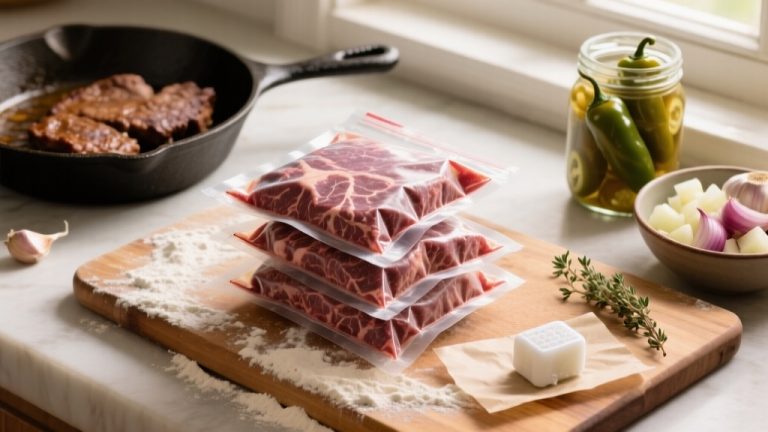
Just make sure to keep it tightly wrapped in airtight packaging to prevent freezer burn and preserve fat quality.
When you’re ready, thaw it slowly in the refrigerator to maintain texture and flavor.
Avoid refreezing once thawed, as multiple freezes can degrade the delicate fat and affect the rich mouthfeel that makes Wagyu special.
Handle it gently after thawing.
What Is the Best Way to Store Leftover Cooked Wagyu Patties?
Treat your leftover Wagyu patties like precious jewels.
Wrap them tightly in plastic wrap or aluminum foil to lock in their buttery richness.
Store them in an airtight container in the fridge, ensuring the temperature stays below 40°F to keep flavors vibrant.
Eat within 3–4 days for peak taste.
If you want to freeze them, seal them well in heavy-duty freezer bags and enjoy within 2 months to preserve their tender texture.
How Do I Tell if Wagyu Ground Beef Is Fresh?
You can tell if Wagyu ground beef is fresh by checking its color, smell, and texture.
Fresh Wagyu should be bright red, not brown or gray.
It shouldn’t have a sour or off smell; fresh beef has a clean, meaty scent.
The texture should be firm and slightly moist, not sticky or slimy.
Also, check the packaging date and keep it refrigerated below 40°F (4°C) until use.
Can I Mix Wagyu With Regular Ground Beef?
Yes, you can mix Wagyu with regular ground beef, but keep in mind it will dilute Wagyu’s rich fat content and buttery texture.
For the best balance, blend no more than 25-30% Wagyu to preserve its unique flavor and juiciness.
Handle the mix gently and keep it cold to maintain texture.
Season only the exterior just before cooking and use high heat for a quick sear to lock in flavors.
What Side Dishes Pair Best With Wagyu Burgers?
Coincidentally, sides that balance Wagyu’s richness work best. You’ll want crisp, fresh salads with tangy vinaigrettes or roasted vegetables like Brussels sprouts to cut through the fat.
Creamy mashed potatoes or truffle fries complement Wagyu’s buttery texture perfectly. Pickles or a sharp coleslaw add brightness.
Avoid heavy sauces; instead, focus on simple, bold flavors that let the burger’s luxurious taste shine without overwhelming it.
How to Cook Wagyu Ground Beef for Juicy, Flavorful Results
You might think cooking Wagyu ground beef is just like any other burger, but you’d be missing out on its rich, buttery magic.
Handle it cold, season it just right, and sear it hot to get that perfect crust.
Overcooking this luxurious meat is like throwing a party and forgetting the guests.
Keep it juicy and tender, and you’ll savor every bite, proving that sometimes, cooking with care is the real secret ingredient.