Best Place for Meat Thermometer in Turkey: Complete Guide
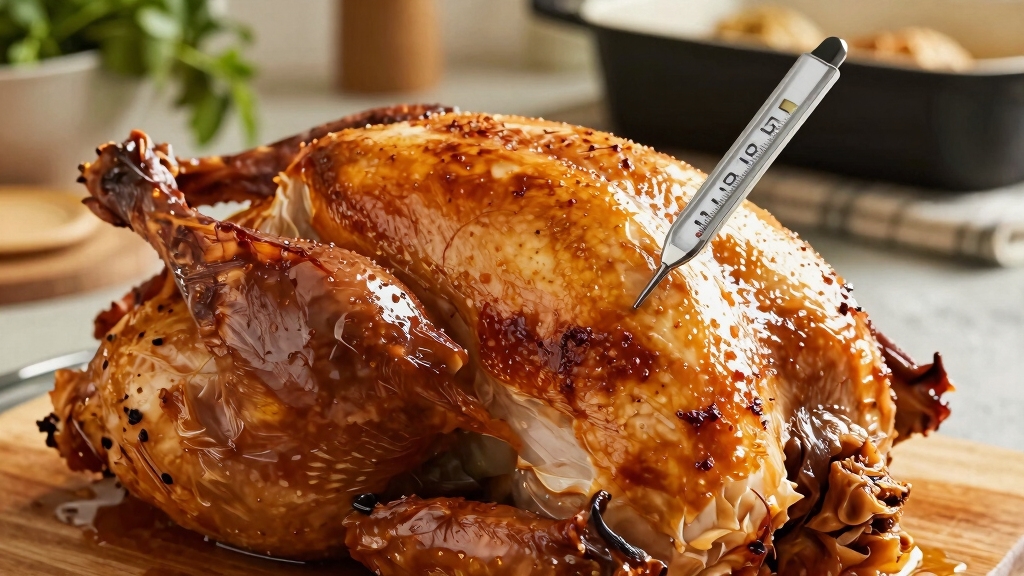
You should insert the meat thermometer into the thickest part of the turkey’s inner thigh or the deepest section of the breast near the neck cavity, about 2 to 2.5 inches deep, to get an accurate temperature reading.
Avoid touching bone, fat, or stuffing to prevent false results. The thermometer tip must be fully surrounded by meat for safety.
Checking multiple spots like the wing guarantees even cooking and juicy meat. Keep exploring to master perfect turkey temperature checks.
Key Takeaways
- Insert the thermometer probe into the thickest part of the inner thigh muscle for an accurate doneness reading.
- For the breast, slide the probe horizontally into the deepest part near the neck cavity, about ½–1 inch from the cavity wall.
- Place the probe in the innermost portion of the wing to ensure it reaches the target temperature.
- Avoid contact with bones, fat layers, stuffing, or cavity walls to prevent skewed temperature readings.
- Use multiple probe locations (thigh, breast, wing) to check even cooking and ensure safe, juicy results.
Where to Insert the Thermometer in Turkey Thigh and Breast?

To accurately gauge your turkey’s doneness, insert the thermometer probe into the thickest part of the inner thigh muscle.
Insert the thermometer into the thickest part of the inner thigh for an accurate turkey doneness reading
Make sure the tip is fully surrounded by meat and not touching any bone. Position it near the junction where the thigh connects to the body, steering clear of the crease between thigh and breast.
For the breast, slide the probe horizontally into the deepest part, aiming near the neck cavity but about half to an inch from the cavity wall.
Make certain the tip is nestled evenly within the meat and avoids bone contact to prevent skewed readings.
Both thigh and breast should reach at least 165°F to be safe.
Placing the thermometer in these precise spots helps you cook your turkey perfectly and safely every time.
Quickly freezing or properly storing any leftover turkey at 0°F or below helps preserve its quality and safety while preventing freezer burn; learn more about freezer temperature and storage times.
Correct Probe Positioning and Insertion Depth for Accurate Readings
To get an accurate temperature, you’ll want to insert the probe about 2 to 2.5 inches deep into the thickest part of the meat. Just make sure the tip is surrounded by meat and not touching any bone or fat.
Now, let’s talk about positioning the thermometer. Whether you’re sticking it in the thigh, breast, or wing, you really want to avoid any errors. Bones and the cavity can mess with the heat conduction, so be careful! When cooking large poultry like turkey, aim to measure the thickest muscle and monitor throughout the cook to account for the stall phenomenon.
Probe Insertion Depth
Achieving an accurate temperature reading hinges on inserting the thermometer probe to the proper depth, generally between 2 and 2.5 inches, to reach the turkey’s thermal center.
Before piercing, hold the probe against the meat to estimate this depth. You want the tip fully surrounded by meat, avoiding any contact with bone, fat, or the pan, as these can distort the reading.
Insert the probe parallel to the cutting board when going in laterally, ensuring the tip nests deep inside the thickest part of the meat. This depth lets the probe measure the true internal temperature, not just surface heat.
Taking care with insertion depth means you’ll get reliable readings, guaranteeing your turkey cooks safely and perfectly every time. Be mindful of appliance safety features like overheat protection which can affect cooking times if the oven or surrounding equipment overheats.
Optimal Probe Position
Positioning your meat thermometer probe precisely is essential for getting an accurate internal temperature reading of your turkey.
Insert the probe into the thickest part of the inner thigh, near where it connects to the body. Ensure the tip is fully surrounded by meat and not touching bone.
For the breast, insert the probe horizontally into the deepest part, close to the neck cavity, avoiding any bone contact. Aim for a probe depth of 2 to 2.5 inches to reach the thermal center, keeping the tip parallel to the cutting board.
Avoid the crease between thigh and breast and steer clear of fat layers. Proper positioning guarantees you measure true meat temperature, ensuring your turkey cooks safely and evenly. Regularly monitor temperatures during cooking to prevent overheating and ensure safe, even results.
Avoiding Temperature Errors
Now that you know where to place the probe for the most accurate temperature readings, it’s just as important to avoid common mistakes that can throw off those measurements.
Correct insertion depth and positioning keep your reading reliable. Insert the probe 2 to 2.5 inches deep into the thickest meat, avoiding bones, fat, and stuffing. Keep the probe tip surrounded by meat, not touching pan or cavity walls.
| Mistake | Impact on Reading | How to Fix |
|---|---|---|
| Touching bone | False high/low reading | Insert away from bones |
| Shallow depth | Underestimates temp | Insert 2–2.5 inches deep |
| Near cavity wall | Skews temperature | Place ½–1 inch from cavity wall |
| Touching stuffing | Incorrect reading | Avoid probe contact with stuffing |
| Fat layers | Distorted readings | Insert probe in lean meat only |
Avoid these pitfalls for perfect temperature checks every time! Mason jars can withstand moderate heat when heated gradually, so follow safe heating practices to avoid thermal shock when using glassware around cooking processes.
What Temperatures to Look for in Turkey Thigh, Breast, and Wing?
When you’re checking your turkey’s doneness, knowing the right temperatures for the thigh, breast, and wing is essential to guarantee safety and juiciness. Each part cooks differently, so targeting the correct internal temperature ensures your turkey is safe without drying out.
Aim for these key temperature marks:
Thigh: 165°F minimum for safety; some prefer 175°F–180°F for tenderness.
Breast: Between 165°F and 170°F to stay moist and fully cooked.
Wing: At least 165°F to ensure doneness.
Stuffing (if present): 165°F to avoid harmful bacteria.
Use an instant-read thermometer for quick, accurate checks near the thickest parts. For best results when smoking, monitor temperatures with a digital probe thermometer for real-time tracking throughout the cook.
Why You Need to Check Multiple Thermometer Points in Turkey?
When it comes to cooking your turkey, you definitely can’t just check one spot to know if it’s done. Think about it: different parts of the turkey can cook at different rates. So, by checking multiple points, you’re ensuring that every section—like the thigh, breast, and wing—is cooked to perfection.
This little extra step is key! It helps you catch any temperature differences, making sure there are no undercooked areas lurking around. Plus, this careful approach guarantees that you end up with juicy, perfectly cooked meat throughout. Who doesn’t want that for their holiday feast? For best results, check multiple spots and ensure the internal temperature reaches 165°F in each area and consider using an instant-read thermometer to verify doneness.
Importance Of Multi-Point Checks
Because turkey cooks unevenly due to its varied muscle types and thicknesses, checking multiple thermometer points is essential to guarantee safety and perfect doneness.
You can’t rely on one spot since the breast, thigh, and wing heat at different rates. By measuring several areas, you ensure every part hits the safe temperature, avoiding undercooked or overcooked sections.
Here’s why multi-point checks matter:
Confirm the thigh reaches 165°F for safe dark meat.
Verify the breast hits 165°F to 170°F for juicy white meat.
Check the wing’s internal temp to avoid cold spots.
Monitor stuffing temperature if the bird is stuffed.
Detect uneven cooking early to adjust heat or timing.
This thorough approach gives you confidence in serving a safe, perfectly cooked turkey every time.
For added safety, consider using a reliable multi-point thermometer to monitor several locations simultaneously.
Ensuring Accurate Temperature Readings
Confirming multiple temperature points on your turkey isn’t just about safety; it’s about accuracy in capturing the true doneness of each part.
By checking the thigh, breast, and wing, you avoid undercooking or overcooking any section. Each area heats differently, so relying on one spot can mislead you.
Use your thermometer carefully: insert the probe into thick meat, avoiding bones or stuffing for precise readings.
| Location | Probe Placement | Target Temperature (°F) |
|---|---|---|
| Thigh | Thickest inner muscle | 165 |
| Breast | Deepest part, near neck | 165-170 |
| Wing | Innermost portion | 165 |
This multi-point check guarantees your turkey is juicy, safe, and perfectly cooked throughout. For safe appliance use, ensure your cooking equipment is placed in a ventilated area and shows no signs of damage before use, as part of general kitchen safety precautions, especially when running for extended times like overnight; see ventilated area.
Common Thermometer Mistakes to Avoid When Cooking Turkey
While cooking turkey, many overlook essential thermometer mistakes that can lead to undercooked or dry meat. You want to make certain your readings are spot-on, so avoid these common errors that can throw off your results.
Don’t insert the probe too shallow or too deep; aim for the thickest part of the meat, about 2 to 2.5 inches deep.
Avoid touching bone, as it conducts heat differently and skews readings.
Never place the thermometer in the stuffing or cavity; those areas don’t reflect the meat’s temperature.
Make sure the probe tip is fully surrounded by meat, not fat or air pockets.
Don’t forget to thaw your turkey fully before inserting the thermometer, or you risk inaccurate readings.
Steer clear of these mistakes to get juicy, perfectly cooked turkey every time.
Also, ensure your thermometer is accurate by checking it regularly against the recommended freezer temperature to help maintain proper calibration.
Tips for Ensuring Safe and Accurate Turkey Temperature Checks
To make certain your turkey is both safe and delicious, you’ll want to take precise temperature measurements using the right techniques. Always insert the thermometer probe into the thickest part of the meat, whether the inner thigh or the deepest breast area, avoiding bone and stuffing to prevent false readings.
Hold the probe steady, ensuring it’s fully surrounded by meat for an accurate measure. Use an instant-read thermometer every 15 minutes near the end of cooking and check multiple spots: thigh, breast, and wing. Aim for a minimum internal temperature of 165°F, with breast temperatures sometimes needing to reach 170°F.
Remember to thaw your turkey completely before probing, and keep the probe parallel to the cutting board to hit the thermal center correctly. These steps guarantee safe, perfectly cooked turkey every time.
Frequently Asked Questions
Can I Use the Same Thermometer for Both Raw and Cooked Turkey?
You can use the same thermometer for both raw and cooked turkey, but you must clean it thoroughly between uses.
Raw meat carries bacteria, so sanitize the probe with hot, soapy water or a food-safe disinfectant before checking the cooked turkey.
This prevents cross-contamination and keeps your food safe.
Always handle your thermometer carefully to ensure accurate readings and maintain hygiene throughout the cooking process.
How Long Should I Wait After Removing Turkey Before Checking Temperature?
You don’t need to wait long after removing the turkey before checking its temperature.
Ideally, check it immediately or within 5 minutes to get an accurate read.
The turkey’s internal heat remains stable right after cooking, so you’ll avoid misleading cool-down effects.
Waiting too long allows heat to dissipate, giving a lower temperature and possibly underestimating doneness.
Use an instant-read thermometer for quick, precise results right away.
Is It Safe to Reuse a Probe Without Cleaning During Cooking?
You know what they say: “Cleanliness is next to godliness.”
You shouldn’t reuse a probe without cleaning it during cooking; it’s unsafe. Each time you check the turkey’s temperature, bacteria from raw meat can transfer, risking contamination.
Always sanitize the probe between uses to keep your bird safe and delicious.
Taking this small step protects your family and guarantees your turkey’s juicy perfection without any unwanted germs sneaking in.
Can a Digital Meat Thermometer Be Left in Turkey While Roasting?
Yes, you can leave a digital meat thermometer in your turkey while roasting.
Just make sure the probe is inserted into the thickest part of the thigh before cooking starts, avoiding bone and stuffing.
This lets you monitor the internal temperature continuously without opening the oven, helping you catch the perfect doneness at around 165°F.
Just be sure your thermometer is oven-safe and designed for leave-in use to avoid damage.
What Is the Best Way to Calibrate My Turkey Meat Thermometer?
To calibrate your turkey meat thermometer, plunge it into a bubbling pot of water like dipping a toe into a hot spring. The reading should hit 212°F (100°C).
If it doesn’t, adjust the dial or electronic setting until it does. For ice water, aim for 32°F (0°C) as a cool check.
Regular calibration guarantees your thermometer reads true, giving you juicy, perfectly cooked turkey every time.
The Secret to Perfectly Cooked Turkey
Think of your turkey as a treasure chest, with the meat thermometer as the key that releases its perfect doneness.
By inserting the probe into the thickest part of the thigh and breast, you uncover the true temperature hidden beneath the surface.
Checking multiple spots guarantees you don’t miss the safe, juicy gold inside.
Avoid common mistakes, and you’ll turn your turkey from a mystery into a masterpiece every time.