What Does Mold on Potatoes Look Like: Signs & Safety Guide
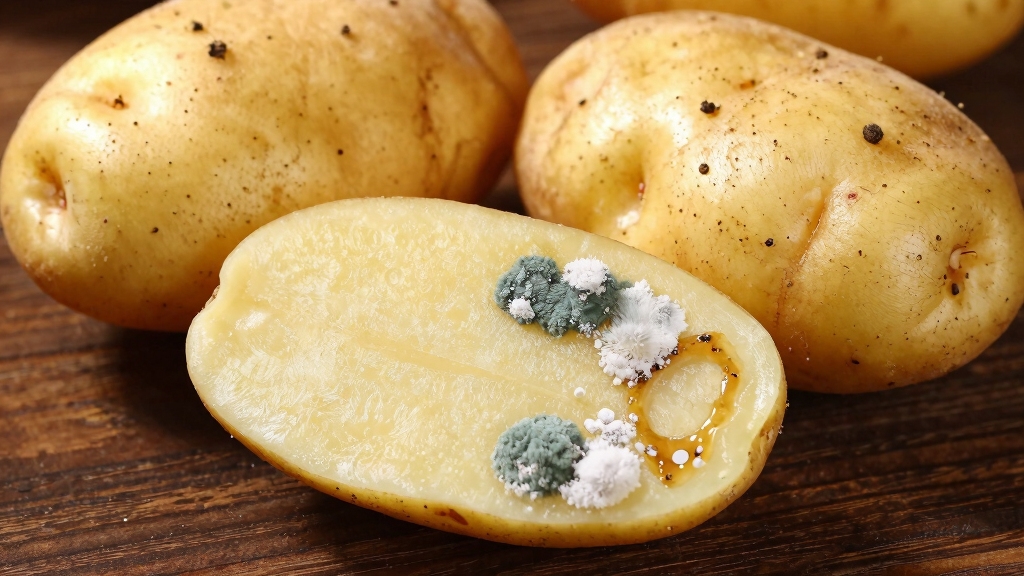
You’ll notice mold on potatoes as fuzzy patches in white, green, blue-green, black, or gray.
These often start as powdery spots with a dry, granular texture.
The spots grow into discrete lesions, ranging from a few millimeters to several centimeters, sometimes with sunken, soft, or shriveled skin nearby.
Different colors indicate specific molds or infections, while moisture or musty odors show advanced decay.
Understanding these signs helps you catch spoilage early and manage storage issues effectively.
Key Takeaways
- Mold on potatoes appears as fuzzy patches in colors like white, green, blue, black, or gray with a cottony or woolly texture.
- Early mold shows powdery spots in white, gray, or pale green, with a dry, granular texture before fuzzy growth develops.
- Advanced mold causes soft, mushy, or shriveled areas, often with moisture halos, oozing liquids, and a musty or sour odor.
- Blue-green fuzzy patches often indicate Penicillium or Aspergillus molds, while black or brown spots suggest bacterial or fungal infection.
- Mold typically forms on bruises or wounds, spreading under warm, humid storage conditions, penetrating deeply beneath the potato skin.
How to Identify Mold on Potato Skins by Appearance?

You’ll often notice mold on potato skins as distinct fuzzy patches that vary in color from white and green to black, blue, or gray.
Mold on potato skins appears as fuzzy patches in colors ranging from white and green to black and blue.
These patches typically possess a cottony or woolly texture, resembling mycelium. They initially appear powdery before developing fuzz.
You’ll find discrete lesions ranging from 3 millimeters to several centimeters in diameter, marked by soft, spongy surfaces.
The surrounding skin may wrinkle or shrivel, and moisture halos often indicate active fungal growth.
Color variations include blue-green hues signaling Penicillium or Aspergillus, while black or brown spots usually denote bacterial or fungal infection.
Press gently on these areas; moldy regions feel mushy and lack firmness. Indentations remain where rot and mold coexist.
This precise identification helps you distinguish mold from other potato blemishes.
Microbial spoilage can also produce sulfur-containing compounds that cause fishy or rotten odors, signaling advanced decay.
How to Spot Early Mold Signs Before Fuzz Appears?
—
When checking your potato skins, take a close look for any powdery spots. These little patches can sneak up on you, often showing up before the fuzzy mold makes an appearance. They can range in size from just a few millimeters to several centimeters.
Also, keep an eye out for any shriveled or wrinkled areas near those spots. These changes are usually a sign that the tissue is starting to break down, which is linked to fungal activity. Catching these subtle signs early on can really help you stay ahead of the game before the visible mycelium starts to develop.
Freezing potatoes at 0°F or below can slow fungal growth and help preserve quality, especially when stored in airtight containers.
—
Feel free to ask for more changes or anything else!
Powdery Spots Appearance
Detect early mold on potatoes by closely examining surface spots that appear powdery before any fuzz develops. These powdery spots are subtle but critical early indicators of fungal colonization, often measuring from 3 mm to several centimeters.
They typically exhibit a dry, granular texture, lacking the cottony mycelium characteristic of advanced mold. The powder can vary in color—white, gray, or pale green—signaling initial spore formation.
Pay attention to discrete lesions that may feel slightly soft or spongy under gentle pressure.
| Spot Color | Texture | Size Range |
|---|---|---|
| White/Gray | Dry, powdery | 3 mm to cm scale |
| Pale green | Fine granular | Small to medium |
| Light brown | Slightly soft base | Variable |
Early detection prevents further fungal progression and internal decay. Manufacturers advise against using jars for high-heat applications due to the risk of thermal shock to glass and potential contamination hazards.
Shriveled Skin Indicators
Following the identification of powdery spots, observe the potato skin closely for areas that appear shriveled or wrinkled. These often signal early mold infection before fuzzy growth emerges.
These shriveled regions indicate fungal infiltration beneath the skin, causing cellular dehydration and tissue collapse. Press gently on these areas; a soft or spongy texture confirms compromised integrity.
You might also notice subtle discoloration, such as brown or darkened patches, adjacent to the shriveled skin. This suggests fungal metabolite activity.
These early indicators often precede visible mycelial development and are critical for timely mold detection. Detecting shriveled skin helps you intervene before mold spreads extensively, preserving potato quality.
Monitor storage conditions closely, as warm, moist environments accelerate this progression from shriveling to fuzzy mold growth. Place affected potatoes in a well-ventilated area away from other produce to reduce moisture buildup and prevent spread.
How to Recognize Texture Changes Indicating Mold Growth?
You’ll start to notice mold growth when those once-firm areas of a potato begin to feel soft or mushy when you press on them gently.
It’s pretty telling!
You might also see some wrinkled or shriveled skin around those spots, which is a good indicator that the tissue is breaking down.
And then there’s the active fungal growth.
This can sometimes create visible moisture or even little oozing liquid halos around the affected areas.
Proper storage, such as keeping potatoes in cool, dry conditions to prevent moisture buildup, can help reduce mold growth and extend shelf life; consider proper freezing durations for other perishables.
Softness and Mushiness
When you press gently on a potato’s surface, mold-infected areas feel noticeably soft, spongy, or mushy compared to healthy skin.
This texture change results from fungal hyphae penetrating and breaking down cellular structure beneath the skin, causing tissue degradation.
Unlike firm, resilient healthy skin, infected regions yield under minimal pressure, sometimes leaving indentations that persist after release.
Mushy areas indicate advanced mold colonization, often accompanied by moisture accumulation or oozing liquid, signifying internal decay.
These softness cues are vital for early detection, especially when visual signs like fuzzy patches are minimal.
You should carefully examine potatoes for these tactile changes in storage or purchase to prevent spoilage spread and potential mycotoxin exposure.
Recognizing softness and mushiness lets you identify mold growth beyond superficial surface symptoms.
Wrinkled Skin Areas
Softness and mushiness often accompany changes in the potato skin’s texture, including the development of wrinkled or shriveled areas near mold-infected regions.
When you examine the potato, focus on these textural alterations as early indicators of mold presence.
Wrinkled skin typically forms around fungal lesions where cellular degradation occurs, causing the surface to lose turgor pressure.
This loss results in a visibly contracted, uneven surface that feels less firm to the touch.
These shriveled zones often border soft, spongy patches where mold hyphae have penetrated the skin layers.
By gently pressing these areas, you’ll notice indentations that persist due to underlying rot.
Recognizing this characteristic wrinkling alongside softness will help you detect mold growth even before extensive fuzz or discoloration becomes apparent.
Always discard potatoes with extensive soft or wrinkled areas and consider proper sanitization of storage containers to reduce cross-contamination.
Moisture and Oozing
Detect moisture accumulation and oozing as critical indicators of mold progression on potatoes. When mold invades, the skin loses firmness, becoming soft and spongy. You’ll often notice liquid seeping from infected areas, signaling active fungal metabolism.
These texture changes reveal moisture retention and cellular breakdown beneath the surface.
Watch for these key signs:
- Soft, mushy spots forming under the skin
- Moisture halos surrounding fuzzy mold patches
- Oozing, clear or milky liquids exuding from lesions
- Wrinkled or shriveled skin near wet areas
- Indentations remaining after light pressure, indicating tissue collapse
Recognizing these texture alterations helps you identify early mold growth, preventing spread and spoilage effectively.
What Mold Colors on Potatoes Mean?
Colors on moldy potatoes can give you critical clues about the type of fungal or bacterial activity occurring on the tuber’s surface.
White cottony mats typically indicate white mold infections covering water-soaked lesions.
White cottony growths usually signal white mold infecting moist, water-soaked areas on potatoes.
Green discoloration often signals solanine accumulation from light exposure, not mold itself.
Blue-green hues suggest Penicillium or Aspergillus fungal presence, both common postharvest pathogens.
Brown, red, or black spots generally denote bacterial or fungal infections causing tissue necrosis.
Dark sunken spots reveal moldy interiors when you cut the potato open, indicating advanced colonization.
These color variations help you assess the infection’s nature and progression precisely.
This guidance informs your handling decisions and potential disposal to prevent health risks and spread in storage environments.
Proper storage—cool, dry, and away from light—helps reduce spoilage and prevent mold growth.
How Moldy Potato Odors Signal Spoilage Stage?
Frequently, odors provide the earliest and most reliable indication of mold progression on potatoes. When you detect a musty or mildew-like smell, it’s a clear sign fungal metabolism has advanced beyond superficial growth.
Early-stage surface mold often lacks any scent, but as mold penetrates deeper, odors intensify. Sour or rancid smells indicate advanced spoilage and tissue decay.
Pay close attention to these odor cues:
- Musty odors replace fresh earthy potato scents.
- Absence of smell typically signals very early surface-only mold.
- Sour or rancid odors correspond to advanced decay stages.
- Odor intensity increases with humidity and temperature.
- Strong smells often accompany internal mycotoxin production.
Proper storage at or below 40°F (4°C) helps slow mold growth and reduce the risk of spoilage.
Common Potato Molds and Their Origins
Although mold can appear in various forms on potatoes, certain fungal species are responsible for the majority of common infestations you’ll encounter.
Penicillium species, identifiable by blue-green fuzzy patches, often originate from soil or damaged tuber wounds.
Fusarium molds, producing sunken brown spots, thrive in warm, moist environments and frequently invade through mechanical injury.
Alternaria species create dark, concentric lesions, commonly developing on tuber surfaces exposed to humidity.
White mold, caused by Sclerotinia, forms cottony mats over water-soaked areas, originating from contaminated storage conditions.
These fungi spread rapidly under room-temperature storage, exploiting microabrasions or bruises.
Regular cleaning and proper ventilation during storage can help prevent mold growth by reducing air circulation issues and moisture buildup.
How Mold Penetrates Potato Flesh?
Understanding the origins and types of molds that infest potatoes sets the stage for examining how these fungi invade the tuber’s internal tissues.
When mold colonizes the potato surface, it sends out thread-like hyphae that penetrate beneath the skin, accessing the flesh.
This internal invasion often precedes visible signs on the surface, making early detection difficult.
As you observe the infected tuber, note these key aspects of mold penetration:
- Hyphae extend deeply, bypassing the protective epidermis.
- Mycotoxins infiltrate flesh ahead of visible decay.
- Internal rot spreads beyond surface lesions, causing softening.
- Discoloration inside ranges from brown to black, signaling tissue breakdown.
- Cutting the potato reveals mold’s hidden advance beneath the intact skin.
Mason jars can be useful for storing preserved potatoes, but remember they are best for moderate heat and not oven use.
Why Mold Spreads Faster on Stored Potatoes?
Mold spreads faster on stored potatoes primarily because the environmental conditions in storage, such as elevated humidity and room temperature, create an ideal habitat for fungal growth.
These conditions accelerate fungal metabolism and sporulation, increasing mold proliferation rates markedly.
Moisture halos and water-soaked lesions develop more readily, providing fungi with abundant water essential for hyphal penetration into potato tissue.
Room temperature storage, especially, can increase mold incidence by up to 300% compared to cooler environments.
Additionally, wounds or bruises on stored potatoes serve as entry points for pathogens like Fusarium and Alternaria, facilitating rapid colonization.
The lack of airflow and consistent warmth further suppresses potato defenses, allowing mycelium to expand unchecked beneath the skin.
Consequently, controlling humidity and temperature is critical to slowing mold spread during storage.
Frequently Asked Questions
Can Mold on Potatoes Cause Allergic Reactions in Humans?
Yes, mold on potatoes can cause allergic reactions in you, especially if you’re sensitive to mold spores.
When you handle or inhale spores from mold like Penicillium or Aspergillus, you might experience respiratory issues, skin irritation, or even asthma attacks.
Your immune system reacts to mycotoxins and fungal particles, so it’s vital to avoid contact and discard moldy potatoes promptly to prevent allergic and toxic effects.
Is It Safe to Eat Potatoes With Small Mold Patches After Cutting Them Away?
No, nibbling near noticeable mold isn’t advisable. Mold’s mycelium might meander beneath the surface, meaning microscopic mycotoxins may mingle within.
Even if you meticulously cut away fuzzy patches, fungal fragments can festoon the flesh. This fungal infiltration fosters foul flavors and forms health hazards, including allergic reactions or food poisoning.
It’s safer to select spotless spuds or discard those displaying even small mold signs to safeguard your system.
What Is the Best Way to Store Potatoes to Prevent Mold Growth?
To prevent mold growth, store your potatoes in a cool, dark, and well-ventilated space, ideally between 45-50°F (7-10°C).
Avoid moisture buildup by keeping them dry and never refrigerate, as cold temperatures convert starch to sugar, affecting taste and texture.
Use breathable containers like paper bags or baskets to allow air circulation.
Inspect regularly, removing any damaged or sprouting potatoes promptly to inhibit fungal spread and spoilage.
How Long Does It Take for Mold to Develop on Cut Potatoes?
Within 24 to 48 hours, you’ll notice mold starting to form on cut potatoes, especially if left exposed to warm, humid conditions.
Initially, tiny powdery spots appear, soon transforming into fuzzy patches with colors ranging from white to green or blue-green.
The potato flesh beneath softens and discolors as fungal hyphae penetrate deeply.
Without prompt refrigeration or drying, mold spreads rapidly, turning the potato mushy and emitting musty odors signaling advanced spoilage.
Are Certain Potato Varieties More Resistant to Mold Than Others?
Yes, certain potato varieties show more resistance to mold due to their skin thickness, chemical composition, and natural antifungal compounds.
You’ll find that varieties like Russet and Yukon Gold tend to resist mold better than thinner-skinned types such as Red Bliss.
You should store resistant varieties in cool, dry conditions to maximize their natural defenses.
However, no variety is completely immune, so proper handling and storage remain critical to prevent mold growth.
Protect Your Potatoes With Early Mold Detection
Think of mold on potatoes as an invasive vine slowly overtaking its host. If you don’t catch the early signs—discoloration, fuzzy growth, or changes in texture and odor—it can quickly penetrate the flesh, making the tuber unsafe to eat.
By closely monitoring color shifts and subtle surface changes, you can identify mold at its onset and prevent spoilage. Staying vigilant is essential, especially with stored potatoes where mold spreads rapidly.