Marinade vs Sauce: Which One Should You Choose?
You use a marinade before cooking to tenderize and infuse subtle, deep flavors into raw food through acidic components that soften surface fibers.
In contrast, sauces are applied during or after cooking to add concentrated, surface-level flavor, moisture, and visual appeal. They often have thicker, clingable textures.
Marinades prepare and modify the ingredient’s interior, while sauces finish and enhance the dish externally.
Understanding these differences helps you control flavor and texture precisely. Explore how timing and composition shape your results.
Key Takeaways
- Marinades are acidic, thin liquids used before cooking to tenderize and infuse subtle flavors by penetrating surface layers of raw food.
- Sauces are thicker liquids or semi-liquids applied during or after cooking to coat food, adding moisture, rich flavor, and visual appeal.
- Marinades alter texture by breaking down proteins pre-cooking, while sauces enhance flavor externally without changing food texture before cooking.
- Marinades require refrigeration and limited marination time to avoid mushiness and bacterial growth; sauces are used safely post-cooking or as finishing touches.
- Marinades prepare and preserve raw foods, whereas sauces provide immediate, concentrated flavor layering and finishing notes on cooked dishes.
Marinade vs Sauce: Side-by-Side Feature Breakdown
| Feature | Marinade | Sauce |
|---|---|---|
| Primary Purpose | Tenderizes and infuses raw food with flavor | Adds concentrated flavor, moisture, and visual appeal |
| Application Timing | Before cooking | During or after cooking |
| Main Flavor Effect | Subtle, integrated flavor | Bold, immediate surface flavor |
| Texture | Thin and runny | Thin to thick or semi-liquid |
| Food Interaction | Penetrates surface layers | Coats the exterior |
| Tenderizing Effect | Yes, especially with acidic ingredients | Generally no pre-cooking texture change |
| Typical Ingredients | Acid, oil, salt, herbs, and spices | Liquids, seasonings, and thickening agents |
| Acidity | Often acidic | Varies by recipe |
| Cooking Requirement | Usually uncooked before use | Frequently cooked or simmered |
| Moisture Contribution | Helps flavor and prepare food before cooking | Adds moisture during finishing |
| Coating Ability | Low | High |
| Flavor Intensity | Gradual and milder | Concentrated and pronounced |
| Texture Risk | Over-marinating can cause mushiness | Usually does not alter internal texture |
| Storage/Safety | Requires refrigeration and controlled marination time | Often used after cooking; storage depends on ingredients |
| Typical Uses | Meat, poultry, seafood, vegetables, and tofu | Finished meats, vegetables, wings, and plated dishes |
| Main Advantage | Develops integrated flavor while tenderizing | Delivers immediate flavor, richness, and attractive coating |
| Main Drawback | Requires advance preparation and careful timing | Primarily provides surface-level flavor rather than deep penetration |
What Is a Marinade?

Soaking raw food in a marinade before cooking allows you to infuse flavor and tenderize the surface layers effectively. You use a marinade, a mostly liquid mixture containing acid like vinegar or citrus juice, oil, salt, herbs, and spices, to target the exterior tissues of meat, poultry, seafood, or vegetables.
The acidic component alters protein structures, softening surface fibers without fully penetrating the interior. Marinades are always applied pre-cooking, which differentiates them from sauces. Their thin, runny consistency guarantees efficient contact and absorption into the outer layers but won’t create a coating.
You must control marinating time carefully; overexposure risks mushy textures. By soaking raw food, you achieve integrated flavor development and improved tenderness before heat transforms the product, setting the stage for cooking methods that finalize the dish. For best results, maintain proper temperature control and storage to prevent bacterial growth during marination and follow recommended refrigeration practices with airtight jars.
How Sauces Are Different From Marinades?
Marinades and sauces might seem similar, but they really serve different purposes in cooking. So, let’s break it down!
You typically apply marinades before cooking, right? They’re great for tenderizing meat and infusing flavor deep beneath the surface. It’s like giving your ingredients a little flavor bath!
On the other hand, sauces come into play during or after cooking. They’re all about enhancing moisture and making your dish look appealing.
Now, when it comes to consistency, marinades are usually pretty thin. They’re designed to penetrate, whereas sauces can vary a lot in texture. Some might be thick and creamy, while others are more liquidy. That means sauces often create a nice coating on the finished dish, adding that extra wow factor.
Understanding these differences—like timing, flavor impact, and consistency—really helps you use each one effectively. So, next time you’re in the kitchen, you’ll know exactly when to reach for a marinade or a sauce! Electric smokers add flavor during cooking using wood chips to impart smoky taste.
Timing Of Application
Before cooking begins, marinades play their essential role by soaking into raw foods to impart flavor and tenderize. You apply marinades ahead of time, allowing acids and seasonings to penetrate surface layers, subtly altering texture and enhancing taste before heat transforms the food. In contrast, sauces are introduced during or after cooking. You might baste with sauce near the end to build layers of flavor or serve it alongside finished dishes for immediate taste impact. This timing difference reflects their distinct purposes: marinades prepare and modify raw ingredients, while sauces accentuate and complement cooked foods. Understanding when to apply each helps you control flavor development and texture, ensuring marinades and sauces fulfill their unique culinary roles effectively. Pickling can similarly change texture and flavor over days, as with pickled bologna stored refrigerated for 3–10 days.
Flavor Impact Differences
While marinades work by penetrating raw food to subtly alter texture and flavor prior to cooking, sauces deliver their impact in a more immediate and surface-focused way.
When you use a marinade, flavors integrate gradually, affecting the food’s interior. Sauces, however, provide a more pronounced taste contrast since they coat the exterior.
Consider these key flavor impact differences:
- Marinades infuse flavor throughout but are milder due to dilution during cooking.
- Sauces offer concentrated, often bolder flavor profiles experienced directly.
- Marinades tenderize while subtly adjusting flavor; sauces emphasize richness, moisture, and finishing notes.
- Sauces allow for layering or adjusting flavors at serving, giving you control over intensity.
Understanding these distinctions helps you choose the right approach depending on your desired flavor outcome. Using a marinade that includes curing salt is common when preparing preserved meat sticks like Slim Jims to help with texture and safety.
Texture And Consistency
Although marinades and sauces may share similar ingredients, their textures and consistencies differ markedly due to their distinct culinary roles.
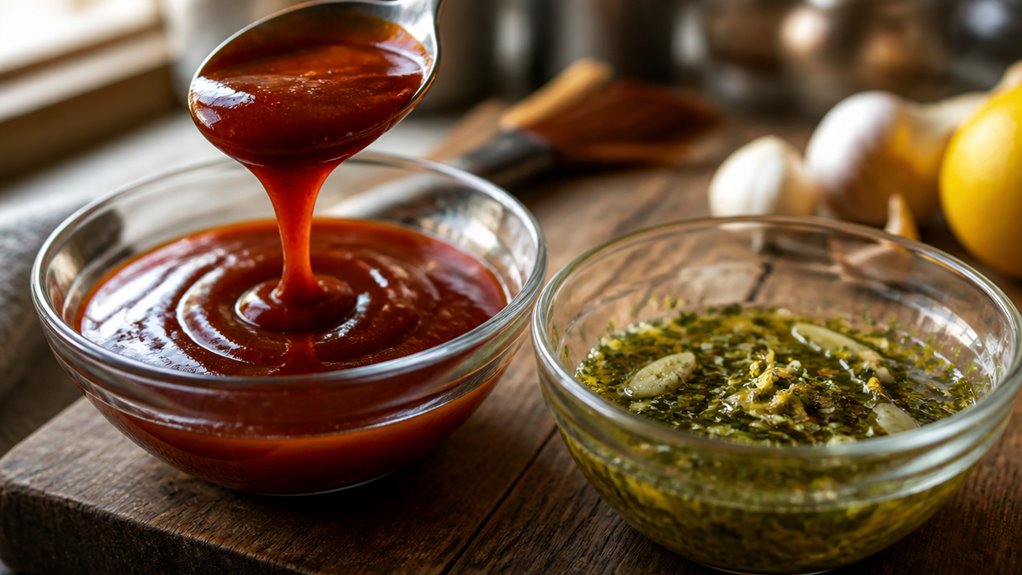
Marinades are usually thin and runny, designed to soak into the surface layers of raw food without creating a coating. This liquidity allows acids and oils to penetrate gently, tenderizing and flavoring beneath the surface.
In contrast, sauces vary from thin to thick and often have a semi-liquid consistency. Many sauces contain thickeners, enabling them to cling to cooked food, adding moisture and a distinct coating that enhances presentation.
Unlike marinades, sauces are frequently cooked or finished with heat, which alters their texture and body. Understanding these differences helps you apply each appropriately, ensuring the desired effect on your dish’s texture and flavor delivery. Many popular wing sauces prioritize a sticky, clingable texture so they coat and glaze cooked wings rather than soak in.
When to Use Marinades or Sauces in Cooking?
Because marinades and sauces serve distinct roles in the cooking process, knowing when to use each can greatly enhance your dish’s flavor and texture.
You use marinades primarily before cooking to tenderize and infuse flavor into raw ingredients like meat or vegetables. Sauces, on the other hand, are applied during finishing or served alongside to add moisture, richness, and visual appeal.
Consider these guidelines:
- Marinade tougher cuts before cooking to break down fibers and develop depth.
- Use sauces with cooked food to complement and elevate existing flavors.
- Apply marinades in advance to allow surface penetration without altering texture excessively.
- Reserve sauces for basting near the end or plating, where they create a topical flavor boost.
For best results with meats like chicken, preheat your pan and use high-smoke-point oils to achieve a proper sear and lock in juices when cooking after marinating, especially when using high-heat searing.
What’s in Marinades and Sauces?
When you break down the components of marinades and sauces, you’ll find that each is carefully formulated to fulfill its unique culinary role.
Marinades and sauces are thoughtfully crafted to serve distinct and essential culinary purposes.
Marinades typically combine acid like vinegar or citrus juice with oil, salt, herbs, and spices. This acidic element helps tenderize and flavor raw foods before cooking.
In contrast, sauces often include liquids, seasonings, and thickening agents, creating a range from thin to semi-thick consistencies that cling to cooked dishes.
While both share herbs and spices, marinades remain liquid and uncooked, designed to penetrate surface layers.
Sauces are frequently cooked or simmered to develop body and enhance presentation.
Understanding these ingredient distinctions clarifies why marinades integrate flavor during preparation.
Sauces amplify moisture and richness when you serve or finish a dish.
Cold-filled sauces preserve umami depth and authentic fermented flavors, making them preferable when you want intense, preservative-free taste.
How Marinades and Sauces Affect Flavor and Texture Differently?
When you use a marinade, it really gets in there, penetrating the surface to integrate flavor and change the texture before you even start cooking. It often tenderizes the food, making it more enjoyable to eat.
On the flip side, sauces are all about that surface action. They enhance the flavor right on top, adding moisture and richness without messing with the internal structure of the food.
Freezing cooked marinaded meats shortly after cooling and storing them in airtight packaging helps retain flavor and texture during long-term storage.
Flavor Integration Versus Enhancement
Although marinades and sauces may share similar ingredients, they influence flavor and texture in fundamentally different ways.
When you use a marinade, flavors penetrate the surface, integrating with the food’s structure to alter both taste and texture pre-cooking.
Sauces, conversely, enhance the food’s existing flavors externally, providing a distinct, often richer finish.
- Marinades infuse subtle, deep flavors, softening texture by breaking down proteins.
- Sauces deliver bold, immediate taste contrasts or complements on the surface.
- Marinades create a unified flavor profile absorbed over time.
- Sauces amplify or balance flavors at serving without altering the food’s internal composition.
Understanding these differences helps you choose the right approach for flavor complexity versus immediate enhancement. Vacuum sealing can help preserve marinade ingredients and extend freshness by reducing oxygen exposure to the preserved food.
Texture Changes Before Cooking
Understanding how marinades alter texture before cooking reveals their unique role in food preparation. When you soak raw meat or vegetables in a marinade, the acidic components break down muscle fibers and connective tissues, tenderizing the food.
This chemical interaction softens texture subtly without fully saturating the interior, preparing it for even cooking. In contrast, sauces don’t affect texture before cooking since they’re applied during or after.
They add moisture and flavor externally but don’t change structural integrity. Over-marinating can lead to mushiness, so timing is critical to maintain desirable firmness. A properly prepared cream sauce made from a roux and dairy can complement marinaded items without altering their pre-cooked texture, especially when added gently to avoid breaking the dish’s consistency cream sauce.
Surface Coating Versus Penetration
The way marinades and sauces interact with food textures and flavors largely depends on whether they penetrate or coat the surface.
When you use a marinade, it seeps into the surface layers, subtly altering texture and infusing flavor beneath the exterior. In contrast, sauces primarily stay on the surface, enhancing flavor and moisture with a noticeable coating.
Consider these key differences:
- Marinades penetrate slightly, tenderizing and flavoring internally before cooking.
- Sauces cling externally, providing immediate taste impact and visual appeal.
- Over-marinating risks mushiness, while sauces avoid texture changes.
- Marinades are thinner, allowing absorption; sauces are thicker, creating a distinct layer.
Understanding these distinctions helps you control how flavor and texture develop in your dishes.
Tips to Avoid Common Mistakes With Marinades and Sauces
When you marinate or sauce your food, timing and composition are essential to avoid common pitfalls.
First, never over-marinate; acids can break down proteins excessively, leading to mushy textures. Stick to recommended marination times based on food type, typically under 24 hours for meats.
Second, avoid cross-contamination by not reusing marinade that contacted raw food unless boiled thoroughly.
Third, tailor sauce thickness to your dish. Too thin, and it won’t cling; too thick, and it may overpower.
Fourth, apply sauces mainly after cooking to preserve intended texture and flavor impact.
Finally, balance acid, salt, and fat in both marinades and sauces to prevent harshness or blandness.
Thoughtful control over these factors guarantees you enhance flavor and texture precisely without common mistakes.
Frequently Asked Questions
Can Marinades Be Reused Safely for Basting During Cooking?
You shouldn’t reuse marinades for basting unless you boil them first.
Raw marinades have been in contact with uncooked food, so they can harbor harmful bacteria.
Boiling kills these pathogens, making the marinade safe to brush onto food during cooking.
If you skip boiling, you risk contamination.
Always separate a portion before marinating if you want to use it later as a sauce or baste, ensuring food safety and flavor integrity.
How Long Should Meat Be Marinated for Best Flavor Without Texture Damage?
You know what they say: too much of a good thing can spoil it.
For best flavor without damaging texture, marinate meat for 30 minutes to 2 hours for delicate cuts like fish or chicken.
For tougher cuts like beef or pork, marinate for up to 24 hours.
Over-marinating, especially with acidic ingredients, can break down proteins too much, making meat mushy.
Always tailor time to meat type and marinade strength for peak results.
Are There Vegetarian or Vegan Marinades and Sauces That Work Similarly?
Yes, you can definitely use vegetarian or vegan marinades and sauces that work similarly.
You’ll want to focus on plant-based acids like lemon juice or vinegar and oils to tenderize and flavor vegetables or tofu.
Ingredients like soy sauce, garlic, herbs, and spices add depth.
Vegan sauces often use purees or nut-based creams for richness.
Both help enhance taste and texture, adapting perfectly to plant proteins.
Can Sauces Be Frozen and Reheated Without Losing Quality?
Yes, you can freeze and reheat many sauces without losing quality, but it depends on their ingredients and texture.
Sauces with high dairy or cream content might separate or become grainy after thawing. Tomato-based or oil-based sauces generally freeze well.
To preserve flavor and texture, freeze sauces in airtight containers and reheat gently over low heat. Stir occasionally to maintain consistency and prevent scorching.
What Kitchen Tools Help Apply Marinades and Sauces Most Effectively?
Did you know that properly marinated meat can retain up to 30% more moisture during cooking?
To apply marinades, you’ll want a resealable plastic bag or shallow dish for even coverage and easy flipping.
When it comes to sauces, silicone brushes and ladles help you spread or drizzle precisely without waste.
Using these tools guarantees your flavors penetrate or coat food evenly, optimizing taste and texture every time.
Marinades vs Sauces: Flavor, Timing, and Texture
Now that you know the distinct roles marinades and sauces play, you can wield them like a seasoned chef from a bygone era.
Marinades tenderize and infuse flavor before cooking, while sauces enhance dishes afterward with bold, immediate taste and texture.
Avoid common pitfalls by timing their use carefully and balancing ingredients thoughtfully.
Mastering these differences guarantees your meals are both flavorful and perfectly textured, making every bite a culinary triumph.