Best Way to Start Charcoal Without Lighter Fluid: Easy Tips
The best way to start charcoal without lighter fluid is to use a chimney starter.
You just place crumpled newspaper or a fire starter cube under the metal cylinder, light it, and let the design concentrate heat to ignite coals evenly and chemical-free.
You can also use electric starters or oil-soaked paper towels for clean, reliable ignition.
Keep vents open and arrange coals tightly for proper airflow. Master these methods and you’ll have steady, hot coals ready in no time.
Key Takeaways
- Use a chimney starter with crumpled newspaper or fire starter cubes for fast, chemical-free charcoal ignition.
- Keep bottom vents fully open to ensure proper oxygen flow and even coal ignition.
- Arrange charcoal in a compact mound or teepee shape to maximize airflow and heat concentration.
- Light oil-soaked paper or paper towels placed under charcoal for a simple, natural fire starter option.
- Electric charcoal starters or propane torches provide clean, reliable ignition without lighter fluid or chemical residues.
Quick Ways to Start Charcoal Without Lighter Fluid

When you need to get your charcoal going without lighter fluid, you’ve got several reliable options that cut out chemicals and off-flavors.
You can soak a paper towel in cooking oil, like olive or vegetable, and place it under the coals for a steady flame. Twisting paper into a tube or donut shape and coating it with oil also works well, especially when paired with a tight charcoal pile.
If you prefer a tool, an electric charcoal starter plugs in and heats coals quickly without mess or chemicals, though you’ll need power access.
Propane torches or fire starter cubes offer fast, consistent ignition but require care with open flames.
These methods guarantee clean starts and predictable burns, so your food stays flavorful and your fire reliable. For high-output, long-reach options consider a propane torch with an extended hose or high BTU rating for fast, powerful ignition.
How to Use a Chimney Starter for Fast, Safe Ignition?
Get your charcoal fired up quickly and safely by using a chimney starter, a simple tool that eliminates the need for lighter fluid.
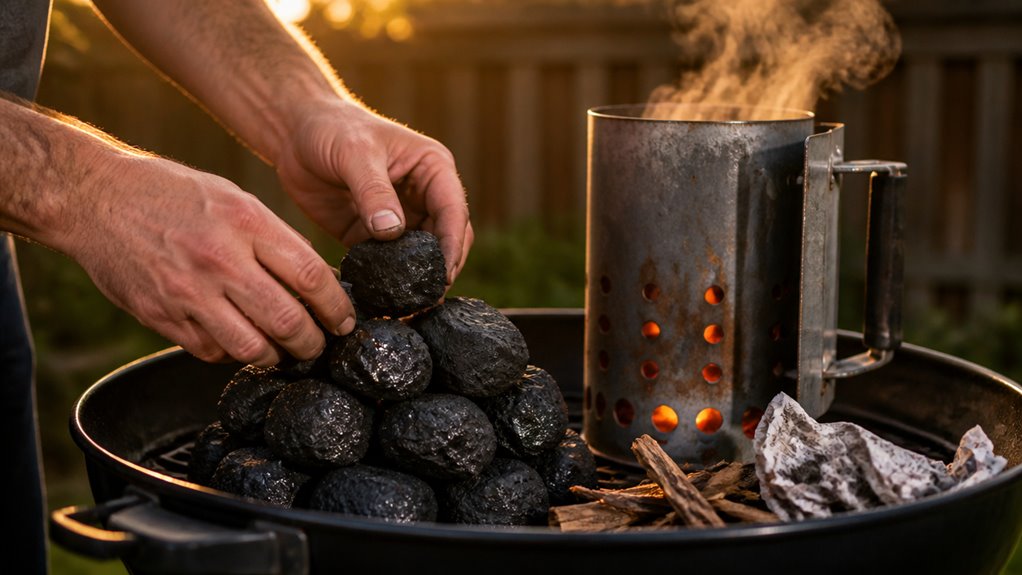
Place crumpled newspaper or a fire starter cube under the chimney’s metal cylinder, then fill the top section with charcoal.
Start by placing newspaper or a fire starter cube beneath the chimney, then load the top with charcoal.
Light the paper or cube, and the design will concentrate heat and airflow, igniting the coals evenly from the bottom up.
Keep the bottom vents open to guarantee proper oxygen flow.
In about 10 minutes, you’ll see the charcoal turn ashy gray and glowing red, signaling it’s ready.
Carefully pour the hot coals into your grill, and you’re set for cooking.
This method avoids chemical tastes and offers a predictable, efficient ignition every time.
For even faster and more reliable starts, choose a chimney with optimized airflow design to pull heat through the briquettes.
Using an Electric Starter to Light Charcoal Easily
Plugging in an electric charcoal starter lets you ignite coals quickly without the mess of lighter fluid.
You simply position the heated metal coil among your charcoal, plug it into a standard outlet, and wait. Within 5 to 10 minutes, the coals glow red and are ready to spread for cooking.
This method cuts down ignition time and eliminates chemical residues that can affect flavor.
Here’s how to use it effectively:
- Arrange charcoal loosely for maximum contact with the starter’s coil.
- Insert the electric starter deep into the pile without touching grill surfaces.
- Plug in and monitor until coals turn ashy gray around the coil.
- Unplug, remove the starter carefully, and spread the coals evenly.
This method offers a clean, reliable way to get your fire going every time. Electric starters also avoid introducing fuels that can alter taste and are a safer, low-maintenance alternative for clean combustion when compared with open-flame or fluid-based methods.
Starting Charcoal With Cooking-Oil–Soaked Paper Towels
First off, grab a paper towel and soak it really well with some cooking oil—canola or vegetable oil works great. This is going to be your secret weapon for lighting the charcoal.
Next, take that oil-soaked towel and tuck it in among your tightly packed charcoal. Make sure it’s positioned just right so there’s good contact. This will help the flames spread steadily.
Oh, and don’t forget—lighting the towel properly is super important if you want those coals to catch fire without using lighter fluid. Happy grilling!
Also, when possible choose a setup with good airflow control to ensure the coals burn evenly.
Preparing Oil-Soaked Towels
Preparing oil-soaked paper towels creates a reliable flame source that helps ignite your charcoal without lighter fluid. To prepare them properly, follow these steps:
- Fold a paper towel into a compact square or rectangle.
- Pour a small amount of cooking oil, such as olive, canola, or vegetable oil, onto the towel. Ensure it’s saturated but not dripping.
- Place the oil-soaked towel on a fireproof surface or in the center of your charcoal pile.
- Light the towel carefully, allowing the oil to burn steadily and transfer heat to surrounding coals.
This method uses common household items to get your fire going safely and effectively. Make sure the charcoal is arranged to maintain good contact with the towel for consistent ignition.
Avoid over-soaking to prevent excessive smoke or flare-ups. This technique is often paired with a small portable grill when cooking in compact outdoor spaces for efficient heat-up and convenience.
Effective Ignition Techniques
Once your oil-soaked paper towels are ready, focus on arranging your charcoal to maximize contact and airflow around them.
Place the towels beneath a small pile or teepee of charcoal to guarantee the flame spreads effectively. Light the towels carefully and keep vents open for steady airflow.
Avoid overcrowding, which restricts oxygen and slows ignition. Monitor the process closely; once coals glow and turn ashy gray, you’re ready to grill.
For longer, more controlled burns, consider using hardwood lump charcoal which provides more consistent heat and less ash than briquettes; this is especially useful when practicing fire-building techniques.
| Step | Action | Tip |
|---|---|---|
| 1 | Arrange coals in teepee shape | Maximizes airflow |
| 2 | Place oil-soaked towel below | Guarantees sustained flame |
| 3 | Light towel with match | Use long match or lighter |
| 4 | Keep vents open | Supports oxygen flow |
This technique offers a reliable, chemical-free start using household items.
Making Paper-And-Oil Fire Starters for Charcoal
Creating paper-and-oil fire starters offers a simple, effective way to ignite charcoal without lighter fluid. You’ll make a reliable flame source that burns longer than plain paper, perfect for starting charcoal in tight piles or teepees.
Follow these steps:
- Twist uncoated paper into a tube or donut shape.
- Soak the paper thoroughly in cooking oil like vegetable or canola.
- Place your fire starter under 1 to 3 briquettes or a small charcoal pile.
- Light the paper’s edge and guarantee airflow for gradual flame buildup.
This method avoids chemical residues and relies on controlled combustion. It works best when coals surround the starter, allowing steady heat transfer.
Keep vents open to boost airflow and speed ignition.
Regular maintenance and safety practices, such as keeping a safe distance and having water or a fire extinguisher on hand, help prevent accidents.
Lighting Charcoal With Propane Torches and Starter Cubes
Ignite your charcoal quickly and efficiently using propane torches or starter cubes, both reliable alternatives to lighter fluid.
With a propane torch, you can direct a focused flame onto the charcoal, igniting it fast and cleanly. Just hold the torch close to the coals, moving it steadily to avoid scorching any surface.
Be cautious; open flames require care and attention.
Starter cubes provide consistent ignition, especially in windy or damp conditions. Place one or two cubes beneath your charcoal pile and light them.
They burn steadily, giving your charcoal enough heat to catch without chemical residues.
Both methods eliminate the risks of lighter fluid’s off-flavors and odors while delivering quick, dependable starts. Use these tools to get your barbecue going efficiently and safely every time. They work especially well with grills made from dense materials like ceramic clay that retain heat for longer.
How to Arrange Charcoal and Vents for Better Airflow?
To get your charcoal burning efficiently, it’s a good idea to arrange the coals in a tight pile or even a teepee shape. This helps concentrate the heat and promotes better airflow. Plus, it just makes sense—more heat means better cooking!
Now, don’t forget about those bottom vents. Keeping them fully open is crucial because it feeds the fire with oxygen, which really speeds up ignition. So, make sure to adjust them accordingly.
When you combine proper vent positioning with a smart charcoal layout, you’re setting yourself up for a strong, steady flame without needing any lighter fluid. Trust me, it makes all the difference! A durable grill made from porcelain-enameled steel can help retain heat and resist rust, improving long-term performance.
Charcoal Pile Arrangement
Arrange your charcoal pile tightly and strategically to maximize airflow and guarantee a consistent, hot burn.
How you stack your coals directly affects how well oxygen circulates, feeding the fire and maintaining heat.
Follow these steps:
- Create a small mound or teepee shape to channel air through the center.
- Keep the pile compact but leave small gaps between coals for ventilation.
- Position the pile over open bottom vents to enhance oxygen flow.
- Avoid scattering coals too thinly, which reduces heat concentration and slows ignition.
This arrangement ensures steady combustion without lighter fluid, helping your charcoal light evenly and stay hot longer.
Proper piling sets the foundation for an efficient, reliable fire-starting process every time.
Vent Positioning Tips
Once your charcoal pile is set, controlling airflow through vent positioning becomes key to maintaining consistent heat and quicker ignition.
Keep the bottom vents fully open to allow fresh air to feed the fire from underneath, which fuels the coals effectively.
Adjust the top vents to regulate oxygen flow, preventing the fire from suffocating or flaring up too much.
Arrange your charcoal in a tight pile or teepee shape to channel airflow efficiently through the vents, guaranteeing steady combustion.
Avoid spreading the coals too thin, as this restricts airflow and slows ignition.
Monitor the vents as the charcoal heats: close them slightly once the coals glow gray to maintain temperature without choking the fire.
Proper vent control guarantees a reliable, chemical-free start every time.
How to Tell When Charcoal Is Ready to Cook?
You’ll usually know your charcoal is ready to cook when it’s covered with a layer of light gray ash and glowing red underneath.
This signals the coals have reached a consistent, high heat ideal for grilling.
To confirm readiness:
- Check for even ash coverage; most coals should be uniformly gray, not black.
- Look for a steady, radiant red glow beneath the ash, indicating full ignition.
- Make sure the charcoal bed is hot to the touch from a safe distance.
- Notice minimal smoke; once flames die down and smoke clears, the coals are stable.
Avoid cooking too early; unready charcoal can cause uneven heat and flare-ups.
Waiting until your coals meet these signs guarantees peak cooking temperature and flavor without lighter fluid residues.
Lighting charcoal in a chimney starter is a reliable way to reach that ready state without using lighter fluid.
Troubleshooting Common Charcoal Ignition Problems
Getting your charcoal to the ideal cooking stage can sometimes hit snags, even if you’ve followed all the steps.
Even with careful preparation, getting charcoal perfectly ready can occasionally present unexpected challenges.
If your coals won’t light, first check that your bottom vents are fully open to guarantee proper airflow.
Damp or old charcoal can resist ignition. Always use fresh, dry briquettes or lump charcoal.
When using a chimney starter, make sure your newspaper or fire starter cube is burning steadily before lighting the charcoal.
If coals smolder without flames, rearrange them into a tighter pile or teepee shape to concentrate heat.
Avoid overcrowding your fire starter, as restricted airflow slows ignition.
Finally, protect your setup from wind to maintain steady combustion.
Troubleshooting these factors will get your charcoal burning hot and ready faster.
Frequently Asked Questions
Can I Reuse Partially Burned Charcoal for My Next Grilling Session?
Yes, you can reuse partially burned charcoal for your next grilling session, but it’s less efficient than fresh charcoal.
Let the coals cool completely, remove any ash, and store them in a dry place.
When reigniting, arrange the reused charcoal with some fresh pieces to guarantee consistent heat.
Keep in mind, reused charcoal burns faster and produces less heat, so plan your cooking time accordingly for the best results.
How Do Weather Conditions Affect Charcoal Ignition and Cooking?
Weather affects charcoal ignition markedly.
Wind can speed up burning but may scatter ashes or make lighting harder.
Shield your grill if it’s gusty.
Moisture from rain or humidity slows ignition and can dampen charcoal, making it tougher to start.
Cold temperatures extend heating time, so plan for longer preheating.
Adjust vents to control airflow and consider using a chimney starter or fire starter cubes to maintain consistent ignition despite weather challenges.
Is Lump Charcoal Better Than Briquettes for Flavor and Heat Control?
Lump charcoal offers better flavor and heat control than briquettes.
You’ll get a cleaner, more natural smoky taste because lump’s made from pure wood, while briquettes include additives.
Lump charcoal heats up faster and burns hotter, giving you precise temperature control.
However, it burns unevenly and faster, so you need to manage airflow carefully.
Briquettes provide more consistent heat and longer burn times but sacrifice some flavor complexity.
Choose based on your cooking style.
What Safety Precautions Should I Take When Handling Hot Charcoal?
When handling hot charcoal, always use heat-resistant gloves and long-handled tools to avoid burns.
Keep a safe distance and avoid loose clothing that might catch fire.
Make certain your grill is on a stable, non-flammable surface and never leave it unattended.
Have a fire extinguisher or water source nearby for emergencies.
After cooking, fully extinguish coals by closing vents to cut oxygen or dousing with water.
Then wait until they’re completely cool before disposal.
How Long Can I Store Charcoal Before It Loses Effectiveness?
Think of charcoal like a treasure chest sealed tight.
If you keep it dry and covered, it stays valuable.
You can store charcoal for up to two years without losing much effectiveness, as long as it’s kept in a cool, dry place away from moisture.
Exposure to dampness weakens its ability to light quickly and burn hot.
Always seal your bag or container well, so your charcoal’s ready when you are.
The Bottom Line on Lighting Charcoal Without Lighter Fluid
Starting charcoal without lighter fluid is easier than you think.
Did you know that using a chimney starter can reduce ignition time by up to 50% compared to traditional methods?
By choosing safer, quicker options like chimney starters, electric starters, or even cooking-oil-soaked paper towels, you’ll get your grill going cleanly and efficiently.
Master these techniques, manage airflow well, and you’ll be cooking perfectly charred meals every time, hassle-free.