
Moka Pot vs French Press: Which Brewer Fits Your Style?
You’ll find the French Press uses coarse grounds and immersion brewing for a bold, full-bodied cup rich in oils and complexity.
The Moka Pot applies pressure with fine grounds to yield a concentrated, espresso-like intensity. Each requires precise grind consistency and brew time control: French Press steeps 4–5 minutes, Moka Pot brews in under 10.
Your choice hinges on preference for nuanced flavors versus sharp strength. Explore how technique, roast, and cleanup affect your ideal brew.

- The original moka coffee pot: Moka Express is the original stovetop espresso maker, it provides the…
- Made in Italy: it is Made in Italy and its quality is enhanced by the patented safety valve which…
- How to prepare the coffee: fill the boiler up to the safety valve, fill it up with ground coffee…
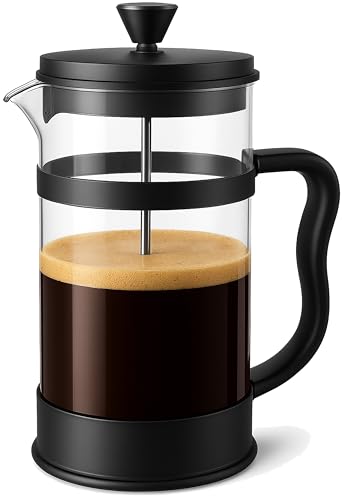
- Superior Filtration: A solid filtration system in a coffee maker ensures a refined taste and robust…
- Durable Borosilicate Glass: The French press glass is expertly made to withstand rapid temperature…
- Easy to Use: The French press comes with a coffee spoon and is convenient for quick coffee making…
Key Takeaways
- French Press uses coarse grounds and immersion brewing for a bold, full-bodied coffee with complex flavors and oily mouthfeel.
- Moka Pot employs fine grounds and steam pressure to produce an intense, espresso-like brew with sharp bite and concentrated body.
- French Press is simpler to use and forgiving but bulkier, while Moka Pot requires precise heat control and is more portable.
- French Press favors light to medium roasts to highlight origin nuances; Moka Pot works best with medium to dark roasts.
- Cleanup for French Press involves thorough filter cleaning; Moka Pot is faster to rinse and disassemble without needing paper filters.
Quick Comparison Table for Two Classic Brewers
| Feature | French Press | Moka Pot |
|---|---|---|
| Brewing Method | Immersion brewing with full water contact | Pressure-based extraction using steam |
| Grind Size | Coarse grind similar to sea salt | Fine grind, slightly coarser than espresso |
| Brew Time | 4–5 minutes controlled by steep time | 5–10 minutes depending on heat |
| Flavor Profile | Bold, full-bodied, layered flavors | Intense, concentrated, sharp bite |
| Coffee Oils | High oil retention via metal mesh filter | Moderate oil presence with dense body |
| Texture & Mouthfeel | Rich and heavy with slight sediment | Thick and syrupy without sediment |
| Heat Control Required | Minimal, forgiving process | High, requires careful stovetop control |
| Cleanup Process | More involved, filter disassembly needed | Quick rinse, fewer components |
| Portability | Bulkier, often glass-based | Compact and durable, travel-friendly |
| Roast Compatibility | Light to medium roasts shine best | Medium to dark roasts perform better |
Brewing Mechanics: French Press vs Moka Pot
Although both the French Press and Moka Pot brew coffee by extracting flavors from grounds, they use fundamentally different mechanics that impact grind size, extraction time, and pressure.
French Press and Moka Pot use distinct mechanics affecting grind size, extraction time, and pressure.
You’ll use coarse grounds for the French Press, where immersion brewing steepens coffee in hot water for 4-5 minutes. This prolonged contact allows full extraction without pressure.
Conversely, the Moka Pot forces heated water through fine grounds under steam pressure within 5-10 minutes, creating espresso-like concentration. This pressure-driven extraction demands a finer grind to optimize flow and flavor release.
You’ll notice the French Press fully submerges grounds, maximizing contact time, while the Moka Pot’s pressurized system rapidly draws flavors. This influences grind consistency and brew duration.
Understanding these mechanics helps you select the appropriate grind and timing for each method. Achieving the ideal water temperature of around 200°F (93°C) is essential for optimal flavor extraction in both brewing methods.
Flavor Profiles: Bold French Press vs Intense Moka Pot
When you brew coffee with a French Press, you’re in for a treat! It delivers a bold, full-bodied cup that’s packed with complex flavor notes.
The retained coffee oils really make those nuanced aromas pop. It’s a delightful experience for your taste buds!
On the flip side, the Moka Pot is a game changer too. It gives you an intense, espresso-like brew that’s got a concentrated body and a sharp bite.
This bold flavor really cuts through milk, making it perfect for lattes or cappuccinos.
To achieve the best results, using an espresso scale with precision can help measure your coffee and water accurately for consistency.
French Press Flavor Notes
Typically, the French Press delivers a bold, full-bodied coffee that highlights complex flavor notes and preserves the natural oils of the beans.
When you use coarse grounds steeped for 4-5 minutes, the immersion method extracts a wide range of soluble compounds, including aromatic oils that paper filters typically absorb.
This retention enhances mouthfeel and produces a rich texture with pronounced fruity, nutty, and earthy undertones.
You’ll notice subtle nuances reflecting the coffee’s terroir, as the extended contact time avoids over-extraction bitterness.
Precise grind size and steep duration allow you to control extraction balance, emphasizing brightness or depth.
The metal mesh filter permits fine sediments into the cup, adding body and complexity.
Consequently, the French Press yields a layered, nuanced profile that rewards careful brewing technique and bean selection.
Unlike some electric models, the French Press’s manual brewing encourages hands-on control over the extraction process for personalized flavor.
Moka Pot Intensity
Intensity defines the Moka Pot’s signature flavor, delivering a concentrated coffee experience that contrasts sharply with the French Press’s bold but more nuanced profile.
You’ll notice the Moka Pot’s pressure-driven extraction forces hot water through finely ground coffee, producing a dense, espresso-like brew with heightened solubles concentration.
This method creates a heavier body and pronounced bitterness, often described as having a “bite” that cuts through milk effectively.
Unlike the French Press, which extracts oils and subtle flavor compounds via immersion, the Moka Pot emphasizes uniform boldness and intensity over complexity.
You need a fine grind and careful heat management to avoid over-extraction or bitterness, ensuring the final cup retains intensity without harshness.
This makes the Moka Pot ideal if you crave a strong, focused coffee punch.
Similarly, just as selecting the right blend consistency is crucial in coffee brewing, achieving the perfect texture in pureed meat requires careful attention to blending techniques and equipment.
Ease Of Use: French Press Vs Moka Pot
When comparing ease of use between the French Press and Moka Pot, you’ll find that the French Press offers a more straightforward brewing experience.
You simply add coarse grounds, pour hot water, steep for 4-5 minutes, then press the plunger.
No active monitoring required.
In contrast, the Moka Pot demands more attention.
You fill the bottom chamber with water, add fine grounds to the filter basket, assemble it tightly, and heat it on the stove.
You must monitor heat carefully to avoid overheating or pressure buildup, which can affect extraction or safety.
The Moka Pot’s pressure-based system requires practice to master precise timing and temperature control.
Meanwhile, the French Press’s immersion method is more forgiving, allowing you to focus on steeping time without constant adjustments.
For those interested in a more hands-off brewing experience, cold brew coffee makers offer an alternative with minimal monitoring required over an extended steeping period.
Cleaning Up: How Easy Are French Press And Moka Pot?
After mastering the brewing process, you’ll find that cleanup differs markedly between the French Press and the Moka Pot.
With the French Press, you must discard wet coffee grounds and thoroughly clean the plunger’s fine mesh filter to prevent clogging and residual bitterness.
This involves disassembling the filter components and washing them carefully, which can be time-consuming.
Conversely, the Moka Pot features reusable metal filters and a simple three-part design: water chamber, coffee basket, and upper collector, which you rinse quickly under running water.
Soap is optional but recommended periodically to remove oil buildup.
The Moka Pot’s fewer components and lack of paper filters streamline maintenance, making it easier and faster to clean compared to the French Press’s more intricate cleanup requirements.
Just as maintenance requirements differ between specialized tools like Shun and Henckels knives, the cleaning routines for coffee makers vary based on their design and materials.
Best Coffee Grind Size For French Press And Moka Pot
Because the extraction mechanisms differ markedly between the French Press and Moka Pot, selecting the appropriate coffee grind size is essential to optimize flavor and prevent brewing issues.
For the French Press, use a coarse grind resembling sea salt to guarantee proper water flow and prevent over-extraction during the 4-5 minute immersion.
Too fine a grind clogs the metal filter, resulting in sediment and bitterness. Conversely, the Moka Pot demands a fine grind, slightly coarser than espresso, facilitating effective pressure-driven extraction within 5-10 minutes.
Excessively coarse grounds reduce extraction efficiency, yielding weak coffee. Meanwhile, overly fine grounds risk pressure buildup and bitter taste.
Choosing the right grinder, such as a burr grinder, can help achieve the consistent grind sizes necessary for both brewing methods.
Best Coffee Roasts And Beans For Each Brewer
Selecting the ideal coffee roast and bean type plays a crucial role in optimizing your brewing experience with a French Press or Moka Pot. Each brewer extracts flavor differently, demanding specific roast profiles and bean characteristics.
Choosing the right roast and bean type is essential for perfect French Press and Moka Pot coffee.
For French Press, choose light to medium roasts with whole beans that preserve origin flavors and oils. Their coarse grind and immersion method reveal complex, nuanced notes without bitterness.
Moka Pot suits medium to dark roasts, as their higher solubility and oil content tolerate pressure brewing’s shorter contact time. This delivers a concentrated, espresso-like intensity.
Avoid light roasts in Moka Pots; they under-extract, yielding sour or weak coffee. Conversely, dark roasts in French Press can overpower subtle terroir nuances, risking harshness.
Freshly roasted beans in vacuum-sealed packaging help preserve the rich aroma and flavor essential for an optimal brew in both methods.
Portability And Price: Which Coffee Maker Travels Better?
When you weigh portability and price, the Moka Pot clearly stands out for travelers seeking a compact, durable coffee maker that fits easily into luggage without sacrificing brew quality.
Its all-metal construction resists damage during transit, and its components disassemble for efficient packing.
The Moka Pot requires no disposable filters, eliminating ongoing costs and waste.
In contrast, the French Press, while affordable at the initial purchase price, tends to be bulkier and more fragile due to its glass carafe, making it less travel-friendly.
Additionally, the French Press often involves purchasing paper filters, adding to recurring expenses.
If you prioritize a robust, space-efficient, and cost-effective coffee maker for travel, the Moka Pot is technically superior in both portability and long-term affordability.
Its compact design aligns well with space-saving solutions that optimize small living or travel spaces.
Choosing The Right Brewer For Your Coffee Style
When picking a brewer for your coffee style, it’s super important to think about how each one extracts flavor. For instance, the Moka Pot uses pressure, which gives you that concentrated, espresso-like shot. On the other hand, the French Press relies on immersion, resulting in a full-bodied and nuanced cup.
Now, let’s talk about how these brewing methods affect things like grind size, flavor complexity, and the overall strength of your coffee. It’s a pretty big deal!
And we can’t forget about versatility. The French Press is great because it can handle different roasts and even cold brew. Meanwhile, the Moka Pot is all about delivering bold and intense coffee. So, what’s your coffee style?
For the best results, it’s essential to use a grinder that offers consistent grind size to ensure optimal flavor extraction for either brewing method.
Flavor Profiles Compared
Although both the Moka Pot and French Press produce strong coffee, their distinct extraction methods yield markedly different flavor profiles that suit varying preferences and brewing goals.
When choosing your brewer, consider these technical distinctions:
- The French Press uses immersion brewing, preserving coffee oils and showcasing complex, full-bodied flavors with rich aromatic nuances that highlight terroir and subtle regional differences.
- The Moka Pot employs pressure-driven extraction, producing a concentrated, espresso-like brew with an intense, heavy body and a sharp bite that cuts through milk effectively.
- Grind size and contact time directly influence flavor clarity: coarse grounds in the French Press yield a rounded, bold cup, while fine grounds in the Moka Pot deliver uniform, robust intensity with minimal subtlety.
Choose based on whether you prefer nuanced complexity or concentrated strength.
Brewing Process Differences
Mastering the distinct brewing processes of the Moka Pot and French Press helps you select the ideal method tailored to your preferred coffee style.
The Moka Pot uses pressure brewing, forcing hot water through finely ground coffee in 5-10 minutes, producing an intense, espresso-like concentrate.
It demands precise stovetop temperature control to avoid overheating or under-extraction.
In contrast, the French Press employs immersion brewing, steeping coarsely ground coffee in hot water for 4-5 minutes, allowing full extraction of oils and nuanced flavors.
Its simplicity requires no active monitoring, offering a robust, full-bodied cup.
You’ll need a fine grind for the Moka Pot and a coarse grind for the French Press, as grind size directly influences extraction quality and flavor intensity in each method.
Versatility and Flexibility
When selecting a brewer, consider how each method’s versatility aligns with your preferred coffee style and routine.
The French Press offers extensive flexibility, accommodating any roast level and grind size, and even allows cold brew preparation. Conversely, the Moka Pot specializes in producing espresso-like coffee but handles light roasts less effectively.
Evaluate these factors:
- Brew Styles: French Press supports diverse profiles from rich, full-bodied to cold brew. Moka Pot excels in concentrated, bold espresso-style coffee.
- Process Control: French Press grants you full control over steep time and grind size. Moka Pot requires precise heat management and grind consistency.
- Portability and Maintenance: Moka Pot is compact with minimal cleanup. French Press demands more maintenance and lacks travel convenience.
Choose based on your desired coffee complexity, preparation involvement, and lifestyle needs.
Frequently Asked Questions
Can I Use a Moka Pot on an Induction Stove?
You can use a moka pot on an induction stove only if the moka pot has a magnetic base compatible with induction technology.
Most traditional aluminum moka pots won’t work because induction stoves require ferromagnetic materials.
To guarantee compatibility, look for stainless steel or specially designed moka pots labeled for induction use.
Without this feature, your induction stove won’t heat the pot effectively, preventing proper brewing and risking damage to the equipment.
How Long Does Coffee Stay Fresh in a French Press?
You should drink coffee from a French press within 30 minutes for peak freshness.
After this time, oxidation and heat degrade flavor compounds rapidly, causing bitterness and stale notes.
The coffee’s oils begin to break down, altering aroma and mouthfeel.
To preserve quality, avoid leaving brewed coffee on the press’s metal mesh filter, as prolonged contact accelerates over-extraction and flavor loss.
Serving immediately guarantees the richest, most balanced cup.
Are There Health Benefits Unique to French Press Coffee?
Yes, French press coffee offers unique health benefits because it retains more coffee oils and diterpenes, like cafestol and kahweol, due to its metal mesh filter.
These compounds can increase cholesterol levels but also have anti-inflammatory and anticancer properties.
You’ll get higher antioxidant levels compared to drip coffee.
However, if you monitor your cholesterol, you might want to moderate your intake since these oils are less filtered out.
Can I Make Iced Coffee Directly With a Moka Pot?
You can’t literally brew iced coffee directly with a Moka Pot because it relies on steam pressure to extract hot, concentrated coffee.
However, you can make a strong hot brew with it and then quickly chill it by pouring over ice.
This method preserves the intense flavors but requires you to cool the coffee separately, as the Moka Pot itself doesn’t support cold brewing or brewing directly onto ice.
What Is the Typical Lifespan of a Moka Pot Compared to a French Press?
You can expect a moka pot to last around 5 to 10 years with proper care, especially if it’s made of durable aluminum or stainless steel.
A French press typically endures 3 to 7 years, depending on the build quality and materials.
Glass models are more fragile than stainless steel ones.
Regular cleaning and careful handling extend both lifespans.
However, moka pots generally outlast French presses due to their robust construction.
Choose Between Moka Pot vs French Press
Whether you’re channeling the bold clarity of a French press or the concentrated intensity of a moka pot, each brewer demands precise grind size, roast selection, and technique to unleash its full potential.
Like choosing between a classic novel and a sharp sonnet, your choice shapes the narrative of your coffee ritual.
Consider your flavor preference, ease of use, and portability to master the craft and savor every expertly brewed cup.
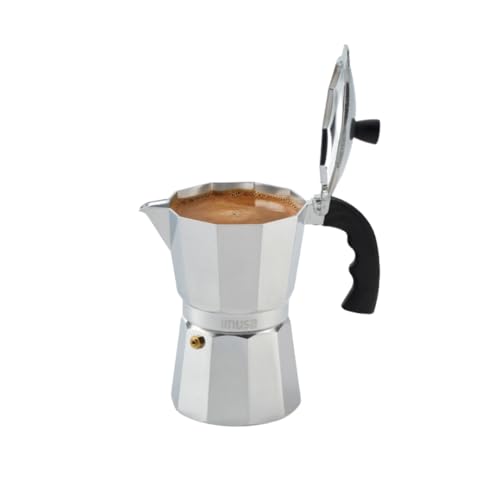
- MEDIUM CAPACITY: This stovetop espresso maker brews six cups of rich, full-bodied coffee using…
- DURABLE AND STYLISH: This aluminum espresso maker features durable construction with cool-touch…
- PERSONALIZED BREWING EXPERIENCE: This Italian coffee maker includes flip-up top lid and convenient…
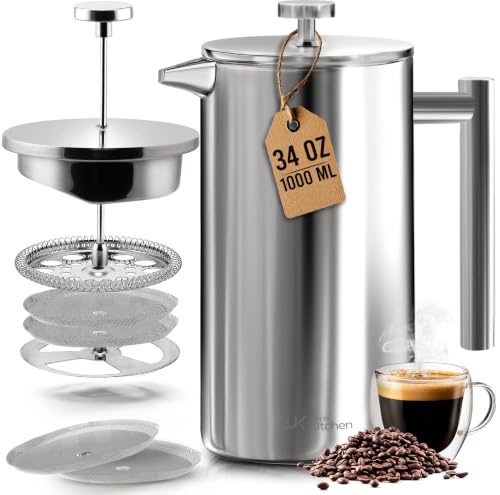
- Double-Walled French Press: Make perfectly brewed coffee at home like a barista. The double-walled…
- Sleek Stainless Steel : The coffee maker is created using 304 grade stainless steel, with a smooth…
- 4-Layered Filtration System : The high quality filtration system of our steel French press traps the…
Last update on 2026-08-31 / Affiliate links / Images from Amazon Product Advertising API