Does Cornmeal Expire: Shelf Life Explained with Storage Tips
Yes, cornmeal doesn’t spoil like fresh produce, but it will lose quality and can go rancid. If it’s degerminated or unopened in a cool pantry, expect about 12 months of best quality. Whole-grain goes stale faster, lasting 3 to 6 months once opened.
Rancid, bitter, or musty smells, visible mold, clumps from moisture, or insects mean toss. Store it airtight, in a cool place or frozen, to extend its life. Keep sensory checks as your guide and continue for storage tips and reuse guidance.
Key Takeaways
- Cornmeal doesn’t “expire” like perishable food but its quality declines, especially whole‑grain types that go rancid faster.
- Smell is the primary test: sharp, bitter, or oily rancid odors mean you should discard the cornmeal.
- Degerminated (regular) cornmeal lasts longest in a cool pantry (~12 months) and even longer if frozen.
- Store opened cornmeal in airtight containers; refrigerate or freeze whole‑grain varieties to slow rancidity.
- Discard immediately for visible mold, insects, clumping from moisture, or bitter taste after a small test cook.
Can You Safely Use Old Cornmeal?
You can often use older cornmeal safely, but whether you should depends on type, storage, and sensory checks. You’ll assess safety by checking smell, appearance, and storage history: rancid, stale, or musty odors, visible mold, or clumping from moisture indicate discard.
Consider type; degerminated varieties resist rancidity longer than whole-grain. Also, consider whether it was stored airtight, cool, and dry. Unopened products retain quality far longer.
If the meal smells neutral, looks normal, and was kept properly, you can use it for cooking, though flavor may be reduced.
For borderline cases, perform a small test cook to evaluate taste. When in doubt, don’t risk contamination; discard compromised cornmeal to avoid foodborne illness. Using airtight storage and oxygen absorbers can significantly extend shelf life by reducing oxygen exposure, especially for whole-grain varieties oxygen absorbers.
How Long Cornmeal Lasts by Type and Storage?
When it comes to how long cornmeal lasts, you’ll want to consider both the type of cornmeal and how you store it. Different kinds behave differently—so it’s really important to keep that in mind.
For regular or degerminated cornmeal, if you store it in a cool pantry, you can expect it to stay fresh for about 12 months or more. But whole-grain cornmeal and opened white cornmeal don’t last as long, unfortunately. If you pop whole-grain cornmeal in the fridge and seal it tightly, it can last anywhere from 3 to 6 months. Opened white cornmeal, on the other hand, can hang out in the fridge for about 6 to 12 months.
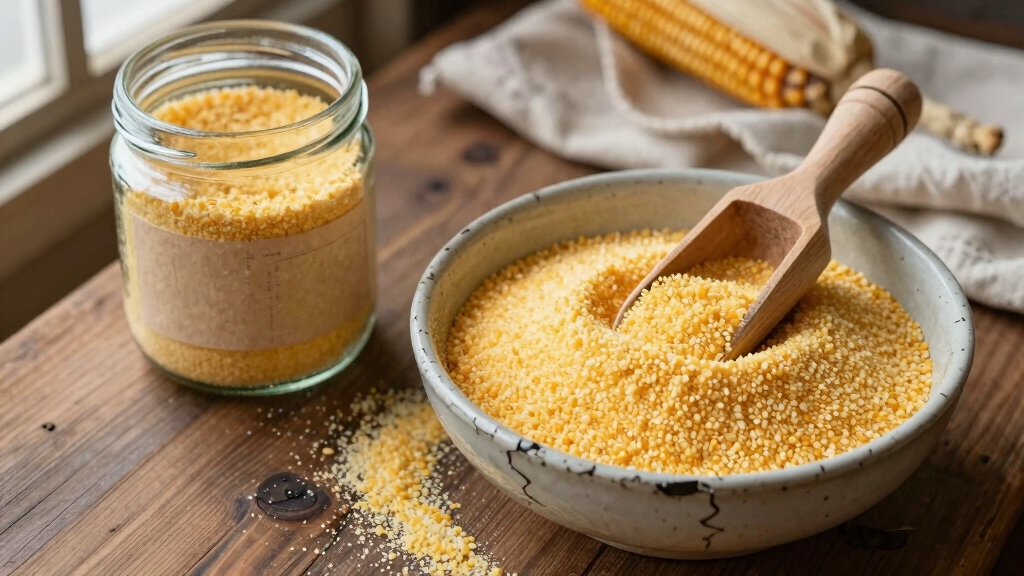
Now, if you really want to maximize shelf life, freezing is your best bet! Just make sure to use a sealed, freezer-safe container. When you freeze white cornmeal, it can stay fresh for up to around 2 years. Whole-grain cornmeal will last about 6 to 12 months in the freezer, while degerminated cornmeal can retain its quality for several years. So, if you have any doubts, freezing is definitely the way to go! Consider using airtight wide-mouth jars for easy filling and maximum preservation when storing cornmeal long-term.
Storage By Cornmeal Type
While different cornmeal types share basic storage needs, their shelf lives vary enough that you’ll want to store each type accordingly.
Degerminated cornmeal is most stable; unopened it keeps best for about a year and, if frozen, maintains quality for several years.
Whole-grain cornmeal contains oil-rich germ, so unopened it’s best used within three months and opened within 3–6 months; it’s the most perishable.
White cornmeal unopened lasts 1–2 years and, once opened, about 6–12 months under good conditions.
Regular yellow cornmeal typically stays at best quality for about 12 months; bulk #10 cans can remain usable far longer when sealed.
In all cases, airtight containers, cool dry storage, and inspection for rancid odor or mold are the practical controls to assess safety and quality.
Freezing cornmeal can extend its shelf life and help preserve quality by slowing spoilage processes and preventing rancidity, especially for varieties with higher oil content like whole-grain cornmeal.
Pantry, Fridge, Freezer
When stored in a cool, dry pantry, common cornmeal types show distinct shelf profiles: degerminated and regular yellow cornmeal keep best-quality about 12 months. Degerminated often lasts a bit longer. Unopened whole-grain cornmeal is best within ~3 months and opened within 3–6 months.
White cornmeal stays good 1–2 years unopened and 6–12 months after opening, depending on conditions. In practice, you’ll extend life by choosing storage based on type. Keep degerminated and regular yellow in the pantry for routine use.
Move opened whole-grain to the fridge to maintain 3–6 months. Refrigerate white if humidity is high. Freezing in airtight, moisture-proof packaging halts rancidity. Whole-grain lasts 6–12 months, white up to 2 years, and degerminated effectively several years.
Always seal tightly and check for off-odors or mold. Labels that are waterproof and oil-resistant help keep storage dates and contents legible in freezer and fridge conditions.
Cornmeal Storage Best Practices (Pantry, Fridge, Freezer)
Storing cornmeal properly can make a big difference in its freshness and flavor! If you have an unopened bag, just pop it in a cool, dark pantry where the temperature is between 55 and 70°F.
Once you open it, though, it’s best to transfer the cornmeal to airtight containers. This helps keep out moisture and prevents it from going rancid.
Now, if you don’t use whole-grain cornmeal very often, consider putting it in the fridge. It’ll stay fresh for about 3 to 6 months that way.
If you really want to extend its shelf life, you can freeze it in a sealed, freezer-safe bag; it should last around 6 to 12 months in the freezer.
For degerminated or white cornmeal, freezing is a great option, too! It can maintain its quality for years.
Just remember to check for any off odors or mold before you use it. Better safe than sorry, right?
Consider transferring opened cornmeal to airtight containers to prevent moisture and pests and maintain freshness.
Pantry Storage Tips
A few simple steps will keep your cornmeal at peak quality: keep it in a cool, dark, dry spot (ideally 55–70°F).
Transfer opened bags into airtight containers and avoid temperature swings that invite condensation or mold.
Store unopened degerminated and regular cornmeal in the pantry where temperature and humidity stay stable; degerminated formulas tolerate longer shelf life.
After opening, move whole-grain varieties to opaque, airtight containers to limit oxygen and light exposure.
Use within 3–6 months for best quality. Label containers with opening dates.
Keep packages off concrete floors and away from heat sources to prevent localized warming.
Inspect before use: off-odors, discoloration, or clumping indicate rancidity or moisture intrusion. Discard if detected.
Regular rotation guarantees peak freshness.
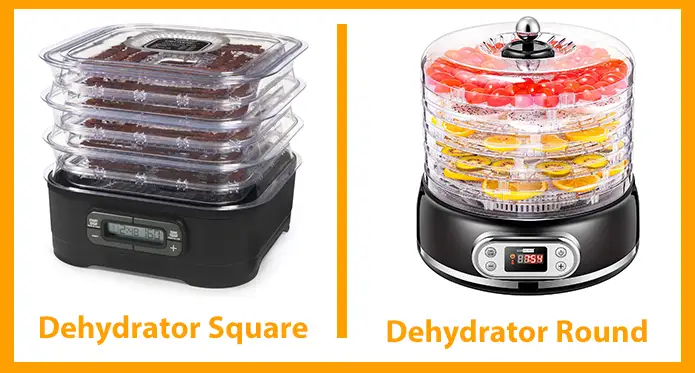
Dehydrating fruit at the right temperature can help preserve nutrients, so consider drying surplus cornmeal-containing mixes at low heat to extend usability and reduce waste temperature control.
Freezer & Fridge Care
For longer-term stability, keep cornmeal chilled: refrigerate opened whole-grain cornmeal for 3–6 months and white varieties for 6–12 months.
Freeze degerminated or regular cornmeal to extend quality for years.
You’ll slow rancidity and insect activity by maintaining consistent cold temperatures and airtight seals.
- Use airtight, freezer-safe containers or heavy-duty bags to block moisture and odors.
- Label containers with type and date; degerminated lasts longest in freezer (multi-year quality).
- Thaw only what you’ll use quickly; avoid repeated temperature cycles that cause condensation and microbial risk.
- Inspect before use: discard if you detect off-odors, discoloration, or clumping from moisture.
These practices preserve flavor and safety with minimal effort. Mason jars are convenient for storage but inspect for pre-existing cracks before use to reduce the risk of breakage.
How to Spot Spoiled Cornmeal (Smell, Look, Texture)?
Usually you can tell cornmeal has gone bad by using your senses: smell it for a sharp, bitter, or oily rancidity, especially with whole-grain or degerminated varieties.
Inspect it for any darkening, clumping, or visible mold. Feel the texture—fresh cornmeal is loose and powdery, while spoiled product may be damp, sticky, or have hard lumps from moisture.
| Sign | What to check | Action |
|---|---|---|
| Smell | Sharp, bitter, oily | Discard if rancid |
| Look | Darkening, specks, mold | Discard if mold present |
| Texture | Clumps, damp, hard lumps | Dry/avoid; discard if persistent |
Use low-threshold criteria: a rancid odor or visible mold indicates spoilage. Minor color change alone suggests quality loss. Combine multiple indicators before deciding.
Using Older Cornmeal Safely (Recipe Tips & Precautions)
After checking smell, appearance, and texture, decide whether older cornmeal is usable and how to adjust recipes. If it passes sensory checks, you can still use it but must alter technique and storage to mitigate quality loss.
Use the list below:
- Rehydrate: add 5–10% extra liquid in batters to compensate for drier, coarser granules.
- Toast/lightly grind: briefly toast or pulse in a grinder to refresh flavor and improve texture.
- Boost fat and acid: increase fat by 5–10% and add a small acid (lemon or buttermilk) to brighten stale notes.
- Use in cooked preparations: prefer polentas, porridges, or breading where prolonged heat and moisture mask minor quality decline.
Keep opened older cornmeal refrigerated or frozen in airtight packaging to prevent rancidity. Freezing in airtight packaging at 0°F or below helps preserve quality and prevent off-flavors.
When to Toss Cornmeal: Quick Checklist?
When you’re deciding whether to toss cornmeal, rely on clear, observable criteria rather than the printed date alone. Smell it for rancidity, inspect for mold or insects, check for clumping from moisture, and note any off-color or bitter taste on a small cooked test. Use this quick checklist to act decisively.
| Check | Action |
|---|---|
| Rancid smell | Discard immediately |
| Visible mold/insects | Discard and clean container |
| Clumping/wet spots | Discard; indicates moisture |
| Off-color or odor | Discard; quality compromised |
| Bitter taste on test | Discard; rancidity likely |
If unopened and stored cool and dry, follow shelf-life norms. Opened whole-grain requires stricter scrutiny. When in doubt, throw it out. Sensory evidence predicts safety and quality better than dates. A properly stored lean cut like the top sirloin can help you compare expectations for freshness when assessing meats versus pantry grains.
Frequently Asked Questions
Can Cornmeal Cause Foodborne Illness if It’s Old but Not Moldy?
Yes, if cornmeal’s old but shows no mold, it can still cause issues. You won’t usually get bacterial foodborne illness from dry, rancid cornmeal.
However, oxidized fats produce off-flavors and digestive upset. Stored improperly, moisture or pests can contaminate it with bacteria, mycotoxins, or insects.
You should check smell, appearance, and texture. Discard if rancid, clumped, discolored, or if pests were present to avoid risk.
Can I Grind Old Cornmeal Into Flour for Other Uses?
I did once sift stale cornmeal into a jar and felt like I’d reclaimed a lost loaf.
You can grind old cornmeal into flour, but check quality first: if it’s rancid or moldy, toss it.
Degerminated types grind and store better; whole-grain will go rancid faster.
Use airtight, cool storage and freeze for longest life.
Expect reduced baking performance and adjust hydration when substituting in recipes.
Does Heat-Treated Cornmeal Last Longer Than Raw Varieties?
Yes, heat-treated cornmeal lasts longer than raw varieties. You’ll get more shelf stability because removing or inactivating the germ reduces oil-driven rancidity and microbial risk.
Store degerminated cornmeal in an airtight container in a cool, dry place or freeze for multi-year life. Whole-grain cornmeal needs colder, airtight storage and will go rancid in months rather than years if left at room temperature.
Are There Signs of Insect Infestation Specific to Cornmeal?
Yes, you’ll spot insects by tiny live bugs, webbing, cast skins, or powdery frass. You’ll also find small clumped grains, pinpoint holes in packaging, and a musty or oily off-odor.
Inspect with a clean light and sieve. Cold-freeze suspect bags for 72 hours to kill pests. Discard heavily infested cornmeal and thoroughly clean storage containers and shelves before refilling to prevent reinfestation.
Can I Compost Rancid Cornmeal Instead of Throwing It Away?
Yes, you can compost rancid cornmeal, but do it carefully. Mix it into the center of your hot compost pile or bury it deep in soil to avoid attracting pests and rodents.
Balance with carbon-rich materials like leaves or paper to prevent clumping and odor. Avoid adding moldy cornmeal in large amounts; if heavily moldy or damp, discard it following food waste guidelines.
Maintain hot, well-aerated conditions for safe decomposition.
Cornmeal Storage Made Simple: Freshness, Safety, and Shelf Life
Think of your cornmeal like a sealed hourglass: stored cool and airtight, its grains stay steady. Exposed to heat, moisture, or time, they darken and clump.
Trust smell, sight, and texture. Off odors, bugs, or rancid oil mean it’s done. For best results, label dates, keep it dry, and freeze for long-term use.
When doubts emerge, discard. Safe food handling beats salvaging uncertain pantry staples.