How to Smoke Brisket on Charcoal Grill? Step-By-Step Guide
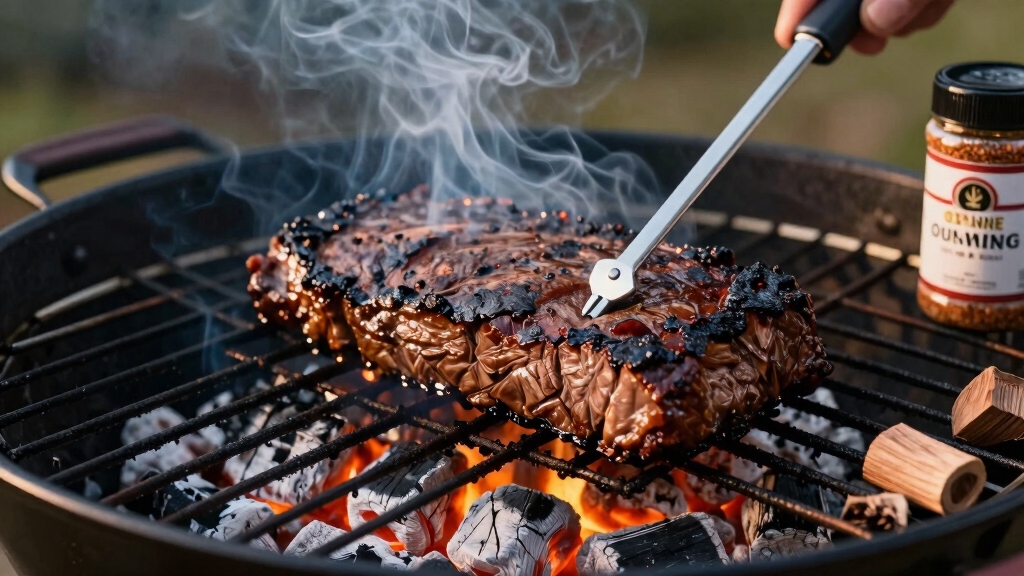
Choose a well-marbled whole packer brisket with a ¼-inch fat cap, trim evenly, and season with salt and pepper rub. Set your charcoal grill for indirect heat at 225–250°F using a two-zone fire, adding hardwood chunks for steady smoke.
Monitor temps, wrapping brisket at the stall (around 165°F) to retain moisture. Then cook until 195–205°F. Rest before slicing thinly against the grain. Follow these steps and you’ll soon master the art of perfectly smoked brisket.
Key Takeaways
- Select a whole packer brisket with a ¼-inch fat cap for juiciness and trim excess fat for even cooking.
- Season brisket evenly with a salt, pepper, garlic, and onion powder rub; let rest at room temperature for rub absorption.
- Set up a two-zone charcoal fire maintaining 225–250°F, with water pan for moisture and indirect heat cooking.
- Use hardwood chunks like hickory or oak for smoke; add fresh wood every hour and wrap brisket at 165°F stall.
- Cook until internal temperature reaches 195–205°F, then rest wrapped for 20–30 minutes before slicing against the grain.
How To Choose The Right Brisket For Smoking?
When you’re selecting a brisket for smoking, you’ll want to prioritize cuts that offer both quality and size to guarantee a flavorful, tender result.
Aim for a whole packer brisket weighing between 12 to 14 pounds; this assures you have both the flat and point muscles, each bringing unique textures.
Pay close attention to the fat cap—it should be at least 1/4-inch thick to help baste the meat during the long cook.
If you prefer leaner meat, opt for just the flat cut, but remember a whole brisket delivers more juiciness.
Size matters, too: plan for roughly 1.5 hours of cooking per pound, so picking the right weight sets your timing.
Choosing wisely here lays the foundation for barbecue perfection.
For optimal preparation, consider using tools with high motor power to efficiently grind any leftover meat for subsequent dishes.
How To Trim Fat And Season Your Brisket?
Alright, let’s dive into trimming and seasoning that brisket. First things first, you want to trim the fat cap down to about a quarter-inch thick. This will help ensure that the brisket cooks evenly and doesn’t end up too greasy.
Now, once you’ve got that fat trimmed just right, it’s time to get your dry rub ready. Go ahead and mix together some kosher salt, black pepper, garlic powder, and onion powder. This combo creates a delicious crust that really enhances the flavor.
If you’re feeling adventurous, don’t shy away from tossing in some smoked paprika or a pinch of cayenne pepper. Trust me, that little kick can add an amazing layer of smoky heat and really help to elevate your smoke ring.
For best results, consider using kiln-dried wood when smoking to produce clean smoke and enhance flavor.
Trimming Fat Cap
Trim the fat cap on your brisket carefully to about a 1/4-inch thickness, ensuring enough fat remains to keep the meat moist while preventing excessive grease and flare-ups during smoking.
Use a sharp boning knife to gently shave off any thick, uneven chunks, focusing on maintaining a consistent layer.
Remove any hard, waxy fat that won’t render down during the long cook, as it can create unpleasant textures.
Pay attention to the brisket’s edges, rounding them slightly for even cooking.
This precise trimming balances flavor and moisture retention with smoke penetration, vital for that tender, flavorful bite.
Taking the time here elevates your brisket, allowing seasoning and smoke to deeply infuse without interference from excess fat or dryness.
Trim thoughtfully; your patience pays off in every juicy slice.
Using a flexible boning knife with a curved blade can greatly improve your trimming precision and reduce waste.
Applying Dry Rub
Coat your brisket generously with a dry rub to build layers of bold, savory flavor that complement the smoke and tender meat.
Start with a balanced blend of kosher salt and coarse black pepper, the classic foundation that enhances the beef’s natural richness.
Add garlic powder and onion powder for depth, and if you want a subtle kick, incorporate smoked paprika or cayenne. Apply the rub evenly across every surface, pressing firmly to assure it adheres to the trimmed 1/4-inch fat cap and exposed meat.
This seasoning not only creates a flavorful crust but also helps retain moisture during the long smoke.
Let your brisket rest at room temperature after seasoning; this allows the rub to penetrate and meld, setting the stage for a perfectly smoked masterpiece.
For best results, smoke the brisket low and slow at 225°F–250°F to lock in moisture and develop a rich smoky aroma, similar to techniques used for smoking turkey wings.
How To Set Up Your Charcoal Grill For Smoking Brisket?
When setting up your charcoal grill for smoking brisket, creating a stable two-zone fire is essential to maintain consistent low heat and indirect cooking. This method guarantees your brisket cooks slowly and evenly, preventing flare-ups and burning.
Start by arranging three layers of unlit briquettes in a “C” shape around the perimeter to form the indirect zone. Place a water or drip pan in the center to regulate temperature and catch drippings.
You’ll light a separate pile of briquettes for the direct heat side, leaving space between heat zones for airflow control. Finally, adjust your grill vents to stabilize the temperature between 225°F and 250°F, the ideal range for smoking brisket.
- Arrange briquettes in a “C” shape for indirect heat
- Position water pan centrally beneath the grate
- Reserve one side for direct heat briquettes
- Adjust vents to maintain steady airflow and temperature
Using a thermometer with fast response time can help you monitor and maintain precise cooking temperatures throughout the smoking process.
How To Light Charcoal And Maintain Steady Heat?
Light your charcoal efficiently using a chimney starter to achieve a consistent, hot coal bed essential for steady heat.
Fill the chimney with 10-16 briquettes, then ignite the newspaper or starter cubes underneath.
Within 15 minutes, the coals will glow red with a thin layer of gray ash, perfect for cooking.
Pour these hot coals onto your grill’s charcoal pile and spread them into two separate mounds on opposite sides to create a two-zone fire.
This setup allows indirect heat for smoking.
Place a water pan between the charcoal piles to stabilize temperature and add moisture.
Adjust your grill’s vents carefully to maintain a steady 225-250°F, checking frequently.
Mastering this technique guarantees you deliver consistent, low-and-slow heat, a must for tender, flavorful brisket every time.
For added safety, always remember to turn off the power supply and water valve before starting any installation or maintenance work related to your grill or smoker to prevent hazards like leaks or electrical issues, which is a critical step in preparation for installation.
How To Add Wood For The Best Brisket Smoke Flavor?
Once your charcoal fire is steady and maintaining that perfect 225-250°F range, it’s time to introduce wood for authentic smoke flavor. Choosing the right wood and adding it properly will elevate your brisket’s taste to smoky perfection.
Use hardwood chunks or split logs, not chips, to guarantee a slow, consistent smoke. Add wood directly onto the hot coals to ignite smoldering smoke rather than open flames. Remember, balance is key: too much smoke can overpower, too little leaves blandness.
Use mesquite, hickory, oak, or cherry for rich, complementary flavors. Add fresh wood chunks every hour during the first four hours. Place wood strategically over coals for steady, indirect smoke. Avoid adding excessive wood at once to prevent bitter creosote buildup.
This method infuses your brisket with that deep, complex smoke character every pitmaster craves. For an optimal flavor experience, consider using all-natural hardwood pellets that burn cleanly and produce minimal ash.
When And How To Wrap Your Brisket During Cooking?
Although the brisket has developed a beautiful bark, you’ll want to wrap it around the stall, typically at about 165°F, to push through the plateau efficiently.
Wrap the brisket at the stall around 165°F to efficiently overcome the cooking plateau.
This wrapping traps moisture and heat, speeding up the cooking and preserving tenderness without sacrificing bark quality.
Use heavy-duty aluminum foil or butcher paper for wrapping. Foil seals in juiciness, while butcher paper allows slight breathability, maintaining bark texture.
Before wrapping, add a splash of beef broth or a few spoonfuls of drippings to create steam and enhance tenderness.
Wrap the brisket tightly to prevent leaks, then return it to the cooler side of your grill.
Keep the temperature steady between 225-250°F, monitoring internal temps closely as the brisket continues to cook toward your finishing target.
For optimal results, use a charcoal grill smoker with adjustable vents to maintain consistent temperature and smoke control throughout the cooking process.
How To Finish Your Brisket: Temperature, Wrapping And Resting?
As your brisket approaches the final stage of cooking, you’ll want to carefully monitor its internal temperature, aiming for that perfect range between 195°F and 205°F to guarantee maximum tenderness.
Wrapping your brisket at the stall, around 165°F, in foil with a splash of beef broth locks in moisture and accelerates cooking.
Once it hits that target temperature, remove it from the heat and let it rest. This vital step allows juices to redistribute evenly, ensuring each bite is juicy and flavorful.
Wrap brisket tightly in foil or butcher paper at stall.
Add beef broth inside wrap for moisture retention.
Continue cooking until internal temp reaches 195°–205°F.
Rest wrapped brisket for at least 20-30 minutes before slicing.
Mastering these steps elevates your smoked brisket to perfection.
Using a food dehydrator with adjustable temperature control can help you prepare complementary snacks like beef jerky while your brisket rests.
How To Slice And Serve Your Smoked Brisket?
When you’re ready to slice your smoked brisket, precision and technique make all the difference in showcasing your hard work.
Start by separating the point from the flat by cutting along the natural seam. Identify the grain direction on each section; always slice against the grain for maximum tenderness.
Use a sharp slicing knife to create consistent, thin slices about ¼-inch thick. For the flat, slice straight across; for the point, you can angle slightly to follow the grain’s curve.
Arrange the slices neatly on a warm platter to retain juices. Serve with your favorite barbecue sauce or simply enjoy the rich, smoky flavor on its own.
Proper slicing elevates your brisket from great to unforgettable. Using a sharp slicing knife with a fine edge helps preserve juiciness and texture while delivering clean, precise cuts.
Frequently Asked Questions
Can I Smoke Brisket Using Lump Charcoal Instead of Briquettes?
Yes, you can smoke brisket using lump charcoal instead of briquettes.
Lump charcoal burns hotter, burns faster, and produces less ash, giving you more control. However, it requires more frequent monitoring and replenishing to maintain a steady 225-250°F temperature.
Use a two-zone setup, add wood chunks for smoke flavor, and adjust vents carefully.
With patience and attention, lump charcoal can deliver a beautifully smoked brisket with rich, complex flavor.
How Do Weather Conditions Affect Smoking Times and Temperature Control?
Weather conditions impact your smoking times and temp control markedly.
Wind can cause heat loss, making it tricky to maintain 225-250°F; you’ll need to adjust vents more frequently.
Cold temps slow cooking, so expect longer smoke times.
Rain adds humidity, affecting your fire’s stability.
To combat this, shield your grill and monitor temps closely.
Mastering these variables keeps your brisket tender and smoky, no matter the weather.
What Are the Signs That My Brisket Is Over-Smoked or Under-Smoked?
Don’t beat around the bush. If your brisket tastes bitter or has a harsh, acrid smoke flavor, it’s over-smoked.
The bark might look almost black, and the meat can be dry.
Under-smoked brisket lacks that deep smoky aroma and flavor.
It might taste bland and look pale with little bark formation.
You want a balanced smoke ring and rich, savory notes without overpowering bitterness or blandness.
Can I Prepare Brisket Ahead and Reheat Without Losing Flavor?
Yes, you can prepare brisket ahead and reheat it without losing flavor.
After smoking, let it rest, then wrap tightly in foil to lock in moisture.
Store it in the fridge up to 3 days or freeze for longer.
When reheating, do it low and slow; use a smoker or oven at 225°F with a bit of beef broth in the foil to keep it juicy.
This preserves tenderness and smoky richness perfectly.
What Are Common Mistakes to Avoid When Smoking Brisket on Charcoal?
Don’t rush the temperature control; fluctuating temps ruin texture and flavor. Avoid trimming too much fat; that cap keeps your brisket moist.
Don’t skip the resting phase; cutting too soon lets juices escape. Also, don’t neglect adding fresh coals and wood chunks hourly early on; that smoke’s essential.
Finally, don’t forget to wrap at the stall; it helps push through to tender perfection without drying out your meat.
Take Your Brisket to the Next Level With Wood and Wrapping Tips
Smoking brisket on a charcoal grill is like nurturing a slow-burning fire. You tend it carefully, adjust the heat, and wait patiently for the perfect moment.
Remember, even pitmasters say it’s a dance between art and science. A 12-hour smoke transforms a simple cut into tender perfection.
With the right prep, steady heat, and patience, you’ll create a brisket that’s not just cooked, but crafted. It will be worthy of any backyard legend. Keep that fire alive.