Sourdough Recipes With Active Starter: Starter to Signature
To bake with an active sourdough starter, maintain it at a 1:1 flour-to-water ratio and feed every 12–24 hours for peak yeast activity.
Use 1–20% starter based on flour weight to optimize fermentation and flavor. High hydration (70–80%) yields open crumb and crisp crust in breads like sourdough and focaccia.
Incorporate your starter precisely to balance dough extensibility and taste. Explore advanced recipes and troubleshooting tips to elevate your sourdough mastery.
Key Takeaways
- Use 1–20% active starter of total flour to maximize yeast and bacterial activity in sourdough recipes.
- High hydration (70–80%) improves crumb openness and crust texture in sourdough breads and focaccia.
- Incorporate flavorful additions like sesame seeds, lemon poppy seeds, or roasted garlic to enhance sourdough complexity.
- Maintain starter at 1:1 flour-to-water ratio and feed every 12–24 hours for consistent fermentation results.
- Use active starter to ensure ideal fermentation, extensibility, and texture in enriched breads and laminated pastries.
Sourdough Recipes Using an Active Starter
| Recipe Type | Starter % (of flour) | Hydration Level | Key Ingredients / Add-ins | Fermentation Notes |
|---|---|---|---|---|
| Classic Sourdough Bread | 10–20% | 75–80% | Strong wheat flour | Bulk ferment 4–6 hrs |
| High-Hydration Rustic Loaf | 15–20% | ~80% | Bread flour | Long bulk + cold proof |
| Sesame Sourdough Bread | 10–15% | 70–75% | Sesame seeds | Even fermentation |
| Lemon Poppy Seed Bread | 10–15% | 70–75% | Lemon zest, poppy seeds | Moderate fermentation |
| Green Olive & Roasted Garlic | 15–20% | 70–75% | Olives, roasted garlic | Extended bulk ferment |
| Dill Pickle Sourdough | 15–20% | 70–75% | Pickles, dill | Careful salt balance |
| Sourdough Focaccia | 10–20% | 75–80% | Olive oil, rosemary, tomatoes | Overnight ferment ideal |
| Sweet Focaccia Variations | 10–15% | 70–75% | Apples, cherries, cinnamon | Long fermentation |
| Croissants / Pain au Chocolat | 10–15% (stiff starter) | 50–60% | Butter, laminated dough | Controlled cold ferment |
| Quick Bakes (Discard) | N/A (discard) | Batter-based | Banana, muffins, pancakes | No fermentation required |
| Overnight Discard Bakes | N/A (discard) | Adjusted per recipe | Cinnamon, nuts, fruit | Overnight rest |
Prepare Your Active Sourdough Starter

Consistently maintaining your active sourdough starter is essential for successful baking.
Begin by feeding your starter regularly with equal parts flour and water if using a regular starter.
Maintain a 1:1 flour-to-water ratio to sustain microbial balance.
For liquid starters, use a 5:1 water-to-flour ratio to encourage bacterial activity.
Stiff starters require 50-60% hydration for high yeast concentration.
Store your starter at room temperature if baking daily, feeding every 12 hours.
Alternatively, refrigerate with weekly feedings for less frequent use.
Discard a portion before each feeding to control volume and acidity.
Use strong wheat, spelt, rye, emmer, or einkorn flours at 1-20% of your dough flour for optimal fermentation.
Always monitor your starter’s bubble formation and aroma to guarantee peak activity before incorporating it into your dough.
For best results, store your starter in airtight jars to maintain freshness and prevent contamination.
Top Sourdough Bread Recipes Using Active Starter
Explore a variety of sourdough bread recipes that maximize the flavor and texture developed by an active starter.
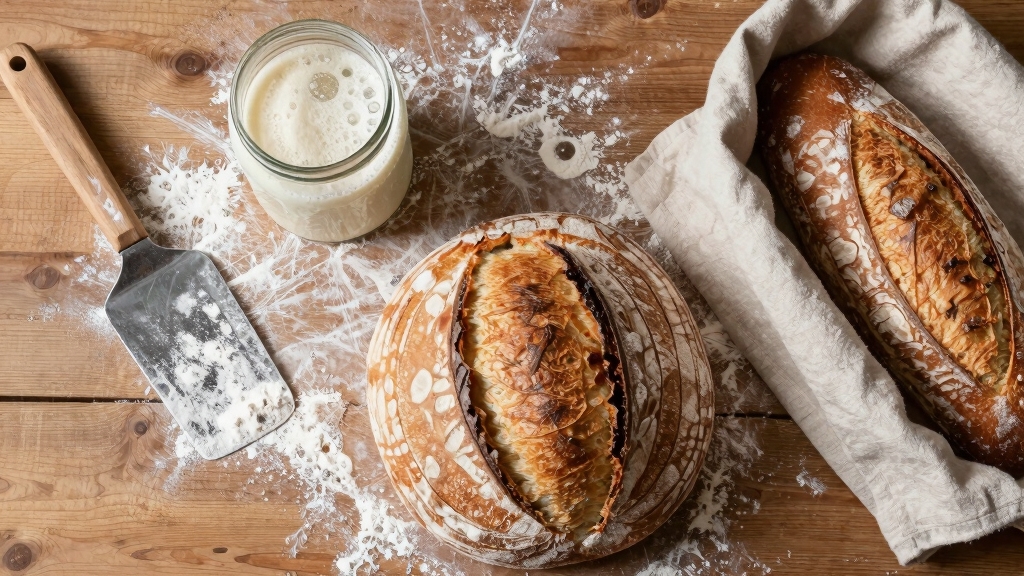
Start with a high hydration sourdough bread at 80% hydration to achieve an open crumb and crisp crust.
Begin your sourdough journey with 80% hydration for a beautifully open crumb and irresistibly crisp crust.
Incorporate sesame seeds on the crust for nutty complexity using the sesame sourdough bread recipe.
For a citrus twist, try lemon poppy seed sourdough bread, balancing acidity and seed crunch.
Enhance savory notes by baking green olive sourdough bread with roasted garlic, creating a robust profile.
Dill pickle sourdough bread introduces tangy, fermented elements, complementing the natural sourness.
Use a regular starter at 1-20% of total flour for peak yeast and bacterial activity, ensuring consistent fermentation and rise.
Each recipe adjusts hydration and mix-ins precisely to leverage your active starter’s potency.
Like sushi hand rolls, these sourdough recipes emphasize bold, singular ingredients to highlight distinct flavors in every bite.
Make Flavorful Focaccia and Pastries With Active Starter

You can really amp up your focaccia by mixing in some exciting flavors! Think about adding cherry tomatoes with fresh rosemary for a savory twist or even a hint of cinnamon if you’re in the mood for something sweet. The magic is in that active starter and the way it ferments, bringing out those delicious flavors.
Now, when it comes to making pastry doughs like croissants or pain au chocolat, keeping that starter active is key. It ensures you get the right fermentation, which is crucial for achieving that perfect flaky texture.
Just remember, paying attention to hydration levels and fermentation times is super important. It’s all about consistency in both your focaccia and pastries to get those delightful results every time!
To preserve your homemade ingredients and enhance your prepping strategy, consider using a food dehydrator to extend the shelf life of herbs and other flavorings.
Focaccia Flavor Variations
When you explore into focaccia flavor variations, using an active sourdough starter guarantees ideal fermentation and texture. The starter’s microbial balance enhances dough extensibility and crumb structure, essential for focaccia’s open, airy profile.
You can experiment by incorporating toppings like cherry tomatoes paired with rosemary, which release moisture and infuse aromatic compounds during baking. Fruit options, such as thinly sliced apples or cherries, add natural sugars that caramelize, creating a sweet-savory contrast.
For a spiced twist, cinnamon integrated into the dough matrix provides subtle warmth without compromising gluten development. Overnight fermentation with a 1-20% regular starter concentration maximizes flavor complexity and dough strength.
Precise hydration levels, typically around 70-80%, accommodate these inclusions while maintaining dough extensibility and oven spring for ideal focaccia crust and crumb. Using an adjustable temperature range during baking ensures optimal moisture retention and crust development.
Pastry Dough Techniques
Building on the fundamentals of focaccia flavor variations, mastering pastry dough techniques with an active sourdough starter enhances both texture and flavor complexity.
You’ll achieve superior lamination, flakiness, and subtle tang by controlling hydration and fermentation times precisely. Use a stiff starter for consistent yeast activity, which improves dough strength and rise in laminated pastries like croissants and pain au chocolat.
| Technique | Key Benefit |
|---|---|
| Lamination | Creates flaky, layered texture |
| Controlled Fermentation | Develops complex sour notes |
| Hydration Adjustment | Balances dough elasticity |
In addition, incorporating sour cream in complementary sauces can add a creamy tang that enhances the overall flavor profile of sourdough-based dishes.
Quick Sourdough Bakes You Can Make Today
You know, one great way to cut down on waste is by using sourdough discard in quick recipes like banana bread or muffins. It really adds a lovely flavor too!
Plus, if you let it ferment overnight, you’ll be amazed at how much the texture and taste improve. It’s all about letting those enzymes work their magic, and the best part? You don’t need to spend hours in the kitchen.
Using dehydrated sourdough discard can be an efficient method to preserve it, similar to how food dehydrators retain flavor and nutrients.
Easy Discard Recipes
Frequently overlooked, sourdough discard offers a valuable base for quick bakes that require minimal preparation time.
You can transform discard into practical recipes like banana bread or strawberry muffins, which utilize its mild acidity to enhance flavor and texture.
Since discard lacks active fermentation strength, these recipes rely on chemical leaveners, baking soda or powder, to achieve rise and crumb structure.
When incorporating discard, adjust hydration and sugar content accordingly to compensate for its inherent moisture and tang.
For example, sourdough banana bread benefits from candied ginger for added complexity, while strawberry muffins perform well topped with streusel for texture contrast.
Additionally, incorporating meal planning strategies can help efficiently use sourdough discard in your weekly baking routine.
Overnight Fermentation Benefits
While sourdough discard recipes offer quick results without fermentation, incorporating overnight fermentation reveals enhanced flavor development and improved texture in your bakes.
This extended fermentation allows organic acids and enzymes more time to break down starches and proteins, intensifying sour notes and yielding a more complex flavor profile.
Additionally, the slow fermentation promotes gluten network strengthening, resulting in a crumb with ideal aeration and chew.
When you ferment overnight, you also increase the dough’s extensibility, which improves oven spring and crust formation.
For instance, sourdough cinnamon rolls or cherry almond focaccia benefit from this process, developing nuanced taste and superior mouthfeel.
Maintaining a consistent temperature during the overnight proofing is crucial to ensure optimal yeast activity and dough quality.
Specialty Sourdough Breads to Try With Active Starter
When working with an active starter, specialty sourdough breads offer unique opportunities to enhance flavor and texture through targeted ingredient combinations and hydration levels.
You can experiment with high hydration breads at 80%, achieving an open crumb and moist texture. Incorporate additions like sesame seeds for a nutty crust or lemon and poppy seeds to introduce citrus brightness and crunch.
Using roasted garlic in green olive sourdough or pickled elements in dill pickle sourdough adds complex savory notes. For precise results, adjust your starter type: regular for wheat-based doughs or stiff starter when replacing commercial yeast for consistency.
Maintaining proper fermentation times and hydration balances guarantees these specialty breads develop their distinctive profiles while leveraging your active starter’s life force effectively.
For optimal freshness and longevity, consider proper storage techniques similar to those used for dehydrated foods.
Fix Common Problems When Using Your Active Starter
If your active starter isn’t performing as expected, identifying and addressing common issues quickly can save your dough and improve your baking results.
First, check hydration; an overly watery starter dilutes yeast activity, while too stiff a starter slows fermentation.
Start by checking hydration; too much water weakens yeast, too little slows fermentation.
Maintain the recommended 1:1 flour-to-water ratio for regular starters.
Temperature also affects performance; keep your starter between 70°F and 75°F for peak yeast growth.
If you notice a layer of liquid (hooch), stir it back in or discard it to rebalance acidity.
Inactivity or sluggish rise often signals insufficient feeding frequency or poor flour quality.
Feed your starter every 12-24 hours with fresh whole grain or unbleached flour.
Finally, avoid contamination by using clean utensils and containers to preserve a healthy microbial balance.
Also, ensure any jars or containers you use are properly sterilized to prevent unwanted bacteria from affecting your starter’s health, such as by using oven sterilization methods.
Bonus: How to Use Sourdough Discard in Quick Bakes?
You can put sourdough discard to work in quick bakes that don’t require long fermentation, turning what might be wasted into flavorful treats. Its mild acidity and yeast content enhance texture and taste without the need for extended proofing.
Incorporate discard in recipes like banana bread or chocolate chip muffins by substituting a portion of the flour and liquid with discard, typically 100–150 grams per batch. This adjustment maintains batter hydration while contributing sourdough complexity.
For pancakes and waffles, use discard to improve rise and flavor; fermenting the batter overnight can optimize leavening. Monitor hydration carefully, as discard’s water content varies.
Using discard in quick bakes reduces waste, utilizes starter’s microbial activity efficiently, and introduces subtle sour notes, enriching your baked goods without altering preparation time appreciably.
Frequently Asked Questions
How Do Hydration Levels Affect Sourdough Starter Activity?
Hydration levels directly influence sourdough starter activity by affecting microbial balance.
When you use a regular starter at 100% hydration (1:1 flour-to-water), yeast and bacteria thrive equally.
Higher hydration, like in liquid starters (5:1 water-to-flour), boosts bacterial activity, increasing acidity.
Lower hydration, as in stiff starters (50-60%), favors yeast growth and reduces bacteria.
Adjusting hydration lets you control fermentation speed, flavor complexity, and dough consistency effectively.
Can I Use Active Starter With Gluten-Free Flours?
You can use an active starter with gluten-free flours, but it requires adjustments.
For example, a baker successfully fermented a brown rice and buckwheat blend by maintaining a 1:1 flour-to-water starter hydration and adding xanthan gum to improve structure.
Since gluten-free flours lack elasticity, your starter’s bacterial and yeast activity must be monitored closely, and fermentation times may vary.
You’ll also need to tailor hydration levels to prevent overly wet or dense dough.
What’s the Best Temperature to Store an Active Starter?
You should store your active starter at around 70°F (21°C) for peak fermentation activity. This temperature balances yeast and bacterial growth, ensuring a healthy rise and flavor development.
If you want to slow fermentation, refrigerate it at 38-40°F (3-4°C). Avoid temperatures above 80°F (27°C), as they can cause over-fermentation and weaken the starter.
Consistent temperature control helps maintain a robust, reliable starter for baking.
How Often Should I Feed My Active Sourdough Starter?
You don’t need to feed your active sourdough starter constantly; feeding it every 12 to 24 hours works best.
Feeding frequency depends on storage temperature. At room temperature, feed every 12 hours to maintain peak activity.
If refrigerated, feeding once a week suffices, but bring it to room temp and feed before baking.
Regular feedings keep yeast and bacteria balanced, ensuring consistent fermentation and flavor development in your dough.
Can Active Starter Be Frozen for Later Use?
Yes, you can freeze your active starter for later use.
Before freezing, feed it thoroughly, let it peak, then portion into an airtight container or freezer bag.
When ready to use, thaw it in the fridge, then feed regularly at room temperature to reactivate its yeast and bacterial activity.
Freezing slows fermentation but doesn’t kill microbes.
Expect a longer revival time post-thaw, so plan ahead to regain full starter strength before baking.
Mastering Sourdough with Consistency and Care
Now that you’ve mastered preparing your active sourdough starter and explored diverse recipes, from rustic breads to quick bakes, you’ll notice your kitchen skills naturally improving.
It’s no coincidence that consistent use of your starter not only enhances flavor but also sharpens your baking intuition. Keep troubleshooting common starter issues and don’t forget to utilize discard creatively.
With these precise techniques, you’re equipped to bake confidently, turning every loaf into a reliable, delicious success.