Best Chicken Marinara Pasta Recipe: Rich, Savory & Flavorful
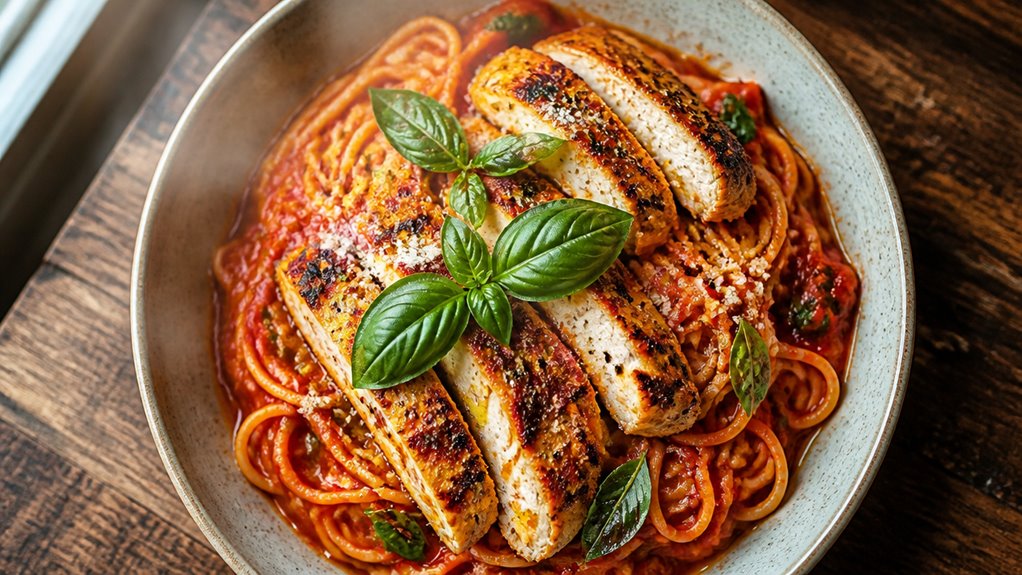
You’ll get perfect chicken marinara pasta by searing bite-sized chicken until golden and juicy. Then simmer it in a rich, herb-infused marinara sauce made with sautéed garlic, onions, and slow-simmered tomatoes.
Cook your pasta al dente, finish it in the sauce, and toss in reserved pasta water to marry flavors beautifully. Top it off with gooey mozzarella and nutty Parmesan for depth and texture.
Keep going, and you’ll explore tips that make this classic dish truly shine.
Key Takeaways
- Sear seasoned chicken pieces in hot olive oil or butter for 3–5 minutes per side until golden and juicy, then rest before combining with sauce.
- Slowly simmer a garlic and onion sautéed marinara base with crushed tomatoes, dried herbs, and a touch of tomato purée for rich, balanced flavor.
- Cook pasta al dente, reserve pasta water, then finish cooking it in the simmering marinara to absorb flavors and coat evenly.
- Incorporate cheeses like mozzarella for stretch, Parmesan for nuttiness, and ricotta or feta for creamy or tangy contrasts during the last cooking minutes.
- Optionally add sautéed vegetables like bell peppers, mushrooms, or spinach for texture, sweetness, and nutrient enhancement in the pasta dish.
Quick Chicken Marinara Pasta Recipe Table
| Recipe Detail | Information |
|---|---|
| Main Term | Best Chicken Marinara Pasta Recipe |
| Recipe Type | Chicken Pasta / Italian-Inspired Main Dish |
| Main Protein | Bite-sized chicken pieces or chicken strips |
| Pasta Options | Pasta of choice, cooked al dente |
| Sauce Base | Crushed or stewed tomatoes, garlic, onion, and tomato purée |
| Cooking Fat | Olive oil or butter |
| Chicken Seasoning | Salt, black pepper, garlic powder, Italian herbs, and red pepper flakes |
| Essential Herbs | Dried oregano, thyme, fresh basil, and parsley |
| Chicken Cooking Time | 3–5 minutes per side for browning, depending on piece size |
| Safe Chicken Temperature | 165°F internal temperature |
| Garlic and Onion | Cook onion for 3–4 minutes, then garlic for 30–45 seconds |
| Pasta Cooking Method | Cook 1–2 minutes less than package instructions, reserve pasta water, and finish in the sauce |
| Best Cheeses | Mozzarella, Parmesan, Pecorino Romano, feta, or ricotta |
| Vegetable Add-Ins | Bell peppers, mushrooms, spinach, kale, zucchini, or carrots |
| Sauce Technique | Simmer gently, stir occasionally, and add reserved pasta water if needed |
| Combining Ingredients | Return chicken to the marinara, add pasta, and simmer gently to blend flavors |
| Gluten-Free Option | Substitute regular pasta with gluten-free pasta |
| Best Side Dishes | Caesar salad, mixed greens, garlic bread, cheesy focaccia, roasted asparagus, or broccoli |
| Refrigerator Storage | 3–4 days in an airtight container |
| Freezer Storage | Up to 2 months |
| Reheating Tip | Add a splash of water or broth to restore moisture |
Brown Chicken Perfectly for Marinara Pasta

Start by heating olive oil or butter in your skillet until it shimmers. Then add seasoned chicken pieces to the pan.
Heat olive oil or butter until shimmering, then add seasoned chicken pieces to the hot skillet.
You want to hear that satisfying sizzle as the chicken hits the hot surface. Let the chicken cook undisturbed for 3 to 5 minutes per side. This helps develop a golden-brown crust that locks in the juices.
Use bite-sized pieces or strips for quicker, even cooking. Season generously with salt, pepper, garlic powder, Italian herbs, and a pinch of red pepper flakes to build layers of flavor.
Once browned and cooked through, with an internal temperature of 165°F, remove the chicken and let it rest briefly. This resting step keeps your chicken tender and juicy, setting the stage for a delicious marinara pasta dish. For added moisture retention and flavor development, consider briefly resting the chicken for 10–15 minutes to allow the juices to redistribute and the internal temperature to stabilize (resting recommendation).
Make a Flavorful Marinara Sauce
Alright, let’s kick things off! Start by gently sautéing some garlic and onion. You want to release those sweet, savory flavors, but be careful not to burn them—nobody likes burnt garlic, right?
Once that’s done, it’s time to add your tomatoes. Let them simmer slowly. This is where the magic happens! As they cook down, the sauce will thicken and develop a rich depth of flavor that’s just irresistible.
And don’t forget about the herbs! Blend in your fresh and dried herbs at just the right moments. This will really brighten and balance the sauce, making it absolutely perfect. Enjoy!
For a richer, more balanced finish, stir in a small amount of tomato purée near the end to add subtle sweetness, tang, and a uniform color.
Garlic And Onion Sauté
Although the chicken is the star of this dish, the foundation of a truly flavorful marinara sauce lies in gently sautéing garlic and onion to release their sweet, aromatic qualities.
When you sauté these aromatics just right, you unleash layers of flavor that elevate the entire sauce.
Here’s how to master this step:
- Heat olive oil over medium heat; too hot and garlic burns, turning bitter.
- Add finely chopped onions first; cook until translucent and soft, about 3–4 minutes.
- Toss in minced garlic last, cooking briefly (30–45 seconds) until fragrant but not browned.
- Stir constantly to prevent sticking and evenly distribute flavors for a rich base.
This simple process sets the stage for a marinara sauce that’s bursting with depth and warmth. For a sustainable kitchen routine, consider using a reusable silicone mat when prepping to reduce waste and simplify cleanup.
Tomato Simmering Techniques
Simmering your tomatoes gently allows their natural sweetness and acidity to balance perfectly, transforming simple ingredients into a rich, savory marinara sauce.
After sautéing garlic (and onion if you like), add crushed or stewed tomatoes to the pan, scraping up any browned bits left from cooking the chicken.
Keep the heat low and let the sauce bubble softly; this slow simmer helps break down the tomatoes, deepening their flavor without bitterness.
Stir occasionally, so the sauce doesn’t stick or scorch.
If it thickens too much, splash in reserved pasta water to loosen it and help it cling to your noodles later.
Patience here rewards you with a luscious, balanced sauce that forms the heart of your chicken marinara pasta.
For a deeper, richer flavor, simmer longer to develop the sauce’s sweeter, richer profile.
Herb Blending Tips
Once your tomatoes have softened into a rich, aromatic base, it’s time to boost the flavor with herbs. The right blend transforms your marinara from simple to spectacular. Here’s how to get it just right:
- Add dried herbs early: Oregano and thyme release their full flavor as the sauce simmers.
- Save fresh herbs for last: Toss in basil or parsley near the end to preserve their bright aroma.
- Balance quantities: Use about a teaspoon of dried herbs per batch, adjusting to taste. Too much can overpower.
- Crush or chop herbs: This helps release essential oils and blends flavors more evenly.
If you want a deeper, slightly smoky undertone that complements tomato sweetness, consider adding a touch of dried ancho or pasilla chile for depth to the sauce while it simmers.
Combine Chicken, Sauce, and Pasta for Maximum Flavor
To get the most flavor out of your chicken marinara pasta, you want to bring all the components together thoughtfully. Start by gently tossing your browned chicken back into the simmering marinara sauce, letting those savory browned bits mingle for extra depth.
Then, add your pasta, allowing it to soak up the rich, herb-infused sauce. Stir carefully, ensuring every bite is coated and the flavors meld seamlessly. This step is where the magic happens: juicy chicken meets aromatic sauce and perfectly cooked pasta, creating a harmonious blend.
Don’t rush; a few minutes of gentle simmering here lets the sauce cling beautifully, elevating your dish from ordinary to irresistible. This careful combining locks in moisture and flavor, ensuring each forkful bursts with delicious, balanced taste. Preheating and properly searing the chicken in a hot cast iron skillet helps develop that coveted crispy, golden skin which adds both texture and depth of flavor.
Cook Pasta for Perfect Sauce Absorption
Because perfectly cooked pasta is the backbone of a great chicken marinara dish, aim for al dente, firm to the bite but not hard. Cooking pasta just right lets it soak up the marinara sauce beautifully, enhancing every bite.
Perfectly cooked pasta is essential for chicken marinara, allowing the sauce to be absorbed and flavors to shine.
Follow these steps for pasta that clings to sauce perfectly:
- Salt your boiling water generously to season the pasta from within.
- Cook pasta 1–2 minutes less than the package suggests for a firmer texture.
- Reserve some pasta water before draining; it helps loosen and meld the sauce.
- Finish cooking pasta in the simmering marinara sauce, stirring gently to coat each piece.
This method guarantees your pasta absorbs flavor without turning mushy, creating a harmonious dish that’s both tender and flavorful. Using labeled and dated containers can help track portions and reduce waste by keeping leftovers organized in the freezer with clear identification.
Choose and Add Cheese to Enhance Flavor and Texture
Although the marinara sauce and perfectly cooked chicken form the heart of your dish, adding cheese takes the flavor and texture to an entirely new level.
You’ll want to reach for Parmesan for its nutty, salty punch that melts into the sauce, creating a silky finish.
Mozzarella adds a gooey, stretchy texture that’s irresistible, especially if you want a comforting, melty bite.
Don’t hesitate to sprinkle a little feta or Pecorino Romano for a sharper, tangy twist that wakes up your palate.
When adding cheese, toss it in during the last few minutes of cooking so it melts evenly without clumping.
This simple step transforms your pasta from good to unforgettable, leaving you craving that perfect cheesy pull with every forkful.
Consider using a certified Pecorino Romano D.O.P. for authentic, bold flavor when choosing a tangy sheep’s-milk option.
Customize Your Chicken Marinara Pasta With Easy Variations
You can totally switch up your chicken marinara pasta by mixing in different cheeses! Try adding mozzarella or feta for a fresh twist that really elevates the dish.
And don’t forget about veggies! Tossing in bell peppers or mushrooms not only boosts the flavor but also gives you a nice texture contrast.
These simple swaps make it super easy to personalize your meal without any extra hassle. So, get creative and make it your own!
For the creamiest results when adding mozzarella, consider using fresh, liquid whole milk or a high-quality whole milk mozzarella made from whole milk to enhance stretch and mouthfeel.
Cheese Options
Cheese often transforms chicken marinara pasta from simple to spectacular, adding rich, melty layers that elevate every bite. When choosing your cheese, think about flavor, texture, and meltability to customize your dish just the way you like it.
- Mozzarella – Perfect for that gooey, stretchy melt that complements marinara’s tang.
- Parmesan – Adds a sharp, nutty bite and a salty punch that deepens the sauce’s richness.
- Feta – Crumbled on top for a tangy, crumbly contrast that brightens every forkful.
- Ricotta – Dolloped in for creamy pockets that mellow the acidity and add lush creaminess.
Try mixing cheeses for fun textures and flavors. You’ll find your perfect cheesy balance that makes this classic dish truly your own. Knives with ice-hardening treatment help maintain a precise cut for preparing ingredients, which keeps textures consistent and cooking times even.
Vegetable Add-Ins
Adding vegetables to your chicken marinara pasta can brighten the dish and introduce fresh textures that balance the rich sauce and melty cheese.
Toss in sautéed bell peppers or mushrooms for earthiness and a subtle sweetness that pairs perfectly with the tangy marinara.
Spinach or kale wilt quickly into the sauce, adding vibrant color and a nutrient boost without overpowering the flavors.
You can also stir in diced zucchini or carrots for a gentle crunch and natural sweetness.
These easy add-ins let you customize the dish to your taste and make it feel lighter and more wholesome.
Plus, sneaking in veggies is a smart way to up your meal’s nutrition without extra effort, making every bite both satisfying and nourishing.
Frequently Asked Questions
Can I Use Frozen Chicken for This Recipe?
You can definitely use frozen chicken, but make sure to thaw it completely before cooking. This helps you brown the chicken evenly and reach that safe internal temperature of 165°F.
If you skip thawing, the outside might overcook while the inside stays raw. Plan ahead, thaw overnight in the fridge or use a quick cold-water method.
Once thawed, season and cook it just like fresh chicken for the best flavor and texture.
How Do I Store Leftover Chicken Marinara Pasta?
You should store leftover chicken marinara pasta in an airtight container to keep it fresh and flavorful.
Pop it in the fridge within two hours of cooking, and it’ll last about 3-4 days.
When reheating, add a splash of water or broth to keep the sauce saucy and the pasta from drying out.
For longer storage, freeze it up to 2 months. Just thaw overnight in the fridge before warming up.
Can I Make This Recipe Gluten-Free?
Absolutely, you can make this recipe gluten-free!
Imagine that rich, savory marinara sauce clinging perfectly to tender chicken and pasta.
Just swap regular pasta for your favorite gluten-free variety.
Be sure to check that any added ingredients, like broth or seasoning, don’t contain hidden gluten.
With simple swaps, you’ll enjoy all the comforting flavors without worry.
It’s just as delicious and safe, letting you savor every bite confidently.
What Side Dishes Complement Chicken Marinara Pasta?
You’ll want sides that balance and brighten your chicken marinara pasta. A crisp Caesar or mixed greens salad with a tangy vinaigrette adds freshness.
Garlic bread or cheesy focaccia provides a satisfying crunch and soak-up power for that rich sauce. Roasted veggies like asparagus or broccoli bring earthiness and color.
If you crave something lighter, a simple caprese salad with fresh mozzarella, tomatoes, and basil complements those Italian flavors perfectly.
Final Thoughts on Making Chicken Marinara Pasta
You’ve just crafted a delicious chicken marinara pasta that’s bursting with flavor and perfect texture. Did you know that 70% of people say a well-made sauce is the key to a memorable pasta dish?
By browning your chicken just right and simmering that rich marinara, you’re not only making dinner but creating a comforting experience.
So go ahead, customize it, savor every bite, and enjoy the magic of homemade Italian goodness!