
Oat Flour Donuts: Naturally Sweet, Wholesome and Delicious
You’ll want to start with 1¼ to 2½ cups of oat flour, binding with eggs or substitutes, and adding moisture through milk or yogurt. Use initial high heat (425°F) for 5 minutes to set the crust, then lower to 325–350°F to bake evenly.
Weigh ingredients precisely and shape uniformly for consistent texture. Baking yields a tender, slightly lighter donut with health benefits from fiber and protein. Keep following for detailed tips on optimizing flavor and technique.
Key Takeaways
- Oat flour donuts use 1¼ to 2½ cups oat flour and can include eggs, milk, and flavorings like cinnamon or vanilla for taste and structure.
- Baking starts at 425°F for 5 minutes, then lowers to 325–350°F to ensure a soft, tender crumb without overbaking.
- Use superfine oat flour for a light, cake-like texture, avoiding graininess and gummy residue in the finished donuts.
- Certified gluten-free oats make these donuts safe for gluten-sensitive individuals, and baking reduces fat compared to frying.
- Natural sweeteners like maple syrup or fruit purees enhance flavor and moisture while providing healthier alternatives to refined sugar.
Recipe at a Glance: Baked Donut Instructions
| Ingredients / Tools | Steps / Actions |
|---|---|
| Oat flour | Measure finely ground oat flour to ensure a soft, tender donut texture |
| Baking powder | Mix with dry ingredients to help the donuts rise evenly |
| Salt | Add a small amount to balance sweetness and enhance flavor |
| Eggs | Whisk to provide structure and moisture |
| Milk or plant-based milk | Stir in gradually for a smooth, pourable batter |
| Honey or maple syrup | Sweeten naturally while adding rich depth of flavor |
| Vanilla extract | Blend in for a warm, bakery-style aroma |
| Melted coconut oil or butter | Adds moistness and richness to oat flour donuts |
| Mixing bowl & whisk | Combine wet and dry ingredients until just incorporated |
| Donut pan (greased) | Spoon or pipe batter evenly into each cavity |
| Oven (preheated) | Bake until donuts are lightly golden and set |
| Cooling rack | Let donuts cool slightly before glazing or serving |
Ingredients and Flavor Variations
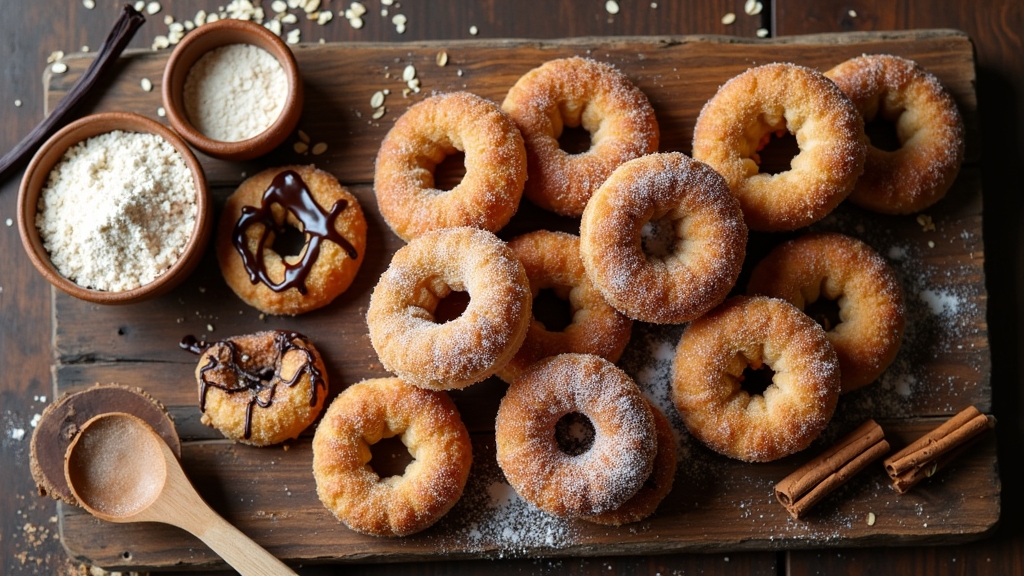
When crafting oat flour donuts, you’ll need a precise balance of ingredients to achieve the desired texture and flavor.
Start with 1¼ to 2½ cups of oat flour, adjusting based on batch size. Incorporate 1-2 eggs or substitutes for binding and structure. Proper preparation and cleaning of your tools can improve the outcome and safety of your cooking.
Begin with 1¼ to 2½ cups oat flour and add 1-2 eggs or alternatives for structure and binding.
Add liquid elements like milk or yogurt to maintain moisture. Leavening agents such as baking powder or baking soda ensure proper rise.
For flavor, vanilla extract enhances sweetness, while cinnamon or nutmeg adds warmth. Cocoa powder creates chocolate variations, and nut butters contribute richness and moisture.
Fruit purees like applesauce serve as natural sweeteners and moistening agents. Sweetener choice impacts taste and texture: white sugar offers neutrality, coconut sugar adds caramel notes, and maple syrup introduces distinct flavor and moisture. Using oat flour specifically results in soft, fluffy donuts with added health benefits such as fiber and complex carbohydrates.
Balancing these components is critical to producing consistent, well-textured oat flour donuts, and maintaining consistent sharpness of your kitchen knives can make preparation safer and more efficient.
Baking Techniques and Temperature Tips
Although oat flour donuts require careful temperature control, mastering your oven settings can substantially improve their texture and rise.
Start by baking at a high temperature (425°F) for 5 minutes to create a crust and boost rise. Then, reduce to 325–350°F for even cooking and moisture retention. Because oat flour adds whole grains and fiber, this careful baking method helps preserve these nutritional benefits. Ensuring temperature accuracy during baking is crucial for optimal results.
Adjust baking time based on size: smaller donuts bake faster, larger ones need longer. Cooling in the pan for 10 minutes stabilizes structure, preventing breakage when removing.
| Temperature (°F) | Baking Time (minutes) |
|---|---|
| 425 (initial) | 5 |
| 325–350 | 10–15 (larger donuts) |
| 400 | 7–12 (smaller donuts) |
Control temperature and time precisely to avoid overbaking, ensuring a tender, moist crumb.
Preparation Tools and Methods

Because oat flour dough demands consistent texture and precise handling, selecting appropriate preparation tools is critical to achieving uniform donut quality and appearance.
Achieving uniform oat flour donuts requires precise tools to maintain consistent dough texture and handling.
Use heavy-duty stand mixers to maintain dough consistency, and digital scales to ensure exact oat flour measurements.
Employ dough sheeters or rolling pins to achieve uniform thickness, then shape donuts with cutters or depositors for consistent dimensions. Choosing containers with airtight lids helps preserve dough freshness during short-term storage.
Proof dough in temperature- and humidity-controlled cabinets to optimize fermentation and rise without drying. Regular cleaning and servicing of proofers help maintain their optimal performance.
For frying, utilize heavy-bottomed pots or specialized fryers with thermometers to maintain stable oil temperature, ensuring even cooking.
Remove donuts safely with spider strainers and handle them precisely using tongs or spatulas.
Finally, cool donuts on racks to avoid moisture buildup, and apply coatings on dedicated glazing tables for consistent finishing.
Texture and Quality Expectations
Achieving the ideal texture in oat flour donuts hinges on the fine consistency of the flour and careful control of baking parameters.
You’ll want to use superfine oat flour to avoid graininess and promote a light, cake-like crumb.
Bake initially at 425°F for 5 minutes, then reduce to 350°F for 6 minutes, ensuring even cooking and structure.
Properly baked donuts spring back to touch and maintain softness without gummy residue typical of some gluten-free flours.
Cooling them in the pan for 10–15 minutes preserves integrity before glazing.
Unlike traditional fried donuts, these baked oat flour versions deliver a fluffy, tender mouthfeel with a lighter weight due to the flour’s unique properties.
They meet consistent quality expectations without compromising texture or moisture balance.
Using specific gluten free flours such as oat flour combined with psyllium husk and xanthan gum is essential to achieve the right hydration and structure for the dough.
Dietary Adaptations and Health Benefits

When tailoring oat flour donuts to specific dietary needs, you can leverage certified gluten-free oats to guarantee safety for those with celiac disease or gluten sensitivity while maintaining the desired texture. Proper storage in airtight containers like mason jars helps preserve freshness and prevents spoilage.
Oat flour naturally provides higher protein and fiber, about 3.5g and 2.3g per serving, respectively. This supports muscle maintenance and digestive health through beta-glucan fiber’s cholesterol-lowering effects.
Oat flour offers 3.5g protein and 2.3g fiber per serving, aiding muscle health and cholesterol balance.
You can reduce sugar content by substituting refined sugars with natural sweeteners like maple syrup or honey, aiding glycemic control.
For fat content, healthier oils such as canola or coconut oil add medium-chain triglycerides, promoting heart health and moisture retention without excess saturated fat.
These adaptations optimize your oat flour donuts for nutritional benefits without compromising sensory qualities or safety. Additionally, baking the donuts instead of deep-frying them helps to significantly reduce added fats and calories, making the treat a healthier alternative.
Frequently Asked Questions
Can Oat Flour Donuts Be Frozen for Later Consumption?
Yes, you can freeze oat flour donuts for later consumption.
To preserve quality, cool them completely before placing in airtight freezer bags. Remove as much air as possible to prevent freezer burn.
Freeze for up to 2 to 6 months depending on ingredients. Thaw donuts gradually in the refrigerator or at room temperature, then reheat lightly.
Avoid freezing glazed donuts; apply toppings after thawing to maintain texture and flavor integrity.
How Long Do Oat Flour Donuts Stay Fresh at Room Temperature?
You can expect oat flour donuts to stay fresh at room temperature for about 1 to 2 days.
To maintain their moisture and texture, store them in an airtight container away from heat and direct sunlight.
Exposure to air accelerates staling, so avoid leaving them uncovered.
If your donuts contain dairy-based fillings or glazes, refrigeration might be necessary, but typically, room temperature storage preserves their original texture best within that timeframe.
What Is the Best Way to Reheat Oat Flour Donuts Without Drying Them Out?
Reheating oat flour donuts without drying them out is like gently coaxing warmth into a fragile flower. You want steady, controlled heat.
The oven method at 300-350°F wrapped loosely in foil preserves moisture effectively.
Alternatively, use a microwave on medium power for 10-30 seconds covered with a damp towel to retain softness.
Both methods balance heat and moisture, preventing dryness by avoiding overheating and ensuring even temperature distribution throughout the donut.
Can I Substitute Oat Flour With Another Gluten-Free Flour in These Recipes?
Yes, you can substitute oat flour with other gluten-free flours, but results vary.
Gluten-free all-purpose flour offers the closest texture and minimal variation.
Sorghum, buckwheat, white teff, and brown rice flours work as equal weight alternatives but may alter fluffiness.
Avoid nut-based flours like almond or coconut, as they negatively impact texture and flavor.
Combining multiple gluten-free flours often yields better consistency than using a single substitute.
Are Oat Flour Donuts Suitable for Children Under Two Years Old?
When it comes to children under two, oat flour donuts can be a safe bet if you proceed with caution.
You’ll want to introduce them gradually after six months, monitoring for any allergic reactions or digestive issues.
Make sure the oats are certified gluten-free if there’s a family history of intolerance.
Avoid honey for kids under one to prevent botulism.
With these precautions, oat flour donuts offer a gentle, nutritious option for toddlers.
Make Oat Flour Donuts Your Go-To Healthier Dessert
You’ll appreciate that oat flour donuts not only offer a delicious alternative to traditional recipes but also boost your fiber intake. Oats provide about 10 grams of fiber per cup, enhancing digestion and satiety.
By mastering precise baking temperatures and techniques, you guarantee ideal texture and crumb structure. With thoughtful ingredient substitutions and preparation tools, you can tailor these donuts to various dietary needs without sacrificing quality or flavor.