
Best Way to Reheat a Burger: Keep It Juicy and Delicious
You want a juicy, crisp burger that smells freshly seared: separate the bun and patty, then choose a method.
Use the oven at 375–400°F on a rack for even heat and a moist interior. Try the air fryer at 350–380°F for fast, crunchy edges.
For stovetop, steam then sear to revive juiciness and finish with a quick crust. If you need speed, use the microwave with a damp towel.
Toast the bun separately and check that the center hits 165°F. Keep an eye on timing if you want pro tips on each method.
Key Takeaways
- For best texture, separate bun and patty, toast the bun separately to avoid sogginess.
- Use an air fryer at 350°F for 3–4 minutes to restore crisp edges and caramelized crust.
- For juiciness, steam the patty briefly on the stovetop then sear 30–60 seconds per side.
- Oven method: reheat at 375–400°F on a wire rack, flipping once for even warmth.
- Always reheat until internal temperature reaches 165°F and remove cold toppings before reheating.
Quick Answer: Best Way to Reheat a Burger

Choose the oven if you want the most consistent, juicy results.
Choose the oven for reliably juicy, evenly cooked burgers—set, bake, flip, and enjoy consistent results every time.
Preheat to 400°F, set the patty on a foil- or parchment-lined sheet with a splash of beef broth or water in the pan, and bake 8–10 minutes, flipping once so the heat penetrates evenly and the meat stays moist.
You’ll notice a gentle sizzle, steam rising, and the patty’s edges tightening without drying out.
For a quick alternative, use a hot skillet with a lid and a little broth or water to create steam.
It sears slightly while keeping interior moisture.
If you need speed, the air fryer crisps fast and avoids sogginess.
Microwave only if you’re in a rush; cover with a damp paper towel to reduce toughness.
To maintain food safety and quality after reheating, always reheat to an internal temperature of 165°F and consider proper cooling & portioning before freezing to preserve texture.
Oven Method : Even Heat and Juiciness
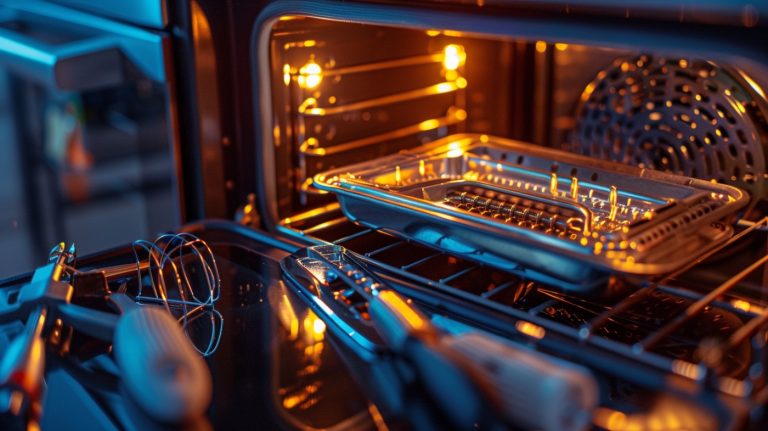
Preheat the oven, and you’ll immediately notice the comforting embrace of even warmth wrapping around the patty. It’s like the heat is gently coaxing its way through, ensuring there aren’t any pesky hot spots.
Now, if you add a splash of beef broth or even set up a water bath, you’ll keep the meat looking glossy and super tender. As the interior gradually warms up, you won’t believe the difference it makes.
In the end, you get a burger that’s uniformly hot, and when you press it or slice into it, it still releases those delicious juices. Trust me, it’s worth it! A quick tip: for better crust formation without pan-searing, consider preheating a cast iron skillet in the oven to a high temperature to mimic a hot skillet and finish the patty briefly under the broiler.
Even Heat Distribution
When you slide a burger into a 400°F oven on a lined baking sheet, the surrounding hot air gently surrounds the patty. Heat penetrates evenly from all sides, preserving its juices and texture.
You’ll notice the surface warming uniformly, with no cold pockets or scorched edges. The air circulation browns the exterior just enough while the center comes up to temperature at a steady pace.
Place the patty away from walls and flip halfway to maintain symmetry. A shallow pan of broth nearby creates a humid microclimate without steaming the meat.
Touch the dome—it’ll feel springy when warmed through—and use an instant-read thermometer for precision. Even heat means predictable textures and consistent bites from edge to center.
For best results, reheat at 375–400°F for 7–10 minutes until the internal temperature reaches 165°F, which helps retain juiciness and ensures safety while preventing a soggy crust; see reheating times for guidance.
Retains Juiciness
Letting the oven work its gentle, surrounding heat keeps the patty succulent as the center warms evenly. You’ll get juicy bites instead of dry, stringy meat.
You’ll notice steam rising gently, the crust softening without collapsing, and fat redistributing so each forkful feels satisfying.
Place the patty on parchment, add a splash of beef broth to the pan, and let the 400°F air coax moisture back into the meat over 8–10 minutes, flipping once.
The result is consistent temperature, minimal moisture loss, and preserved flavor.
This method mirrors how convection ovens promote even heat distribution for better reheating results.
| Step | Temp/Time | Benefit |
|---|---|---|
| Prep | 400°F, 8–10 min | Even heating |
| Add liquid | Splash broth | Restores juiciness |
| Flip | Once mid-way | Uniform warmth |
| Serve | Reassemble | Best texture preserved |
Air Fryer : Fast Crisp Edges
Usually you’ll get the crispiest edges by placing the patty in a single layer in the air fryer basket and running it at 350°F for 3–4 minutes. The circulating hot air quickly dries the surface, creating a caramelized crust while keeping the center juicy.
You’ll hear a faint sizzle as the exterior tightens and smell the toasty, beefy aroma. Slide the burger out and you’ll feel the contrast: crisp rim, yielding middle. Use this quick method when you want texture without fuss.
- Relief: quick fix for sad leftovers.
- Satisfaction: crunchy bite, warm core.
- Pride: looks freshly cooked again.
- Comfort: familiar flavor, revived warmth.
Toast buns separately for best results. Consider using a short preheat (about 3–5 minutes) to ensure consistent browning and even cooking when reheating.
Microwave : Quickest Home Hack (With Steam)
Often, you’ll reach for the microwave when time’s tight. Cover the patty with a damp paper towel to trap steam. Heat on medium power to restore warmth without turning the meat rubbery.
Often, reach for the microwave—cover the patty with a damp paper towel and heat on medium to avoid rubbery meat
Place the patty on a microwave-safe plate and separate the bun. Tuck a damp edge of the towel over the meat so steam hugs the surface. Heat in 30-second bursts, checking between intervals.
The patty should feel warm through but not steaming hot. You’ll notice the aroma deepen and the juices loosen slightly—those are signs it’s ready. Toast the bun separately so it stays crisp.
This method is fastest, low-fuss, and best when you want a hot, tender burger in under two minutes. Regular maintenance like consistent sharpening helps keep your kitchen tools safe and efficient.
Stovetop : Steam Then Sear to Revive a Patty
You’ll kick things off by steaming the patty in a covered skillet with a splash of water or broth. This helps the meat heat through without drying out. Trust me, it’s a game changer!
Once that’s done, lift the lid and let the pan heat up. This is where the magic happens! The surface will get nice and crispy, giving you that savory, caramelized sear we all love.
The best part? You get this amazing contrast between the moist, gently reheated interior and the crunchy exterior. It really brings the burger back to life! Enjoy every bite! For food safety, ensure the patty reaches 165°F (74°C) before serving.
Steam To Reheat
Steaming a burger on the stovetop brings back juiciness fast: heat a skillet over medium, add about 120 ml (½ cup) of water or beef broth, set the patty in the pan, and cover.
Steam will gently rehydrate the meat while preventing it from drying out. You’ll hear a soft hiss and smell warmed beef; the patty plumps slightly as steam restores moisture.
Keep the lid on for 2–4 minutes, checking that the liquid hasn’t fully evaporated. Finish when the internal temperature reaches about 60–65°C (140–150°F) for medium-warm.
- Anticipation: the aroma rises, and your mouth waters.
- Relief: the patty feels tender, not chalky.
- Comfort: juices bead on the surface.
- Satisfaction: a revived burger, ready to enjoy.
For best results, avoid overcrowding the skillet so steam circulates evenly, which is similar to ensuring proper air circulation on dehydrator trays for even drying and to prevent sticking air circulation.
Sear For Texture
Finish the steam step, then crank the heat and give the patty a quick sear to restore contrast: you’ll hear a sharp sizzle as the hot pan caramelizes the exterior, creating a crisp, savory crust while locking the restored juices inside.
Pat the surface dry briefly so moisture doesn’t steam the crust away, then add a thin film of oil to the skillet. Set heat to medium-high and press the patty gently once to guarantee even contact.
Work quickly—30 to 60 seconds per side is usually enough to avoid overcooking. Watch for deep brown spots and smell that nutty, roasted aroma.
Slide the patty off the heat, let it rest 30 seconds, then assemble so the texture stays pronounced against soft buns and melty cheese.
Keep the burger warm briefly by tenting it in foil to maintain temperature and retain moisture.
Grill : Reheating for Smoky Flavor
Cranking up the grill to medium-high heat will revive a day-old burger with a smoky kiss that brightens the beef’s flavor and restores a pleasing char. You’ll want the grates hot so the patty sears quickly without overcooking inside.
You’ll smell caramelized fat and hear the satisfying sizzle as the exterior crisps while steam keeps the center juicy. Move confidently: place the patty on oiled grates, flip once, and watch the edges darken.
Finish with a quick tent of foil to settle juices for a minute before assembling.
- Anticipation: the first sear releases nostalgia.
- Texture: crisp edges meet tender interior.
- Aroma: smoke mingles with browned beef.
- Pleasure: each bite feels intentional.
For a quick reheat that preserves juiciness, consider using an air fryer set to about 350°F–380°F for a few minutes, as its rapid hot air circulation helps lock in moisture and restore crispness to the exterior (see rapid hot air circulation).
Reheating Frozen Patties : Timing & Safety
When you’re reheating frozen patties, you want to make sure they hit a safe internal temperature of 165°F (74°C). This way, each bite isn’t only juicy but also safe to eat—no worries there!
Now, if you’re in a hurry, you can thaw them first for quicker and more even heating. But don’t worry if you prefer to cook them straight from frozen; just keep in mind that the timing will differ based on your method.
For example, in the oven, it takes about 8 to 10 minutes, while on the stovetop, give them 3 to 4 minutes per side with a bit of steam. If you’re using an air fryer, you’re looking at around 3 to 4 minutes, and in the microwave, it’s a quick 1 to 2 minutes on medium.
Oh, and a little tip: always use a thermometer to check that temperature. Also, it’s a good idea to separate the buns before you reheat to keep everything nice and crispy—no one likes a soggy bun!
Safe Internal Temperature
Food safety matters most when reheating frozen patties, so you should always aim for a safe internal temperature to prevent illness while keeping texture intact.
Use an instant-read thermometer to probe the center. 165°F (74°C) is the target for reheated leftovers, so juices run clear and the meat feels firm but still juicy.
You’ll notice a subtle change: sizzling edges, steam rising, and a faint beefy aroma when it’s done. Check several spots in thicker patties to avoid cold pockets.
Let the patty rest for a minute; carryover heat evens temperature and preserves juiciness.
- Feel relief when the thermometer reads 165°F.
- Hear the sizzle, smell the roasted beef.
- See clear juices, no pink.
- Trust the probe, then enjoy.
Thawing vs Direct
After you’ve confirmed the patty’s reached a safe 165°F, you’ll face a choice: thaw first or reheat straight from frozen.
Thawing in the fridge overnight softens ice crystals. When you reheat in the oven, skillet, or grill, the meat warms evenly and juices redistribute, giving a tender, savory bite.
Reheating from frozen saves time but demands care. Lower heat, added moisture, and slightly longer cook preserve texture without drying the exterior.
You’ll smell searing fat sooner with thawed patties; frozen ones steam and hiss, releasing more broth. For safety, always make certain the center hits 165°F again.
Choose thawing for texture and predictability, or direct for speed. Both work if you monitor temperature and moisture closely.
Timing By Method
If you’re working from frozen, plan a bit more time and a gentler approach to make sure the center reaches 165°F without overcooking the edges. You’ll want methods that coax heat through the patty while keeping juices locked in.
The oven bath at 400°F takes 8–10 minutes, flipping once; you’ll smell warming beef and steam. In a skillet, add 120 ml broth, cover, and sizzle 3–4 minutes per side; the steam softens the crust.
An air fryer at 350°F warms in 3–4 minutes, crisping the surface. The microwave can rescue you in 1–2 minutes on medium with a damp towel, but texture suffers.
- Oven: even, juicy, dependable
- Stovetop: steamy, seared, controlled
- Air fryer: quick, crisp, efficient
- Microwave: fast, convenient, fragile
Reheat Assembled Burgers or Separate Parts?
When you’re deciding whether to reheat an assembled burger or separate its parts, think about texture and moisture first.
Keeping the bun, patty, and toppings together can be convenient but often yields a soggy bun and uneven heating.
Separating them lets you revive crispness on the bun and evenly warm the patty.
Use steam for juiciness and dry heat or a quick sear for a fresh exterior.
Separate when you want contrast: toast the bun in a skillet or air fryer until edges are golden and crisp.
Then steam or oven-reheat the patty to lock in moisture.
Remove cold toppings like lettuce and tomato; add them fresh.
Reassemble just before serving so you get crunchy bun, juicy meat, and bright toppings.
Troubleshooting: Dry, Rubbery, or Uneven Burgers?
Though you want a juicy, evenly warmed burger, reheating can leave the patty dry, rubbery, or hot in spots. Pay attention to heat, moisture, and timing.
You’ll feel disappointment in a dry chew, anger at rubbery spring, or surprise when the center scalds while edges crisp. Fix it by controlling steam and gentle heat, and by separating bun from patty.
- Use low, even heat (oven or covered skillet) to coax juices back without overcooking.
- Add a splash of beef broth or a damp paper towel to replace lost moisture.
- Flip gently and check temperature frequently to avoid rubbery protein.
- Finish with a quick sear or air-fry burst to restore a crisp, pleasing crust.
Food Safety Limits and Storage Best Practices
Because bacteria grow fastest between 40°F and 140°F, you should cool, store, and reheat burgers with care to keep them safe and tasty.
Because bacteria thrive between 40°F and 140°F, cool and store burgers promptly to keep them safe and tasty.
After serving, transfer patties to shallow containers within two hours so they cool quickly. You’ll feel the warmth fade faster and avoid the danger zone.
Refrigerate at 40°F or below and eat within three to four days, or freeze for up to three months for best quality.
When reheating, bring the internal temperature to 165°F. Use a probe thermometer to confirm the center is steaming hot.
Thaw frozen patties overnight in the fridge, not on the counter. Label containers with dates, keep buns separate, and toss anything that smells off or has an unusual texture.
Frequently Asked Questions
Can Reheating Affect My Burger’s Nutritional Content or Calories?
Yes, reheating changes your burger slightly but won’t markedly alter calories.
You’ll notice texture and moisture shifts: steaming keeps juiciness, grilling or searing adds browned aromatics, while microwaving can dry edges.
Some fat may render out during reheating, reducing fat content a bit. Water loss concentrates flavors and calories per bite.
You’ll still get roughly the same nutritional profile, just a different sensory experience.
Can I Reheat Plant-Based or Veggie Burgers the Same Way?
Yes, you can reheat plant-based or veggie burgers the same ways, but you’ll tweak temperatures and times.
You’ll smell toasty edges from the air fryer at 350°F for 3–4 minutes.
You’ll get a juicy finish in the oven at 400°F for 8–10 minutes with a splash of broth.
On the stovetop, steam gently under a lid to avoid drying.
Microwave covered with a damp towel for the fastest option, though the texture softens more.
What Condiments or Toppings Shouldn’t Be Reheated With the Patty?
Don’t reheat mayo, creamy dressings, or fresh lettuce. They’ll turn soggy or split, and your burger loses that crisp contrast.
Ditch sliced tomatoes and raw onions too, since they get watery and limp.
Keep pickles, hard cheeses, and ketchup aside until after reheating. They’ll hold up and snap back when added warm.
Think of textures like a symphony: keep delicate instruments offstage until the final performance.
Can I Freeze Cooked Burgers After Reheating Once?
Yes, you can freeze cooked burgers after reheating once, but you shouldn’t wait long.
Let the patty cool quickly, wrap it tightly in plastic and foil to block air, and label with the date. Freeze within two hours of reheating and use within 1–2 months for best texture.
When you thaw, do it in the fridge and reheat gently to avoid drying. You’ll preserve flavor and juiciness better that way.
How Long Can Reheated Burgers Be Safely Kept Before Refrigerating?
You should refrigerate reheated burgers within two hours, or one hour if it’s above 90°F, or bacteria can multiply.
Let the burger cool briefly so it isn’t piping hot. Then place it in an airtight container or wrap tightly to lock in moisture and aroma.
Label with the date, and eat within 3–4 days. If you want longer storage, freeze promptly and thaw safely before reheating.
Revive the Sizzle, Reclaim the Flavor
You’ve got this: resurrecting a sad, soggy burger into a juicy, crackling masterpiece is totally possible.
Crank the oven for gentle heat, or blast the edges in an air fryer. Steam in the microwave if you’re desperate; pan-sear for that caramelized crunch.
Smell the meat as it reawakens, feel the bun regain its spring, and bite into molten cheese and sizzle. It’s like a tiny, glorious comeback tour on your plate.