Best Way to Warm a Smoked Turkey: Keep It Moist & Tender
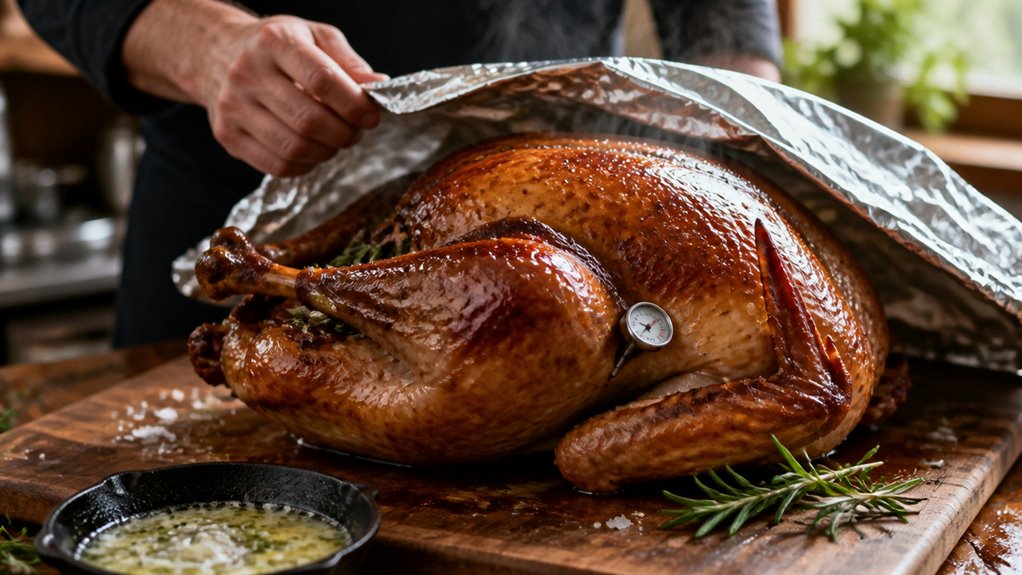
You’ll warm a smoked turkey best by reheating it slowly in a 250°F to 325°F oven, tightly covered with foil to trap steam and maintain moisture.
Add a small amount of liquid like broth or apple juice to the pan, and use a roasting rack to keep the bird elevated, preventing sogginess.
Target an internal temperature of 140°F to 155°F, then let it rest wrapped in foil to redistribute juices.
For a crisp finish or quicker warming options, some adjustments help preserve texture and safety.
Key Takeaways
- Reheat smoked turkey in a low oven (225°F–275°F) covered loosely with foil to maintain moisture and avoid drying.
- Use a roasting rack above a small amount of liquid in the pan to prevent sogginess and retain juiciness.
- Aim for an internal temperature between 140°F and 155°F, using a meat thermometer to ensure safe, moist reheating.
- Rest the turkey wrapped in foil for 10–30 minutes after reheating to redistribute juices and improve tenderness.
- Optionally, briefly crisp skin in a preheated oven or air fryer after reheating without over-drying the meat.
Why Oven Reheating Works Best for Smoked Turkey?

Although there are several ways to warm a smoked turkey, oven reheating stands out as the most reliable method. It provides consistent, low heat that preserves moisture and texture.
You’ll want to set your oven between 250°F and 325°F, as this range minimizes drying while evenly warming the bird. Covering the turkey tightly with foil traps steam, which helps maintain juiciness.
Adding a small amount of liquid—water, broth, or apple juice—to the pan further supports moisture retention. Using a roasting rack keeps the turkey elevated above the liquid, preventing sogginess.
This controlled environment guarantees the bird heats uniformly, avoiding hot spots common in microwaving or other methods. Overall, oven reheating offers the best balance between heat consistency, moisture preservation, and texture retention for whole smoked turkeys. For an added boost of flavor and moisture, consider injecting a small amount of Cajun butter into larger portions before reheating.
Target Internal Temperatures for Reheating Smoked Turkey
Making sure your smoked turkey reaches the proper internal temperature during reheating guarantees both safety and ideal texture.
Aim for an internal temperature between 140°F and 155°F to balance food safety and moisture retention.
Lower targets, around 135°F, risk insufficient reheating, while 165°F, though safe, may dry the meat.
Using a reliable meat thermometer helps you monitor this precisely.
Insert it into the thickest part without touching bone for accuracy.
Maintain oven heat between 250°F and 325°F to evenly raise the turkey’s temperature without overcooking.
Covering the bird traps steam, preserving juiciness as it approaches your target.
For best results, let the turkey rest 10–15 minutes after reheating to allow juices to redistribute and finish rising to a safe temperature, especially when pulled at 155°F–160°F.
Reheating Time Guidelines by Turkey Weight
When reheating smoked turkey, you should estimate cooking time based on its weight to achieve even warming without drying.
Oven reheating commonly requires 10 to 15 minutes per pound at 250°F to 325°F, balancing heat intensity with moisture preservation.
Smaller birds heat faster but need careful monitoring to avoid overcooking. Always pair timing with internal temperature checks for safety and quality.
For turkeys under 12 pounds, expect approximately 1.5 to 2 hours.
Birds weighing 12 to 16 pounds generally need 2 to 3 hours.
Larger turkeys over 16 pounds may require 3 to 4 hours.
Use a reliable meat thermometer to confirm the target reheating temperature.
Adjust your reheating time according to oven variations and bird thickness for best results.
Consider using fruitwood pellets or a mild blend when initially smoking the turkey to help preserve a sweet, moist flavor that holds up during reheating.
How to Control Moisture When Reheating Turkey?
Maintain moisture during reheating by adding a small amount of liquid, such as water, broth, stock, or apple juice, to the bottom of the roasting pan. This liquid creates steam, which reduces surface drying and helps preserve the turkey’s texture.
Use only enough liquid to coat the pan’s base, preventing sogginess. Place the turkey on a roasting rack above the liquid to avoid direct contact, which maintains crispness where desired.
Tightly cover the bird with foil to trap steam and create a humid environment inside the pan. This combination of liquid addition, rack use, and coverage forms an effective moisture barrier, minimizing moisture loss.
Monitoring internal temperature makes certain you don’t overheat, which otherwise accelerates drying. This method balances heat and humidity, optimizing reheated smoked turkey juiciness. For best texture retention, consider finishing the skin briefly in a preheated oven or air fryer to re-crisp the surface without over-drying the meat.
Why Resting Smoked Turkey After Reheating Matters?
Resting your smoked turkey after reheating is super important! When you let it sit for a bit, the juices really get a chance to redistribute throughout the meat. This makes the turkey not only taste better but also feel better in your mouth—talk about a win-win!
Plus, resting helps keep the moisture locked in, which is key to avoiding that dreaded dryness when you start carving. If you skip this step, you might end up losing those delicious juices, and nobody wants a turkey that’s tough and less satisfying to eat. So, take a moment to let it rest—it’s worth it! A reliable offset smoker with good heat retention and airflow control will help maintain moisture and even cooking during the initial smoking.
Juices Redistribute Evenly
Although reheating restores the turkey’s temperature, allowing it to rest afterward guarantees juices redistribute evenly throughout the meat.
When you let the smoked turkey rest, the heat stabilizes, and internal pressure decreases. This enables moisture to move from concentrated pockets back through the fibers.
This process minimizes juice loss when carving and assures consistent flavor. Key evidence-based benefits include:
- Juices reabsorb into muscle fibers, preventing dryness.
- Temperature equalizes, reducing hot and cold spots.
- Resting under foil retains steam, preserving moisture.
- Improved juiciness enhances overall eating experience.
For best results, let the turkey rest for at least 20–30 minutes after reheating to allow adequate redistribution of juices and stabilization of internal temperature, which mirrors the recommended resting period for large smoked meats like brisket.
Enhances Meat Texture
Regularly allowing your smoked turkey to rest after reheating markedly improves its meat texture. This resting enables muscle fibers to relax and reabsorb moisture.
During cooking and reheating, muscle fibers contract, squeezing out water and causing toughness. Resting reverses this process, allowing fibers to loosen and reabsorb expelled juices.
This results in a more tender, less stringy texture. Studies show that resting for 10 to 30 minutes after reaching target internal temperature yields ideal texture improvements.
Covering the turkey with foil during this period maintains a stable environment, preventing premature cooling that could hinder fiber relaxation.
Skipping this step risks tougher, drier meat due to continued muscle contraction and juice loss. Consequently, resting is a critical, evidence-supported practice to enhance the eating quality of your reheated smoked turkey. Keeping the turkey wrapped in foil for 10–30 minutes also helps retain moisture and warmth.
Retains Moisture Effectively
Beyond improving texture, resting smoked turkey after reheating plays a key role in preserving its moisture content.
When you let the bird rest, the internal juices redistribute evenly. This reduces moisture loss during carving. This step is vital to maintain the succulent quality of the meat rather than losing fluids immediately after heating.
Consider these points to retain moisture effectively:
- Rest the turkey for 10 to 30 minutes, covered loosely with foil.
- Use foil to trap steam, preventing surface drying.
- Avoid carving immediately to minimize juice escape.
- Make sure the internal temperature stabilizes to optimize juiciness.
Freezing meat properly beforehand can also help preserve moisture and texture when reheating, so consider proper freezing methods to maintain quality.
When to Use Faster Reheating Methods for Smoked Turkey?
If you’re looking to reheat smoked turkey, faster methods like microwaving are great for sliced smoked turkey breast. It heats up quickly and doesn’t dry out too much, which is a win!
On the other hand, if you have a whole bird or larger portions, it’s better to stick with holding warm techniques.
These methods keep the turkey at a safe temperature without cooking it further, which helps maintain that juicy texture we all love.
Consider using a dry rub to refresh and enhance flavor before reheating larger portions.
Microwaving Sliced Turkey
When you need to warm up smoked turkey quickly, microwaving sliced turkey breast offers a practical alternative to oven reheating.
This method suits smaller portions and avoids the extended time whole birds require. However, microwaving risks uneven heating and drying, so you must carefully control timing and moisture.
Consider these tips for effective microwave reheating:
Heat slices in short intervals (15-30 seconds) to prevent overcooking. Cover the turkey with a microwave-safe lid or damp paper towel to retain moisture.
Stir or rearrange slices between intervals for even temperature distribution. Use a food thermometer to make certain slices reach at least 140°F for safe serving.
This approach is evidence-based and balances speed with preserving texture and juiciness. For food safety and quality, aim to reheat to 165°F (74°C) when possible to ensure even temperature and kill pathogens.
Holding Warm Techniques
Maintaining smoked turkey at a safe, warm temperature without further cooking calls for specific holding techniques that preserve moisture and texture.
You’ll want to keep the bird above 135°F to prevent bacterial growth but avoid temperatures that cause drying or overcooking.
After oven reheating, wrapping the turkey in foil and placing it in a cooler with towels creates a controlled, insulated environment that holds heat for hours without further heat exposure.
Faster reheating methods, like microwaving, suit only sliced portions due to uneven heating risks and moisture loss in whole birds.
Use these quicker options when time is limited or when reheating small, pre-sliced servings.
For whole smoked turkeys, rely on low, steady oven heat followed by proper resting and insulated holding to maintain peak moisture and texture.
Frequently Asked Questions
Can I Reheat Smoked Turkey in an Air Fryer?
Yes, you can reheat smoked turkey in an air fryer, but it’s best for smaller pieces rather than a whole bird.
The air fryer’s dry heat risks drying out the meat, so wrap the turkey loosely in foil to retain moisture.
Set it to a moderate temperature, around 300°F, and check frequently to avoid overcooking.
Use a meat thermometer to confirm it reaches a safe internal temperature before serving.
How Long Can Leftover Smoked Turkey Be Safely Stored?
You can safely store leftover smoked turkey in the refrigerator for 3 to 4 days.
Make sure to keep it in an airtight container or tightly wrapped to prevent moisture loss and contamination.
If you want to keep it longer, freeze it for up to 2 to 6 months, depending on packaging quality.
Always check for off smells or texture changes before consuming, as these indicate spoilage despite proper storage times.
Is It Safe to Refreeze Reheated Smoked Turkey?
You can’t put the genie back in the bottle once reheated smoked turkey has been out.
It’s generally unsafe to refreeze turkey after reheating because bacteria may have grown during cooling and reheating.
Each time you thaw and warm it, the risk increases.
To keep food safe, only refreeze turkey if you cooled it properly without reheating, or if it was thawed in the fridge and never warmed.
What Side Dishes Pair Best With Reheated Smoked Turkey?
You’ll want sides that complement the smoky flavor without overpowering it.
Consider pairing reheated smoked turkey with creamy mashed potatoes, roasted root vegetables, or a tangy cranberry sauce to balance richness.
Green beans almondine or sautéed Brussels sprouts add freshness and texture.
A light salad with citrus vinaigrette can also brighten the meal.
These choices enhance the turkey’s flavor while providing balanced, contrasting tastes and textures for a satisfying meal.
Can Smoked Turkey Be Reheated Without Losing Its Smoky Flavor?
You can absolutely preserve that delightful smoky essence when reheating smoked turkey. By using low, steady oven heat around 250°F to 325°F and covering the bird tightly with foil, you trap moisture and prevent drying, which keeps the smoky flavor intact.
Adding a splash of broth or apple juice in the pan enhances juiciness without diluting the taste. Just monitor internal temperature carefully to avoid overcooking and flavor loss.
The Bottom Line on the Best Way to Reheat Smoked Turkey
When reheating your smoked turkey, remember: slow and steady wins the race.
Oven reheating guarantees even warmth and preserves moisture, hitting that perfect internal temperature without drying out your bird.
Follow time guidelines based on weight, and don’t skip resting—it locks in juiciness.
While faster methods might tempt you, they risk uneven heating.
So, trust the science: patience delivers the best, juiciest results every time you reheat your smoked turkey.