
Choron Sauce Recipe: Smooth, Savory and Foolproof
To make Choron sauce, start by reducing white vinegar, shallots, tarragon, and peppercorns into a flavorful base. Whisk fresh egg yolks over gentle heat, gradually emulsifying clarified butter to form a stable béarnaise.
Near the end, blend in tomato purée for vibrant color and balanced acidity. Maintain precise temperature and whisking to avoid curdling and achieve a glossy texture. Adjust seasoning with salt and lemon juice to taste. Explore further to master each technique and serving tip.
Key Takeaways
- Choron sauce is a béarnaise derivative with tomato purée added and tarragon omitted for a rich, tangy flavor.
- Prepare a vinegar reduction with shallots, herbs, and peppercorns as the sauce base.
- Whisk egg yolks over a bain-marie below 80°C, gradually incorporating clarified butter to form a stable emulsion.
- Stir in 1–3 tablespoons of tomato purée near the end, then season with salt, lemon juice, and fresh herbs.
- Serve warm over grilled meats or vegetables; store refrigerated for up to two days and reheat gently in a bain-marie.
| Ingredients / Tools | Steps / Actions |
|---|---|
| Egg yolks | Whisk gently in a heatproof bowl until smooth and pale |
| White vinegar | Add gradually to the yolks for balanced acidity |
| Shallots | Finely mince and simmer briefly for subtle sweetness |
| Tarragon | Infuse into the reduction for classic Béarnaise flavor |
| Unsalted butter | Melt slowly and emulsify into yolks while whisking |
| Tomato purée | Stir in gently to transform Béarnaise into Choron sauce |
| Salt and white pepper | Season carefully to enhance, not overpower |
| Saucepan & whisk | Maintain low heat and constant motion to prevent curdling |
| Warm serving bowl | Keep the Choron sauce smooth and velvety before serving |
History and Origin of Choron Sauce
Although many sauces have long defined French haute cuisine, Choron sauce stands out for its unique innovation by Alexandre Étienne Choron in the late 19th century.
As chef de cuisine at Paris’s Voisin, Choron developed this sauce by modifying the classical béarnaise, specifically by omitting tarragon and chervil and incorporating tomato purée. This addition introduces a subtle sweetness and tang, enriching the sauce’s flavor profile while maintaining the béarnaise’s creamy texture. Using the right cooking methods, including controlled heat distribution with a heat diffuser, can help preserve the sauce’s delicate consistency.
Originating during a period of culinary refinement, Choron sauce exemplifies French classical sauce evolution. Its inventor’s prominence rose amid the Siege of Paris in 1870, where Choron maintained haute cuisine standards despite scarcity.
Today, you recognize Choron sauce as a distinct béarnaise derivative, bearing the legacy of its creator’s technical innovation within French gastronomy. Traditionally, it has been a beloved family Sunday dinner staple in French households, showcasing the sauce’s enduring cultural significance.
Key Ingredients for Authentic Choron Sauce
What exactly goes into crafting an authentic Choron sauce? You’ll start with 2–4 fresh, large egg yolks, whisked carefully to avoid curdling. They provide richness and thicken the emulsion.
Use unsalted, clarified butter, typically 100–400 grams, added gradually while hot but not boiling. This ensures a stable emulsion, similar to the precise control required in cheese melters to maintain texture.
Add unsalted clarified butter slowly while hot (not boiling) to create a smooth, stable emulsion.
The tomato component, essential for Choron’s distinctive tang and color, usually involves 1–3 tablespoons of tomato purée or paste. This is incorporated after forming the emulsion.
Herbs like tarragon and occasionally parsley add freshness. Shallots, bay leaf, and black peppercorns contribute depth but are strained out before emulsifying.
Classic French sauce Choron is a variation of béarnaise sauce combined with tomato purée, offering a subtle tomato flavor enhancement.
Preparing the Reduction Base

Let’s kick things off by grabbing some white vinegar. Pour them into a saucepan to create our reduction base.
Next, chop up some shallots finely—these will really enhance the flavor. Using a fine chop ensures even distribution of flavor throughout the sauce.
Now, if you have whole peppercorns or mignonette pepper lying around, toss those in too. And don’t forget about tarragon; whether it’s fresh or dried, it’ll add a lovely aromatic touch to the mix. Choron sauce was originally created as an adaptation of béarnaise sauce, which is why these ingredients are key.
Once you’ve got everything in the pan, it’s time to heat things up. Set the burner to medium to high heat, and make sure to stir constantly. This will help concentrate the flavors while keeping everything from burning.
Aromatics and Herb Infusion
Alongside the vinegar reduction, incorporating carefully selected aromatics and herbs shapes the depth and complexity of Choron sauce.
Finely chopped shallots introduce mild sweetness and pungency, while fresh tarragon leaves contribute a distinctive anise aroma.
You’ll combine these with crushed black or mignonette peppercorns to add subtle heat.
Simmer the mixture gently for 10-15 minutes, reducing it to about one-third volume to concentrate flavors without bitterness.
Strain through a fine mesh sieve to remove solids, ensuring a smooth, intensely flavored base.
Fresh herbs release ideal oils, so use them over dried. Control temperature tightly to prevent burning.
This aromatic reduction intensifies Choron’s herbaceous and umami notes, setting a precise foundation before integrating tomato paste and emulsifying with egg yolks and butter.
The use of fresh flat-leaf parsley alongside tarragon and shallots is common to enhance the sauce’s herbal-tomato taste.
Emulsifying the Egg Yolks and Butter
To emulsify the egg yolks and butter, it’s super important to keep a close eye on the temperature. You definitely want to avoid curdling, so gently warm those egg yolks over a bain-marie.
Now, when it comes to adding the clarified butter, start slow. Just a few drops at first! Then, as you get comfortable, you can increase to a steady stream. Make sure you’re whisking constantly. This is key for creating a stable emulsion.
Using cookware with a ceramic interior coating and a stainless steel base can help ensure even heat distribution, which is crucial for preventing the sauce from overheating.
And don’t forget, consistent and vigorous whisking is essential. It helps everything come together nicely and keeps your sauce smooth and cohesive.
Temperature Control Importance
Because controlling temperature is essential, you must keep the water bath gently simmering between 70°C and 80°C to emulsify the egg yolks and butter properly. Using precise temperature control helps maintain the sauce’s ideal consistency and prevents breakdown.
Confirm the water doesn’t touch the bowl’s bottom to avoid overheating. Heat the yolks slowly, targeting 60°C–65°C, whisking constantly to distribute heat evenly and prevent curdling.
If yolks thicken too rapidly or appear scrambled, remove the bowl immediately and whisk off heat. Properly thickened yolks are pale, smooth, and creamy, signaling protein denaturation without coagulation.
Avoid boiling water or temperatures above 80°C, which risk scrambling yolks and breaking the emulsion. After warming, remove from heat at the right moment to maintain emulsion stability; reheating above 60°C can cause separation. Serve immediately after preparation to ensure the best flavor and texture.
Maintaining this precise thermal control is critical for a stable, smooth Choron sauce base.
Gradual Butter Addition
Maintaining a stable temperature sets the stage for properly incorporating butter into the egg yolks. You’ll add small cubes of cold butter one at a time to the warm, gently simmering liquid, typically between 160°F and 180°F.
This controlled temperature gradient ensures the butter’s fat droplets break down evenly, forming a stable oil-in-water emulsion. Each cube takes about 30 seconds to fully incorporate before adding the next, preventing fat overload and temperature shock that could break the sauce. The gradual addition allows your whisk to disperse fat droplets uniformly, maintaining emulsion stability.
Following the traditional 3:8 water-to-butter ratio ensures the sauce achieves a creamy consistency without separating. To sustain the emulsion, it is important to whisk continuously throughout the process to keep the mixture smooth and glossy.
Avoid rushing; patience during this incremental process is critical to a smooth, stable Choron sauce. Proper maintenance of kitchen textiles, such as clean cheesecloth, supports overall culinary hygiene and quality.
Whisking Techniques
Although the gradual addition of butter is essential, mastering the whisking technique is equally important to achieve a stable emulsion.
Use fresh, room-temperature egg yolks, as their lecithin content promotes emulsification. Whisk rapidly and consistently with a wire whisk, maintaining steady speed to incorporate air and prevent fat-water separation.
Performing this step over a double boiler helps maintain the ideal temperature, which is a common practice in energy-efficient cooking.
Perform this over a double boiler, ensuring the bowl’s bottom doesn’t touch simmering water. Keep the temperature below 190°F (88°C) to avoid curdling. This gentle heat thickens the yolks without scrambling. Skill is essential to carefully control the temperature and prevent the sauce from breaking.
Focus on breaking butter into tiny droplets suspended in the aqueous phase. Proper whisking results in a thick, creamy sauce that coats the back of a spoon.
If the sauce breaks, rescue it by whisking in fresh yolks and water promptly.
Incorporating Tomato for Flavor and Color
When you incorporate tomato into Choron sauce, you introduce a defining element that sets it apart from traditional Béarnaise.
Typically, you use tomato purée or paste for a concentrated flavor and uniform color, stirring it in near the end of the preparation after forming the béarnaise base. The sauce was created somewhat by chance in Choron’s kitchen, originating from a béarnaise base with added tomatoes, which highlights its improvisational origin.
Using tomato purée also ensures a thicker, smoother consistency that blends seamlessly with the sauce.
Add tomato purée or paste near the end for concentrated flavor and consistent color.
This addition brightens the sauce with mild acidity, balances the richness from butter and egg yolks, and enhances umami complexity.
Tomato’s natural sweetness tempers the vinegar’s tartness, while its warm reddish hue improves visual appeal.
Alternatively, diced tomato concassé can add texture, and smoked tomato confit introduces smoky depth.
You’ll find that carefully balancing around 1 to 3 tablespoons of tomato product preserves the sauce’s herbaceous and rich profile without overwhelming it.
Achieving the Perfect Texture and Consistency
To achieve the perfect texture and consistency in Choron sauce, you must carefully manage the emulsification of egg yolks and clarified butter while controlling the temperature throughout the process. Whisk the reduced vinegar and shallot mixture until pale and thick.
The classic preparation involves stirring in tomato purée or concassé near the end to add a rich, tangy flavor. Then, add clarified butter slowly in a steady stream over gentle heat, ideally using a double boiler to prevent overheating.
Using a heat-tolerant bowl during preparation helps maintain the ideal temperature and prevents curdling. Continuous whisking prevents curdling and maintains a stable, velvety emulsion.
Strain the reduced liquid before combining with yolks to ensure smoothness. Add tomato purée gently at the end to avoid breaking the emulsion.
If the sauce breaks, remove it from heat and whisk in a fresh yolk to re-emulsify. Serve immediately to maintain its creamy, luscious consistency.
Seasoning and Final Flavor Adjustments
Because seasoning profoundly influences Choron sauce’s final profile, careful adjustments guarantee a balanced, nuanced flavor. The sauce’s unique character comes from its combination of tomato puree and grilled peppers, which add depth to the seasoning balance.
Add salt and pepper after thickening and butter incorporation, then finish with acidic elements like lemon juice or vinegar to preserve brightness.
Adjust cayenne pepper last to control heat, and stir in fresh herbs at the end for aroma.
| Seasoning | Timing | Purpose |
|---|---|---|
| Salt & Pepper | Post-thickening | Flavor balance |
| Lemon Juice | End | Brightness, acidity |
| Cayenne Pepper | After finishing | Heat control |
| Fresh Herbs | End | Freshness, complexity |
If the sauce is too acidic, add tomato puree; if too bland, increase acid. Adjust sweetness, richness, or heat accordingly for perfect harmony.
Serving Suggestions and Storage Tips
Mastering seasoning sets the stage for properly serving Choron sauce to highlight its complex flavors. Serve it warm or at room temperature over grilled beef cuts like steak or chateaubriand, or with roasted chicken and seafood such as salmon.
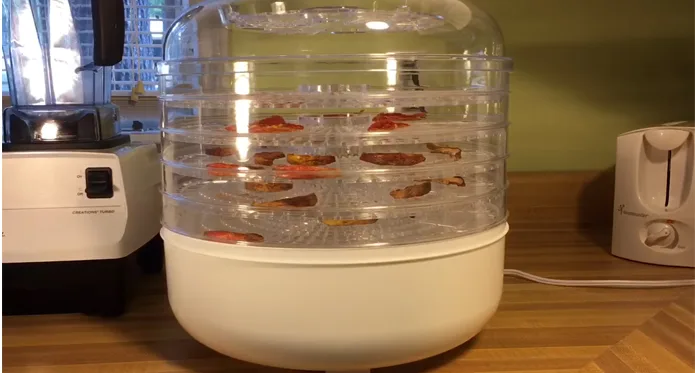
This modern adaptation emphasizes health-conscious ingredients, offering a flavorful yet heart-healthy alternative. Using non-stick dehydrator sheets can help prepare complementary dried herbs and spices that enhance the sauce’s aroma and taste.
Avoid heating it hot to prevent emulsification breakdown; gently rewarm using a bain-marie while whisking constantly. Choron also enhances vegetables like broccolini and roasted root vegetables or acts as a dip for fries.
Store the sauce tightly covered in the refrigerator for up to two days; don’t freeze. If thickened after chilling, whisk in warm water or stock to restore consistency.
Use glass or ceramic bowls and avoid direct heat or microwaves during reheating to maintain a stable, smooth emulsion and preserve its rich texture.
Frequently Asked Questions
Can Choron Sauce Be Made Dairy-Free or Vegan?
Yes, you can make Choron sauce dairy-free or vegan by substituting butter with plant-based oils like vegan margarine or coconut oil.
Replace egg yolks with aquafaba, silken tofu, or commercial vegan egg replacers to maintain emulsification. Keep tomato purée and tarragon for flavor.
Expect slight texture and richness differences, and focus on careful emulsification to achieve the creamy consistency. Experimentation helps balance taste and stability in these adaptations.
What Dishes Pair Best With Choron Sauce Besides Steak?
You’ll find choron sauce pairs excellently with poultry like roasted or pan-seared chicken, enhancing its acidity and buttery texture.
It complements fish and seafood, especially grilled fillets or sautéed shellfish, without overpowering delicate flavors.
Vegetables, such as roasted root veggies, asparagus, and gratins, benefit from its creamy, tarragon-infused profile.
Is It Possible to Freeze Choron Sauce for Longer Storage?
You might think freezing Choron sauce is a good way to extend its shelf life, but it’s generally not recommended.
Freezing breaks the emulsion, causing separation and curdling due to egg yolks and butter. However, you can freeze tomato components separately in small batches.
If you must freeze the finished sauce, do so cautiously in small portions, then gently reheat with a bain-marie while whisking, though the texture won’t fully recover.
How Do I Fix a Broken or Curdled Choron Sauce?
To fix broken choron sauce, immediately remove it from heat to stop further separation. Whisk in cold butter or slowly drizzle the broken sauce into a fresh egg yolk base while continuously stirring.
Use low heat to gently rewarm and stabilize the emulsion. If hand-whisking fails, try an immersion blender for stronger recombination.
Maintain consistent temperature and gradual ingredient integration to restore the sauce’s smooth, velvety texture.
Can I Use Fresh Tomatoes Instead of Tomato Paste?
Yes, you can use fresh tomatoes instead of tomato paste, but you’ll need to peel, seed, and simmer them for 20–25 minutes to reduce excess water and concentrate the flavor.
Without this reduction, your sauce may become too thin and watery, weakening the emulsified texture.
For the best consistency and depth, strain the mixture and add it early in preparation. Tomato paste remains easier and more reliable for traditional results.
Choron Sauce Recipe Belongs in Your Kitchen
Now that you’ve mastered the delicate balance of rich butter, tangy tomato, and silky egg yolks, your Choron sauce stands ready to elevate any dish.
Like a painter’s final brushstroke, this sauce adds vibrant color and depth, transforming simple ingredients into culinary art.
Remember, precise temperature control and gradual emulsification are key to perfect texture. Store it carefully and serve promptly to enjoy its full flavor potential every time.