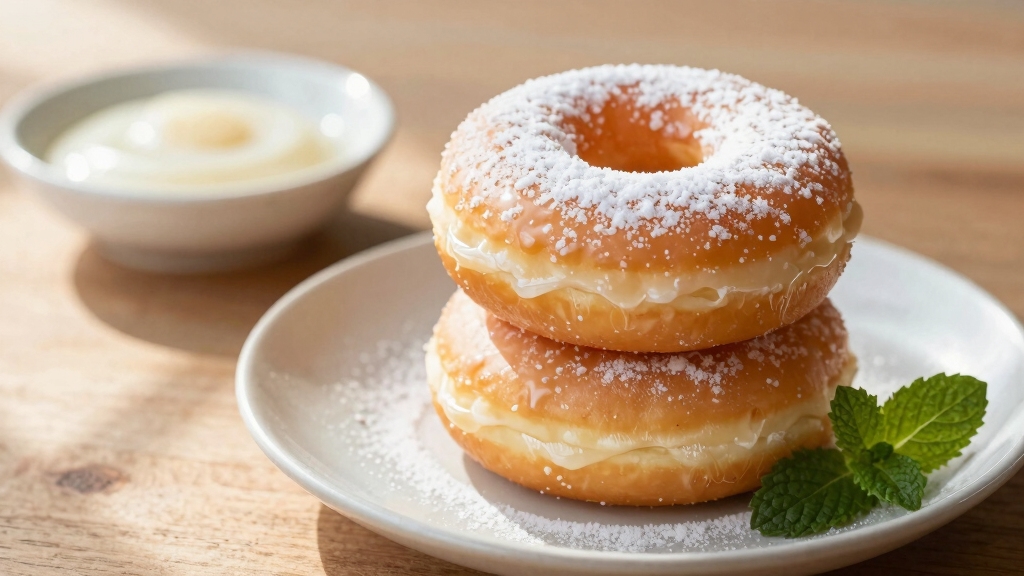
Low Calorie Donut Recipe: Easy Healthy Baked Donuts
You can make low-calorie donuts by swapping sugar with erythritol or stevia and replacing butter with unsweetened applesauce or low-fat milk.
Bake instead of frying to cut added oils, and use yogurt or egg whites to keep donuts moist and protein-rich.
Bake at 350°F until a toothpick comes out clean, then cool on a wire rack before glazing.
Try air frying for a crisp exterior with fewer calories. Keep going to discover more tips for perfect, guilt-free donuts.
Key Takeaways
- Use sugar substitutes like erythritol or stevia to reduce calories without sacrificing sweetness.
- Replace butter or oil with unsweetened applesauce to lower fat content while maintaining moisture.
- Bake donuts at 350°F for 8–16 minutes instead of frying to cut added oils and calories.
- Incorporate low-fat milk or plant-based alternatives and egg whites for leaner protein and reduced fat.
- Cool donuts on a wire rack before glazing to preserve texture and prevent sogginess.
Complete Low Calorie Donut Recipe Table
| Recipe Detail | Information |
|---|---|
| Main Term | Low Calorie Donut Recipe |
| Recipe Type | Healthy Baked Dessert |
| Cuisine | American |
| Difficulty Level | Easy |
| Prep Time | 10 Minutes |
| Baking Time | 8–16 Minutes |
| Total Time | 20–30 Minutes |
| Cooking Method | Baking or Air Frying |
| Main Ingredients | Self-Rising Flour, Applesauce, Low-Fat Milk |
| Sugar Substitute | Erythritol or Stevia |
| Fat Substitute | Unsweetened Applesauce |
| Baking Temperature | 350°F (180°C) |
| Air Fryer Temperature | 350°F |
| Air Fryer Time | 3–4 Minutes |
| Cooling Time | About 1 Hour |
| Optional Toppings | Cinnamon Sugar, Sugar-Free Glaze |
| Best Served With | Coffee, Tea, Fresh Fruit |
| Storage | Airtight Container at Room Temperature |
| Room Temperature Shelf Life | Up to 2 Days |
| Freezer Shelf Life | Up to 3 Months |
What Makes a Donut Low Calorie?

Understanding what makes a donut low calorie starts with the ingredients and preparation methods you choose.
Mastering low-calorie donuts begins with selecting the right ingredients and thoughtful preparation techniques.
You’ll want to focus on reducing fat and sugar without sacrificing texture or flavor. Using sugar substitutes like erythritol or stevia lowers caloric intake markedly while maintaining sweetness.
Incorporating wet ingredients such as unsweetened applesauce or low-fat milk can replace higher-calorie fats like butter.
Baking rather than frying cuts down on added oils, which contributes heavily to calorie count.
Precise oven temperatures and baking times help you achieve a golden brown donut without overbaking, which preserves moisture and prevents density that might tempt you to add more fat.
Dehydrators can also be used for other treats like cookies or fruit snacks, so consider dehydrator capacity when planning batch sizes.
Choosing Ingredients for Low Calorie Donuts
Reducing calories in donuts starts with the ingredients you select. Choosing nutrient-dense, low-calorie components helps maintain flavor while cutting unnecessary fats and sugars.
Opt for dry ingredients like self-rising flour paired with sugar substitutes such as erythritol or stevia to lower glycemic impact. For wet ingredients, unsweetened applesauce replaces part of the fat, while low-fat milk or almond milk reduces calorie density without sacrificing moisture.
Visualize these ingredient choices:
- Light, fluffy self-rising flour as the dough base
- Smooth, sweetened applesauce replacing butter
- Subtle sweetness from natural sugar alternatives
- Creamy low-fat or plant-based milk for moisture
Consider storing any leftover ingredients in an airtight canister to preserve freshness and prevent oxidation.
How to Substitute Sugar and Fat for Low Calorie Donuts?
Swap traditional sugar and fats in your donut recipe with healthier alternatives to cut calories without sacrificing taste or texture.
Replace refined sugar with erythritol or stevia, which provide sweetness without the calories and have minimal impact on blood sugar.
For fat reduction, substitute half of the butter or oil with unsweetened applesauce; this maintains moisture and softness while lowering fat content markedly.
Using non-stick cooking spray instead of full-fat oils also reduces calories without affecting the donut’s structure.
Additionally, low-fat milk or plant-based alternatives like almond milk can replace whole milk or cream to lower fat intake.
These evidence-backed swaps allow you to enjoy flavorful, moist donuts that fit a calorie-conscious diet, supporting your weight management goals without compromising the classic donut experience.
High-temperature baking or quick-bake methods can help produce a lighter, crisper exterior on low-fat donuts while keeping them moist inside, and thin crust techniques can inspire similar texture improvements.
Step-by-Step Low Calorie Donut Baking
Start by preheating your oven to 350°F (180°C) and preparing your donut pans or silicone molds with a light coating of non-stick spray. This ensures easy release.
Next, fill each mold about two-thirds full with your low-calorie batter, ensuring even distribution for consistent baking. Bake for 8 to 16 minutes, depending on the donut density, until golden brown. A toothpick inserted should come out clean.
Once baked, cool them on a wire rack for at least one hour before glazing or coating.
Lightly greased pans prevent sticking and help maintain donut shape.
Batter consistency should be smooth but thick enough to hold form.
Monitor baking time closely to avoid dryness.
Cooling preserves texture and readiness for finishing touches.
This method delivers moist, well-risen donuts with reduced calories. For best texture and to prevent sogginess when glazing, let donuts rest uncovered on the rack for a few minutes so surface moisture can evaporate and the crust can firm up prevent sogginess.
Using Donut Pans and Silicone Molds for Perfect Shape
When working with donut pans or silicone molds, ensure each cavity is well-greased to prevent sticking and guarantee easy removal. Use non-stick spray or lightly brush oil for best results. Fill each mold about two-thirds full for even baking and perfect shape.
Silicone molds offer flexibility and easier release but require thorough greasing.
| Feature | Donut Pans |
|---|---|
| Material | Metal, conducts heat well |
| Greasing Method | Non-stick spray or oil |
| Removal | Slightly tricky, use spatula |
| Feature | Silicone Molds |
| Material | Flexible silicone |
| Greasing Method | Light oil spray |
| Removal | Easy, molds bend to release |
Both provide consistent shapes. Your choice depends on preference and cleanup ease. For best long-term performance, clean silicone molds thoroughly after use to prevent residue buildup and preserve their nonstick quality.
Air Frying vs. Oven Baking for Low Calorie Donuts
After preparing your donut batter and choosing the ideal pan or silicone mold, deciding between air frying and oven baking can impact both texture and calorie control.
Choosing between air frying and oven baking affects your donuts’ texture and calorie content after batter preparation.
Air frying cooks donuts quickly at 350°F for 3 to 4 minutes, producing a slightly crisp exterior with less oil absorption. Oven baking takes 10 to 12 minutes at the same temperature, yielding a softer, more uniform texture.
Both methods require greasing molds or spraying baskets to prevent sticking. Cooling on a wire rack is essential to avoid sogginess.
Air fryer basket sprayed with oil, donuts in a single layer. Oven preheated to 350°F, donuts baked in pans or molds.
Air frying reduces cooking time and potential fat content. Oven baking offers even heat distribution and consistent browning.
Choose based on your texture preference and available equipment. For safety and best results, verify the center temperature reaches 165°F when reheating or finishing items with fillings, and let rest briefly to redistribute heat.
Adding Flavor With Cinnamon Sugar and Sugar-Free Glazes
Although low-calorie donuts focus on reducing sugar and fat, adding flavor with cinnamon sugar coatings or sugar-free glazes enhances taste without markedly increasing calories.
You can lightly spray your cooled donuts with oil to help cinnamon sugar stick evenly. Combine cinnamon and a sugar substitute like erythritol for minimal added calories.
For sugar-free glazes, mix powdered sugar alternatives with a small amount of low-fat milk until you reach a spreadable consistency. Thin glazes coat donuts smoothly without excess sweetness.
These coatings add flavor and visual appeal while maintaining low caloric density. Applying them after donuts have cooled prevents melting and sogginess, preserving texture.
This approach delivers satisfying taste enhancements aligned with your health goals. It makes your low-calorie donuts enjoyable without compromising nutrition. Additionally, using erythritol and isomalt can help replicate traditional candy textures while avoiding sugar.
Tips to Avoid Overbaking and Keep Donuts Moist
To keep your low-calorie donuts nice and moist, it’s super important to stick to the recommended baking times, which range from about 8 to 16 minutes. You definitely want to keep an eye on them! A great trick is to use a toothpick to check for doneness. Just insert it into one of the donuts, and if it comes out clean, you’re good to go.
Make sure to take them out of the oven right away when they’re done. If you leave them in too long, they can dry out, and nobody wants a dry donut! After you remove them, let them cool on a wire rack for about an hour before you glaze them. This helps maintain that soft, tender texture that makes donuts so delightful. Enjoy your baking!
Using yogurt or sour cream in the batter can help retain moisture and create a tender, moist crumb for your low-calorie donuts.
Optimal Baking Times
When baking low-calorie donuts, you’ll want to keep a close eye on the timing to maintain moisture and avoid dryness.
Optimal baking times typically range from 8 to 16 minutes at 350°F (180°C), depending on your oven and pan type.
Overbaking causes moisture loss, so remove donuts promptly once they appear golden.
Using a consistent oven temperature guarantees even cooking and prevents drying out.
To help you picture the process, consider these tips:
Fill donut molds about two-thirds full for even baking.
Preheat your oven fully before placing donuts inside.
Use non-stick spray to prevent sticking and uneven browning.
Cool donuts on a wire rack for at least an hour to retain softness.
Following these steps helps you achieve moist, tender low-calorie donuts every time.
Stand mixers provide consistent mixing for batters and kneading dough, which can be especially helpful when preparing batters for baked donuts with larger bowl capacities.
Toothpick Test Usage
Since overbaking can quickly dry out your low-calorie donuts, using the toothpick test is essential to check doneness without guesswork. Insert a clean toothpick into the donut’s center. If it comes out clean or with a few moist crumbs, your donuts are perfectly baked. Avoid leaving the toothpick in too long, as this can create holes or damage the delicate crumb.
Here’s a simple guide to help you interpret the toothpick test:
| Toothpick Result | Interpretation |
|---|---|
| Clean or few crumbs | Donuts are done, remove them |
| Wet batter | Needs more baking time |
| Sticky batter | Underbaked, continue baking |
Store baked goods in a cool, dry place and use breathable wrapping like paper or cloth to help prevent mold growth, especially if you plan to keep them for more than a day or two — consider breathable materials for short-term storage.
Cooling Techniques
Although removing your low-calorie donuts promptly after the toothpick test is crucial, you also need to cool them properly to preserve moisture and prevent overbaking.
Cooling on a wire rack allows air to circulate evenly, preventing sogginess and excess heat retention that leads to dryness. Avoid stacking donuts while warm, as trapped steam softens the crust.
Letting them cool completely before glazing guarantees the coating sets without melting.
To cool your donuts effectively, try these tips:
Place donuts in a single layer on a wire rack immediately after baking.
Avoid covering or stacking donuts until fully cooled.
Keep donuts away from direct heat or sunlight.
Allow at least one hour for cooling before applying glazes or coatings.
These steps help maintain a tender, moist texture in your low-calorie donuts.
Storing and Freezing Low Calorie Donuts for Freshness
Maintaining the freshness of low calorie donuts relies heavily on proper storing and freezing techniques. To keep your donuts soft, store them in an airtight container at room temperature for up to two days.
Avoid refrigeration, as it can dry them out quickly due to moisture loss. If you want to preserve them longer, freeze the donuts individually on a baking sheet.
Then transfer them to a sealed freezer bag or container. This method prevents clumping and freezer burn. When ready to eat, thaw at room temperature for 1-2 hours or warm briefly in a microwave for about 10 seconds to restore softness.
These steps help retain texture and flavor without adding calories, ensuring your low calorie donuts stay enjoyable and fresh over time.
How to Add Protein Without Extra Calories?
When you want to boost protein in your low calorie donuts without adding extra calories, choosing the right ingredients is key. Incorporate protein-rich yet low-calorie elements that maintain texture and flavor.
Boost protein in low-calorie donuts by selecting ingredients that enhance nutrition without compromising taste or texture.
Almond milk replaces traditional dairy, adding protein with fewer calories, while egg whites provide lean protein without fat. Unsweetened protein powders, particularly whey or plant-based, blend seamlessly into the batter.
These substitutions enhance protein content without increasing caloric density, supporting your fitness goals.
Try these options to visualize your protein boost:
Smooth batter enriched with whey protein powder.
Light, fluffy donuts using egg whites instead of whole eggs.
Almond milk replacing low-fat milk for subtle nutty flavor.
Unsweetened applesauce to retain moisture without added calories.
These evidence-based swaps help you achieve a high-protein, low-calorie donut effortlessly.
Frequently Asked Questions
Can I Make Low Calorie Donuts Vegan or Dairy-Free?
Yes, you can make low-calorie donuts vegan or dairy-free by swapping traditional ingredients.
Use plant-based milk like almond or oat milk instead of dairy, and replace eggs with unsweetened applesauce or flaxseed meal mixed with water.
Choose vegetable oil over butter and opt for sugar substitutes like stevia.
These swaps maintain low calories while keeping the texture and flavor enjoyable.
Just make certain your glaze or coating is also free from dairy products.
What Are the Best Tools for Decorating Low Calorie Donuts?
You’ll find piping bags and silicone spatulas are your best tools for decorating low calorie donuts precisely and cleanly.
Studies show piping bags help fill molds evenly, which is key for consistent glazing.
Using a shallow bowl with cinnamon sugar and lightly spraying donuts with oil guarantees coatings stick well.
Microwavable bowls speed up chocolate glaze prep, melting chocolate and milk efficiently without overheating.
These tools streamline your decorating process effectively.
How Do Low Calorie Donuts Compare Taste-Wise to Traditional Donuts?
You’ll find low-calorie donuts taste slightly different from traditional ones due to sugar substitutes and reduced fat, which can affect sweetness and texture.
However, many recipes use applesauce and vanilla to maintain moistness and flavor.
While they’re less rich, the cinnamon sugar or light glazes help boost taste.
Are Low Calorie Donuts Suitable for People With Gluten Intolerance?
You might find low calorie donuts a bit of a delicate dance when it comes to gluten intolerance.
Most recipes rely on self-rising flour, which contains gluten, so they’re not naturally suitable for you.
However, you can substitute gluten-free flour blends to keep them friendly to your needs.
Just make sure your ingredients are certified gluten-free to avoid cross-contamination.
This way, you can enjoy a lighter treat without the gluten worries.
Can I Add Fruit or Nuts Without Increasing Calories Significantly?
You can add small amounts of fruit like berries or nuts such as chopped almonds without materially raising calories.
Keep portions controlled, around a tablespoon per donut, to maintain low caloric density.
Dried fruits or large nut quantities add sugar and fat, increasing calories.
Fresh fruits provide moisture and sweetness with minimal impact, while nuts add protein and healthy fats but should be used sparingly for calorie control.
Enjoy Low-Calorie Donuts Without Compromising Flavor
You’ve revealed the secret to guilt-free indulgence. These low-calorie donuts are your ticket to sweetness without the calorie crash.
By choosing smart ingredients and mastering substitutions, you’re baking up a healthier treat that doesn’t skimp on flavor or texture.
Keep your donuts moist and fresh, and even sneak in some protein for a satisfying bite.
With these tips, you’re not just making donuts; you’re crafting a smarter, tastier way to enjoy a classic favorite.