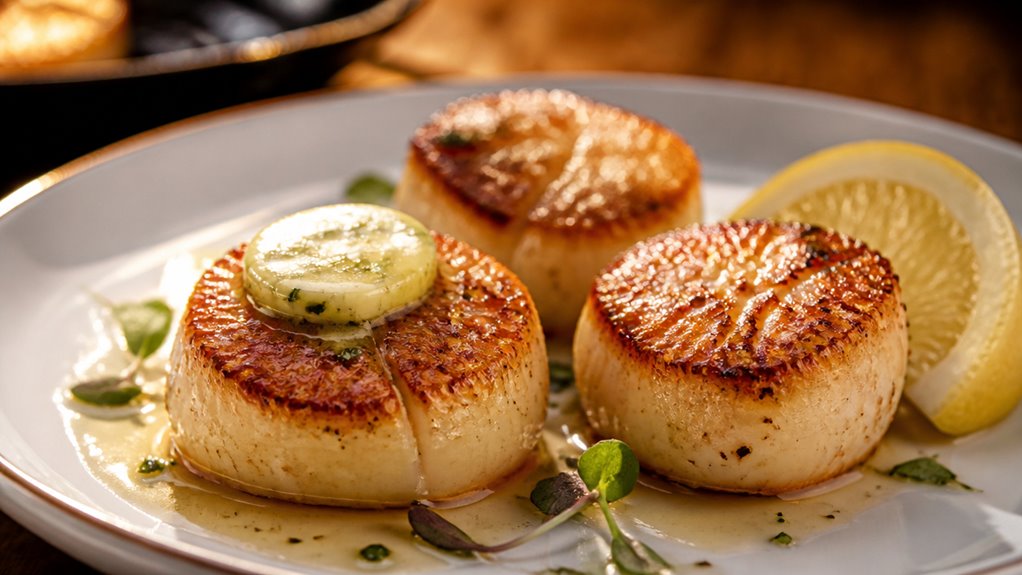
Best Way to Reheat Scallops: Restaurant-Quality Leftovers
To reheat scallops perfectly, bring them to room temperature first to guarantee even warmth.
Use gentle heat methods like steaming or a low 275°F oven with a splash of water, covering to lock in moisture and preserve their tender, buttery texture.
Avoid high heat to prevent rubberiness. A quick stovetop sauté on low with a splash of oil also works well; just watch the internal temp around 125°F.
For more tips on texture and flavor preservation, keep exploring.
Key Takeaways
- Reheat scallops gently using low heat methods like steaming or oven at 275°F to preserve texture and flavor.
- Let scallops reach room temperature and pat dry before reheating to ensure even warming and avoid sogginess.
- Aim for an internal temperature of 125–140°F to maintain tenderness and prevent rubberiness.
- Cover scallops during reheating to trap moisture and prevent drying out.
- Finish with a brief high-heat sear or broil to restore a light crust and enhance flavor.
Why Reheating Scallops the Right Way Matters?

Although reheating scallops might seem straightforward, doing it the right way is essential to preserving their delicate texture and subtle flavor. If you use high heat or rush the process, scallops can quickly turn rubbery or dry out, ruining their naturally tender, juicy quality.
You want to apply gentle heat that warms without overcooking, maintaining the scallops’ buttery softness and sweet, briny notes. Proper reheating also guarantees even temperature throughout, avoiding cold spots or overly hot centers.
When you reheat scallops carefully, you uphold the original dish’s appeal, making every bite pleasurable. Skipping this step or using harsh methods compromises both taste and mouthfeel. Taking time and choosing the right technique truly pays off in a delicious, satisfying result.
How to Prepare Scallops Before Reheating?
Getting the perfect texture and flavor when reheating scallops starts with how you prepare them beforehand. First, let your scallops come to room temperature for 1 to 2 hours. This guarantees even heating and prevents cold centers.
Next, gently pat them dry with a paper towel to remove excess moisture. This can cause steaming instead of searing or warming. If your scallops came with sauce, separate them to avoid uneven reheating. Warm the sauce separately and combine afterward.
Lightly season with salt and pepper or a splash of olive oil to enhance flavor during reheating. Finally, avoid overcrowding by arranging scallops in a single layer in a pan or dish. This allows heat to circulate evenly and preserves their tender, juicy texture. Use a heavy-bottomed pan for even heat distribution and to help prevent scorching heavy-bottomed pans.
Steaming Scallops for Gentle, Even Heating
Steaming scallops offers a gentle, even heat that preserves their delicate texture and natural sweetness.
To do this, place a steamer basket over boiling water, ensuring the water doesn’t touch the scallops.
Heat them for up to three minutes, checking frequently to avoid overcooking.
This method keeps scallops moist and tender, unlike harsher reheating techniques.
A gentle steaming approach also mirrors the gentle heat application recommended for preserving delicate seafood and sauces.
| Step | Tip | Result |
|---|---|---|
| Use boiling water | Prevents uneven heating | Even warmth |
| Heat for 3 mins | Avoid overcooking | Maintains texture |
| Finish with herbs | Add fresh lemon and parsley | Enhances flavor |
Steaming lets you gently revive scallops without drying them out.
This makes it an ideal method for reheating leftovers.
Oven Method for Moist, Tender Scallops
If you want to maintain the scallops’ moisture while reheating larger batches, the oven method offers a controlled, gentle approach.
Preheat your oven to a low 275°F to avoid drying out the delicate seafood.
Place the scallops in an oven-safe dish and splash a little water over them to create steam during reheating.
Cover the dish tightly with aluminum foil to lock in moisture and heat evenly.
Heat the scallops for 5 to 15 minutes, checking after 10 minutes to prevent overcooking.
Use a thermometer to verify they reach an internal temperature of 125°F, preserving their tender texture.
This method keeps scallops juicy and flavorful, making it ideal when you’re reheating multiple portions without sacrificing quality.
For an added layer of flavor and a gentle crust without searing, finish under high broil for a minute or two after baking, placing scallops on a preheated oven-safe skillet to mimic a searing effect.
Microwave Reheating for Quick, Safe Results
When you’re reheating scallops in the microwave, it’s a good idea to space them out evenly in a single layer. This way, they cook more uniformly and you won’t end up with any cold spots.
Try using short bursts of 30 seconds on high power. Just check on them frequently to make sure they don’t overcook; you really want to keep that tenderness intact.
Also, covering your dish with a damp paper towel or a microwave-safe lid can help lock in moisture. This little trick will keep them juicy and ensure safe reheating. Enjoy your scallops! A useful food-safety tip is to reheat leftovers until they reach an internal temperature of 165°F (74°C) to ensure they are safe to eat.
Microwave Settings And Timing
Frequently, the microwave offers the fastest way to reheat scallops without sacrificing moisture. However, you’ll need to carefully manage settings and timing to avoid overcooking.
Set your microwave to high power and heat scallops in 30-second bursts, checking frequently to prevent toughness. Arrange scallops evenly in a microwave-safe dish, cover with a damp paper towel or microwave-safe lid to trap steam and retain moisture.
Depending on scallop size, total reheating usually takes between 1 to 3 minutes. Use a meat thermometer to ensure they reach 165°F for safety.
After microwaving, let scallops rest for a minute or two. This allows heat to distribute evenly and juiciness to settle, helping maintain their tender texture. Proper timing and coverage are key to preserving scallops’ delicate flavor and preventing rubberiness. You can also briefly finish scallops in a hot skillet or oven to restore surface texture and avoid sogginess, especially after microwaving, and confirm doneness with an instant-read thermometer.
Ensuring Even Heat
Achieving even heat distribution in the microwave is crucial to reheating scallops quickly and safely without compromising their delicate texture.
To do this, arrange the scallops in a single layer, avoiding overlap, so microwaves can evenly penetrate each piece.
Cover the dish with a microwave-safe lid or damp paper towel to trap steam, which prevents drying out.
Use short 30-second intervals, checking the temperature after each to avoid overcooking.
Stir or rotate the dish between intervals if your microwave lacks a turntable, ensuring no hot or cold spots.
By monitoring closely and spacing scallops properly, you’ll preserve their tenderness and prevent rubbery edges, a common microwave pitfall, while swiftly reaching the safe internal temperature of 165°F.
This method balances speed with gentle reheating for best results.
Place the dehydrator on a level, stable surface in a well-ventilated area to reduce fire risk and ensure proper air circulation.
Stovetop Sauté to Restore Flavor and Texture
Although reheating scallops requires gentle care to preserve their delicate texture, using the stovetop sauté method lets you quickly restore their flavor and warmth without drying them out.
Start with a non-stick pan on low to medium heat, add a splash of water, and cover to trap steam. Toss scallops lightly in oil, salt, and pepper for enhanced aroma.
Flip after a few minutes to heat evenly, aiming for an internal temperature of 125–140°F to maintain tenderness.
| Step | Description |
|---|---|
| Heat setting | Low to medium heat |
| Moisture method | Splash of water, covered pan |
| Seasoning | Oil, salt, pepper, garlic optional |
| Cooking time | A few minutes per side |
| Final temp | 125–140°F internal temperature |
This method revives scallops’ juicy texture and fresh flavor effectively. A sharp, well-balanced knife with an ergonomic handle can help trim any excess membrane before reheating and improve portioning precision blade material.
Alternative Reheating: Air Fryer, Grill & Sous Vide
When you want to add a new dimension of flavor and texture to your leftover scallops, alternative reheating methods like the air fryer, grill, and sous vide offer excellent options.
The air fryer crisps scallops at 400°F, giving a golden-brown exterior while keeping the inside tender. Just a few minutes on each side works best.
Grilling imparts a smoky char and revitalizes their natural sweetness. Preheat the grill and sear scallops quickly, finishing with a squeeze of lemon for brightness.
Sous vide is ideal for gentle, even reheating. Set the water bath to 130°F and immerse scallops for 30 to 45 minutes, preserving moisture and texture perfectly.
For the best texture, finish scallops briefly in a hot skillet or under a broiler to restore a crisp exterior and prevent sogginess.
Checking Scallops for Perfect Doneness
Exploring alternative reheating methods like the air fryer, grill, or sous vide can bring out unique flavors and textures.
Trying reheating techniques like air frying, grilling, or sous vide adds exciting new flavors and textures.
Knowing how to check scallops for perfect doneness guarantees you don’t sacrifice tenderness or moisture.
To achieve this, monitor the internal temperature closely; aim for 125–140°F to prevent rubberiness.
Visually, scallops should appear opaque and slightly firm but still springy to the touch.
Press gently with a finger or fork; if they resist but yield slightly, they’re perfect.
Avoid overcooking, which causes scallops to dry out and toughen.
If using a thermometer, insert it into the thickest part for accuracy.
With practice, you’ll confidently judge doneness by feel and appearance, ensuring every reheated scallop stays juicy and tender.
You can also briefly finish scallops under high heat to develop a light crust similar to a Maillard reaction for added flavor.
Common Scallop Reheating Mistakes to Avoid
To preserve scallops’ delicate texture and flavor, you must avoid common reheating mistakes that lead to dryness or toughness.
One key error is applying high heat, which quickly dries out scallops and makes them rubbery. Instead, use gentle, steady heat to warm them evenly.
Overcrowding the pan or steaming basket can cause uneven heating, so reheat in small batches. Avoid skipping the step of covering scallops during reheating, as this traps moisture and prevents them from drying out.
Also, don’t reheat scallops straight from the fridge; let them reach room temperature first to ensure uniform warmth.
Finally, don’t neglect frequent checking. The moment scallops hit 125°F internally, stop reheating to keep their tender, buttery texture intact.
For a quick, dependable finish that preserves moisture and texture, consider using an air fryer set to moderate heat as an alternative reheating method.
Frequently Asked Questions
Can I Reheat Scallops Frozen Without Thawing First?
You can reheat scallops from frozen, but it’s tricky to do it well.
Thawing first guarantees even heating and preserves their tender texture.
If you skip thawing, use gentle methods like steaming or a low oven temperature to avoid overcooking the outside while the center stays cold.
Be patient, checking often to prevent toughness.
Quick, high-heat methods risk drying them out, so gradual warming is key for frozen scallops.
How Long Can Reheated Scallops Be Safely Stored?
You can safely store reheated scallops in the refrigerator for up to 2 hours if left at room temperature. However, once reheated, it’s best to consume them immediately.
If you refrigerate them right away, they’ll last about 1 to 2 days. Avoid reheating scallops multiple times, as it increases the risk of bacteria growth and texture degradation.
Always store scallops in an airtight container to maintain freshness and safety.
Are There Specific Scallop Types Better Suited for Reheating?
You’ll find that larger, dry-packed scallops handle reheating better than smaller, wet-packed ones.
Dry-packed scallops retain more of their natural texture and flavor, so they’re less likely to become rubbery or watery when warmed.
Wet-packed scallops absorb water, making them prone to sogginess during reheating.
If you’re aiming for tender, flavorful scallops after reheating, choose dry-packed types. They respond well to gentle heat and keep their quality intact.
Can Reheated Scallops Be Used in Raw Dishes Like Ceviche?
You shouldn’t use reheated scallops in raw dishes like ceviche. The texture and flavor change after reheating, making them less tender and potentially mushy.
Ceviche relies on fresh, raw scallops’ firmness and delicate taste, which reheated scallops can’t replicate. Using reheated scallops might also pose food safety risks since the scallops have already been cooked and reheated.
It’s best to reserve reheated scallops for cooked dishes to enjoy their qualities fully.
What Side Dishes Pair Best With Reheated Scallops?
You’ll want side dishes that complement the delicate, slightly sweet flavor of reheated scallops.
Try light, fresh options like lemon-garlic asparagus or a crisp arugula salad with shaved Parmesan.
Creamy risotto or herb-infused quinoa adds comforting texture without overpowering the scallops.
Roasted baby potatoes or sautéed spinach bring earthiness and balance.
These sides enhance the scallops’ tenderness while keeping the meal elegant and well-rounded.
Keep Leftover Scallops Tender and Delicious
Isn’t it worth taking a moment to reheat your scallops right and savor their delicate texture and flavor?
By prepping them carefully and choosing methods like steaming or stovetop sauté, you avoid rubbery or dry results.
Each technique offers its own benefits, so you can match your time and equipment to your needs.
Avoid common pitfalls, and you’ll enjoy scallops that taste as fresh and delicious as when first cooked.
Why settle for less?